
Red Flag Meaning The Hidden Signs You Should Never Ignore
Have you ever ignored a behavior because you thought, “Maybe I’m just overthinking it”? Most people have. Whether it’s a new friendship, a romantic relationship, or even a workplace connection, it’s surprisingly easy to overlook warning signs when emotions or first impressions get in the way. That’s why understanding the red flag meaning is so important. What seems like a small issue today can turn into a much bigger problem over time, especially when it involves trust, respect, or communication.
Recognizing red flags in relationships doesn’t mean expecting perfection from people. It means learning to spot unhealthy patterns before they affect your well-being. In this guide, you’ll discover what a red flag really means, why these warning signs matter, common relationship red flags to watch for, and how to respond with confidence. By the end, you’ll have a clearer understanding of what deserves your attention and what healthy relationships should actually look like.
What Is the Red Flag Meaning?
A red flag is a warning sign that suggests a person, situation, or behavior could lead to problems in the future. The phrase originally came from literal red flags used to signal danger, and today it’s commonly used to describe behaviors that shouldn’t be ignored.
When people talk about the red flag meaning in everyday conversations, they usually refer to actions that indicate dishonesty, disrespect, manipulation, poor communication, or other unhealthy patterns. While a single mistake doesn’t always make someone a red flag, repeated behaviors often reveal a deeper issue.
Red Flag Meaning in Simple Words
In simple terms, a red flag is anything that makes you pause and think, “Something doesn’t feel right here.”
It doesn’t automatically mean you should end a relationship or avoid someone completely. Instead, it’s a signal to pay closer attention before becoming more emotionally, financially, or personally invested.
Why Are Red Flags Important?
Ignoring warning signs can lead to unnecessary stress, disappointment, or emotional harm. Recognizing them early helps you make better decisions and protect your mental well-being.
Understanding red flags can help you:
- Build healthier relationships
- Avoid manipulation and toxic behavior
- Set stronger personal boundaries
- Improve communication
- Make more confident decisions
Many people only recognize warning signs after problems become serious. Learning about them beforehand gives you an advantage.
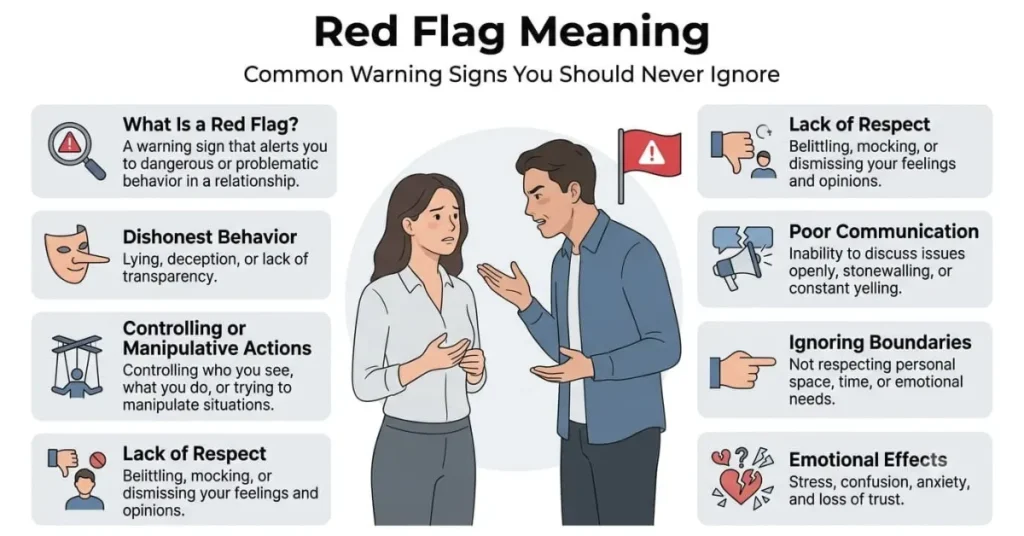
Common Red Flags in Relationships
Healthy relationships are built on trust, respect, honesty, and communication. When these qualities are consistently missing, it may be time to pay attention.
Poor Communication
Someone who constantly avoids important conversations, ignores your feelings, or refuses to communicate honestly may create long-term relationship problems.
Controlling Behavior
A partner who tries to control who you see, what you wear, or how you spend your time is showing one of the most recognized relationship red flags.
Constant Dishonesty
Everyone makes mistakes, but repeated lying damages trust. If someone frequently changes their story or hides important information, it’s worth taking seriously.
Lack of Respect
Healthy relationships require mutual respect. Insults, public embarrassment, or dismissing your opinions are warning signs that shouldn’t be ignored.
Extreme Jealousy
A little jealousy is normal from time to time. Constant accusations, checking your phone, or questioning every interaction often point to insecurity and unhealthy behavior.
Refusing Responsibility
People who never admit mistakes and always blame others rarely grow from conflicts. Accountability is an important part of every healthy relationship.
Red Flags Beyond Romantic Relationships
The red flag meaning isn’t limited to dating. Warning signs can appear almost anywhere.
Friendships
Examples include:
- Only contacting you when they need something
- Constant negativity
- Breaking your trust
- Ignoring your boundaries
Workplace
Possible workplace red flags include:
- Poor communication
- Lack of transparency
- Unrealistic expectations
- Toxic management
- High employee turnover
Online Interactions
Social media and dating apps have created new situations where recognizing warning signs matters.
Examples include:
- Fake profiles
- Love bombing very early
- Asking for money
- Refusing video calls
- Inconsistent personal stories
Red Flags vs Green Flags
Understanding healthy behaviors is just as important as recognizing unhealthy ones.
| Red Flags | Green Flags |
| Dishonesty | Honesty |
| Manipulation | Mutual respect |
| Poor communication | Open communication |
| Controlling behavior | Healthy independence |
| Constant criticism | Encouragement |
| Broken trust | Reliability |
Looking for green flags helps you focus on positive relationship qualities rather than only avoiding bad ones.
Are Red Flags Always Deal Breakers?
Not necessarily.
Some warning signs come from stress, poor communication, or lack of experience and can improve when both people are willing to grow. Others, especially those involving abuse, manipulation, repeated dishonesty, or controlling behavior, deserve serious attention.
The key is looking for consistent patterns rather than judging someone based on a single imperfect moment.
How to Respond When You Notice a Red Flag
If something feels wrong, don’t ignore your instincts.
Here are practical steps:
- Observe whether the behavior happens repeatedly.
- Talk openly about your concerns.
- Set healthy boundaries.
- Watch whether the person respects those boundaries.
- Seek advice from trusted friends or professionals if needed.
- Prioritize your emotional and physical well-being.
Healthy relationships become stronger through honest conversations, not fear or control.
Common Misunderstandings About Red Flags
Many people confuse personal preferences with genuine warning signs.
For example:
- Being introverted is not a red flag.
- Enjoying alone time isn’t a red flag.
- Having different hobbies isn’t a red flag.
A true red flag usually involves repeated harmful behavior that negatively affects trust, safety, respect, or emotional health.
Conclusion
Understanding the red flag meaning isn’t about becoming suspicious of everyone you meet. It’s about recognizing patterns that protect your time, trust, and emotional well-being. Every relationship has challenges, but healthy ones are built on honesty, respect, and a willingness to communicate through difficult moments.
The more familiar you become with common red flags in relationships, the easier it is to make thoughtful decisions instead of reacting after problems grow. Trust your observations, ask questions when something feels off, and don’t ignore concerns simply because you hope they’ll disappear.
FAQs
Author

Ethan Carter is an SEO blogger specializing in internet slang, text abbreviations, and social media meanings. He creates clear, accurate, and reader-friendly content backed by thorough research. His goal is to help readers understand modern online language with reliable, easy-to-read guides.
2 Comments