

Fiend Meaning: 7 Surprising & Powerful Definitions, Slang Uses & Examples
Fiend meaning usually depends on context: it can describe someone intensely interested in something, a person behaving cruelly, or an older supernatural figure. If you saw “fiend” in a text, caption, comment, or conversation, the intended sense may not be obvious at first.
In modern slang, texting, and social media, the word often suggests a strong craving, enthusiasm, or obsession with something. In traditional English, however, it can describe a cruel person, evil spirit, or demon. Having worked with word-meaning content, I find that context and tone solve most confusion around this surprisingly flexible word.
Quick Answer | Fiend Meaning
The simplest fiend meaning in casual English is someone who is extremely interested in, enthusiastic about, or constantly wants something. Calling someone a “coffee fiend,” for example, usually means they love coffee and consume it frequently. The expression is often humorous rather than literal.
However, fiend has a darker traditional meaning too. It can describe a cruel or wicked person or an evil spirit. That is why “book fiend” feels playful while “that cruel fiend” sounds negative. The words surrounding it usually reveal whether the speaker means enthusiasm, strong desire, or something much more serious.
What Does Fiend Mean? | Fiend Meaning
In ordinary English, fiend is a noun with several related senses. Dictionaries describe it as a cruel or unpleasant person, while the informal sense refers to someone very interested in something. Oxford also records the older supernatural sense of an evil spirit and traces the word to Old English fēond.
In informal speech, the word becomes more expressive. A “movie fiend” is not necessarily a negative person; it usually means someone who loves movies. Likewise, “fitness fiend” can describe someone highly enthusiastic about exercise. The key semantic relationship is fiend → intense interest → informal emphasis, with context determining the tone.
A Person Who Really Loves Something
A fiend can mean an enthusiast, fan, or someone strongly interested in a particular hobby. Phrases such as “music fiend,” “book fiend,” “gaming fiend,” and “coffee fiend” emphasize enthusiasm. The expression often sounds informal, playful, and slightly exaggerated rather than judgmental.
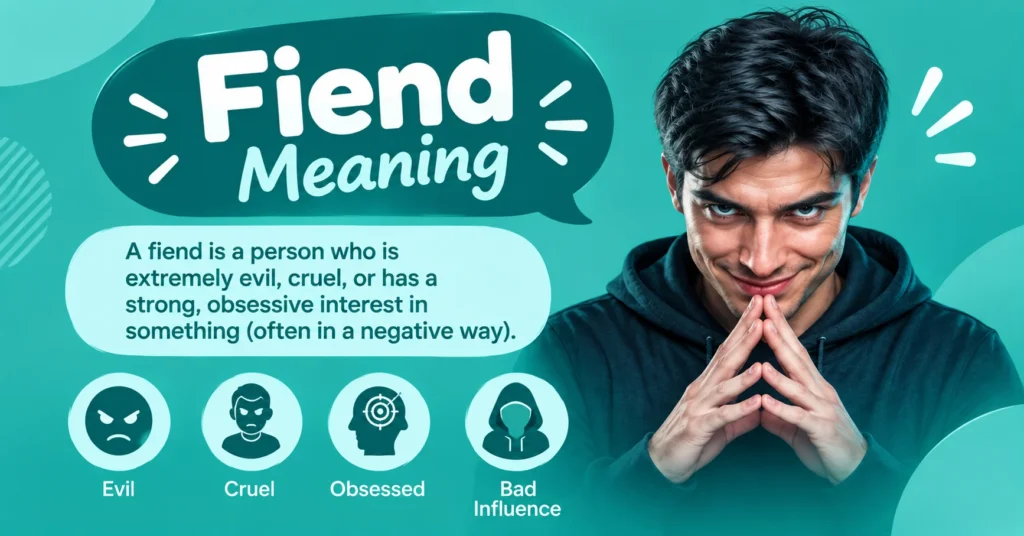
Someone Who Wants Something Constantly
Another casual fiend meaning describes a person who repeatedly wants or seeks something. Saying “She’s a snack fiend” suggests that she is always interested in snacks. In everyday conversation, this is often humorous exaggeration, similar to saying someone is “obsessed” with a favorite food or activity.
A Cruel or Wicked Person
The traditional sense is considerably darker. A fiend can mean a cruel, wicked, or unpleasant person, especially in storytelling or dramatic writing. This meaning appears more naturally in descriptions of villains, frightening characters, or harmful behavior. In that setting, the word has little connection with the playful slang sense.
Someone Obsessed With a Habit
The word can also suggest an unusually strong attachment to a habit or activity. A “fitness fiend” or “shopping fiend” may simply be an enthusiastic person, while other contexts can imply excessive behavior. This is why calling someone a fiend is best interpreted from the complete sentence rather than from the word alone.
Common slang meanings of fiend | Fiend Meaning
In contemporary slang, the most useful fiend meaning is usually “someone who really loves, wants, or seeks something.” It can make an ordinary statement sound stronger: “I like chocolate” becomes “I’m a chocolate fiend.” The word adds personality, intensity, and sometimes playful exaggeration to casual language.
The slang sense appears around hobbies, food, entertainment, fashion, gaming, and other interests. Tone matters because “coffee fiend” is normally lighthearted, while calling someone simply “a fiend” can sound insulting. The difference comes from context, sentence structure, relationship between speakers, and whether the word follows a specific interest.
| Expression | Common meaning | Typical tone |
| Coffee fiend | Someone who loves coffee | Playful |
| Book fiend | Someone who loves reading | Positive |
| Gaming fiend | Someone highly interested in games | Casual |
| Music fiend | Someone passionate about music | Positive |
| Snack fiend | Someone who constantly wants snacks | Humorous |
| A cruel fiend | A wicked or unpleasant person | Negative |
Different Meanings of Fiend | Fiend Meaning
The modern fiend meaning is broader than a single slang definition. The word connects an older sense involving an evil or cruel figure with newer informal uses involving strong enthusiasm or desire. Dictionary.com records several senses, including a highly interested person and someone highly skilled at something.
This range explains why the same word can feel completely different in two sentences. “He’s a language fiend” may be a compliment about his enthusiasm or ability, while “the villain was a fiend” describes wickedness. Rather than memorizing one definition, look at the noun nearby, the verb, and the overall conversational setting.
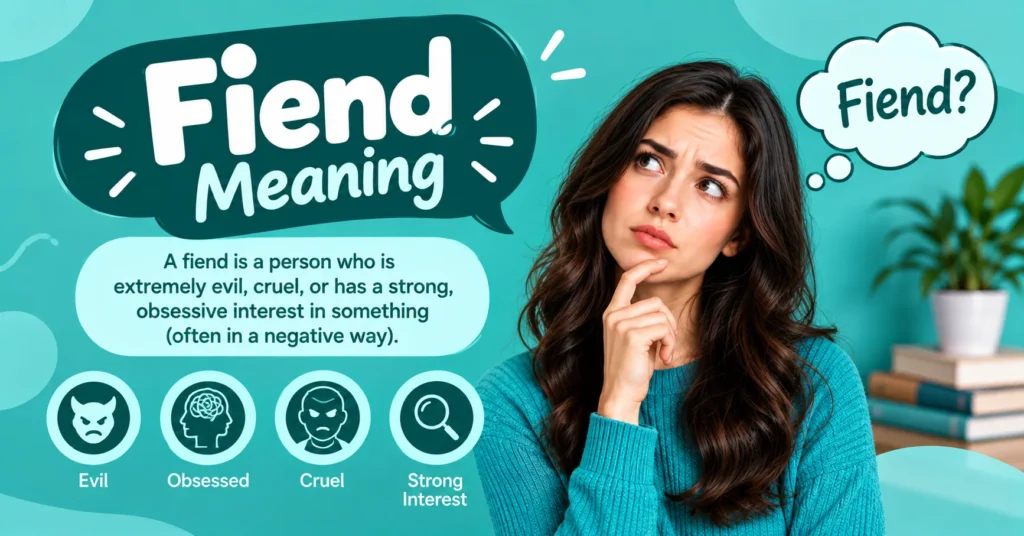
Is Fiend Internet Slang?
Not exactly. Fiend existed in English long before TikTok, texting, or online communities. Its roots go back to Old English fēond, associated with an enemy or foe, and its meaning later developed into the supernatural and cruel-person senses found in modern English.
Why Does Fiend Sound Playful Sometimes?
The playful use comes from treating strong enthusiasm as a humorous form of excess. Calling yourself a “coffee fiend” makes your preference sound more intense than simply saying “I like coffee.” Modern slang often uses exaggeration this way, allowing speakers to sound expressive without necessarily making a literal claim.
Where Is Fiend Commonly Used? | Fiend Meaning
The fiend meaning changes subtly according to where you encounter it. In text messages, social captions, gaming communities, and casual conversation, it often signals enthusiasm. In literature or dramatic descriptions, the traditional negative meaning is more likely. SlangCircle specifically highlights texting, TikTok, Instagram, Reddit, Discord, and everyday conversation.
Online users often pair the word with a specific interest, making the intended meaning easy to understand. “Coffee fiend” and “gaming fiend” are usually clear from the noun that comes before them. A standalone “fiend,” however, needs more context because it can carry a harsher or more traditional meaning.
Text Messages
In texting, fiend often works as playful shorthand for someone who strongly enjoys something. A friend might write, “You’re such a dessert fiend,” after seeing someone order another sweet treat. The expression is informal and usually communicates teasing, affection, or light exaggeration rather than serious criticism.
TikTok and Instagram
On social media, words such as fiend, obsessed, and fan can make captions feel more expressive. A caption such as “coffee fiend” communicates enthusiasm in only two words. The platform itself does not create a new dictionary definition; instead, social media gives existing informal usage a highly visible setting.
Reddit discussions often use fiend around hobbies, entertainment, food, technology, and niche interests. Someone might describe themselves as a “keyboard fiend” or “movie fiend.” In these contexts, the noun attached to fiend usually makes the intended meaning obvious and keeps the expression relatively light.
Discord
In gaming communities, fiend can describe someone who spends a lot of time enjoying a particular game or activity. A phrase like “He’s a Minecraft fiend” communicates enthusiasm rather than literal wickedness. The surrounding gaming context helps readers interpret the expression as casual internet language.
Everyday Conversation
In everyday American English, fiend can sound natural when used humorously with a specific interest. “My brother is a barbecue fiend” suggests that he really loves barbecue. The same word used alone“He’s a fiend”is less clear and may sound considerably more negative.
Is Fiend Rude or Offensive? | Fiend Meaning
Whether fiend sounds rude depends heavily on tone and context. Attached to a favorite activity, it is commonly playful: “She’s a book fiend.” Used by itself, it can suggest that someone is cruel, unpleasant, excessively demanding, or overly obsessed. That distinction is important in real conversations.
For formal settings, a clearer alternative is usually safer. In a workplace email, academic assignment, or professional introduction, fan, enthusiast, specialist, or someone who really enjoys may communicate the intended idea more precisely. Informal language is not automatically wrong; it simply needs the right audience.
Quick tone guide
A simple way to judge the fiend meaning is to examine what comes immediately before or after it. “Music fiend” is normally positive, “coffee fiend” is playful, and “cruel fiend” is clearly negative. When no context is supplied, the listener may need additional information before interpreting the word.
| Phrase | Likely interpretation |
| “Coffee fiend” | Loves coffee |
| “Book fiend” | Loves books |
| “Gaming fiend” | Very enthusiastic about gaming |
| “You’re a fiend!” | Potentially teasing or insulting |
| “A cruel fiend” | Wicked or cruel person |
Fiend vs. Fan | Fiend Meaning
Fiend and fan can both describe strong interest, but their emotional effect differs. A fan is neutral and widely appropriate, while fiend is more informal and often more intense. Saying “She’s a basketball fan” sounds straightforward; “She’s a basketball fiend” adds stronger enthusiasm and a playful edge.
The difference becomes especially useful when choosing language for a specific audience. Fan works comfortably in professional and educational writing. Fiend fits casual conversations, captions, jokes, and expressive descriptions. Neither word is automatically better; they simply communicate different levels of informality and intensity.
| Word | Meaning | Tone | Best context |
| Fan | Person who likes something | Neutral | Almost anywhere |
| Fiend | Person intensely interested in something | Informal/intense | Casual speech |
| Enthusiast | Person with strong interest | Polished | Formal or professional |
| Fanatic | Extremely devoted person | Stronger | Use carefully |
| Addict | Person with dependency or habitual attachment | Potentially serious | Context-dependent |
For example:
Compare “She is a coffee fan” with “She is a coffee fiend.” Both communicate that she likes coffee, but the second suggests a stronger attachment. If the goal is neutral communication, fan is clearer. If the goal is playful exaggeration, fiend gives the sentence more personality.
Fiend or Feen Meaning | Fiend Meaning
Fiend is the standard English spelling, while feen appears as an informal or phonetic slang form in some online and conversational contexts. SocialMexa specifically addresses this spelling relationship, while Dictionary.com records feen as an informal form associated with the verb sense of desiring something strongly.
For standard writing, use fiend. If you encounter feen, feening, or similar spellings online, interpret them from context rather than assuming they are separate standard English words. The important semantic connection is intense desire or enthusiasm, but the spelling and register differ.
Fiend
Fiend is the established dictionary spelling. It can refer to an evil spirit, cruel person, or informally a person intensely interested in something. It is appropriate in standard English, including articles, essays, professional writing, and general communication.
Feen
Feen is encountered mainly in informal slang and phonetic writing. It may represent the sound of fiend or appear in expressions about strongly wanting something. Because slang spellings can vary, the exact interpretation depends on the surrounding sentence and the community using the term.
Common Mistakes with Fiend or Feen
One common mistake is treating fiend and friend as interchangeable because their spellings look similar. They are different words. Another is assuming every use of fiend describes something evil. In casual expressions such as “movie fiend,” the intended meaning is simply strong enthusiasm.
Fiending or Feening
Fiending is the standard spelling related to the verb sense of fiend, meaning to strongly desire something. Informal online writing may also use feening. The distinction is mainly one of spelling and register; the surrounding context tells you whether the speaker means an ordinary strong desire or a more serious craving.
Conclusion
The fiend meaning depends on context, but in modern casual English it often describes someone who is intensely interested in or enthusiastic about something. A phrase such as “book fiend,” “coffee fiend,” or “gaming fiend” is usually playful, while describing someone simply as “a fiend” can sound negative.
The word also has older meanings connected with a cruel person or evil spirit, which explains why its tone can change so dramatically. If you encounter fiend in a text, caption, or conversation, look at the surrounding words before interpreting it. And when you see feen or fiending, remember that these informal forms are closely connected to the same idea of strong desire or enthusiasm.
FAQs
Author

Ethan Carter is an SEO blogger specializing in internet slang, text abbreviations, and social media meanings. He creates clear, accurate, and reader-friendly content backed by thorough research. His goal is to help readers understand modern online language with reliable, easy-to-read guides.


One Comment