
Ghosting Meaning The Hidden Truth Behind Being Ignored
Have you ever been chatting with someone every day, only for them to suddenly disappear without a word? No explanation. No goodbye. Just silence. If you’ve experienced this, you’re not alone, and you’ve probably wondered about the real ghosting meaning and why people do it.
Ghosting Meaning has become a common part of modern communication, affecting friendships, dating, workplaces, and even family relationships. While it may seem like someone simply stopped replying, the emotional impact can leave people feeling confused, rejected, and searching for answers. Understanding what ghosting really means can help you make sense of the experience instead of blaming yourself.
This guide explains what is ghosting meaning, provides a clear ghosting definition, explores why people ghost, the different forms it can take, and how to respond in a healthy way. Whether you’re trying to understand someone else’s behavior or recognize it in your own life, you’ll find practical insights and real-world examples throughout this article.
Ghosting Meaning: What It Really Means and Why It Happens
What Is Ghosting?
While ghosting meaning is most often associated with dating, it can happen in friendships, family relationships, workplaces, and even professional networking.
Ghosting Definition
Ghosting definition: Ghosting is the act of ending a relationship or conversation by abruptly stopping all communication without giving a reason or saying goodbye.
The term comes from the idea that a person becomes like a “ghost” they simply vanish from someone’s life.
How Ghosting Works
Ghosting doesn’t always happen overnight. Sometimes communication fades gradually before stopping completely.
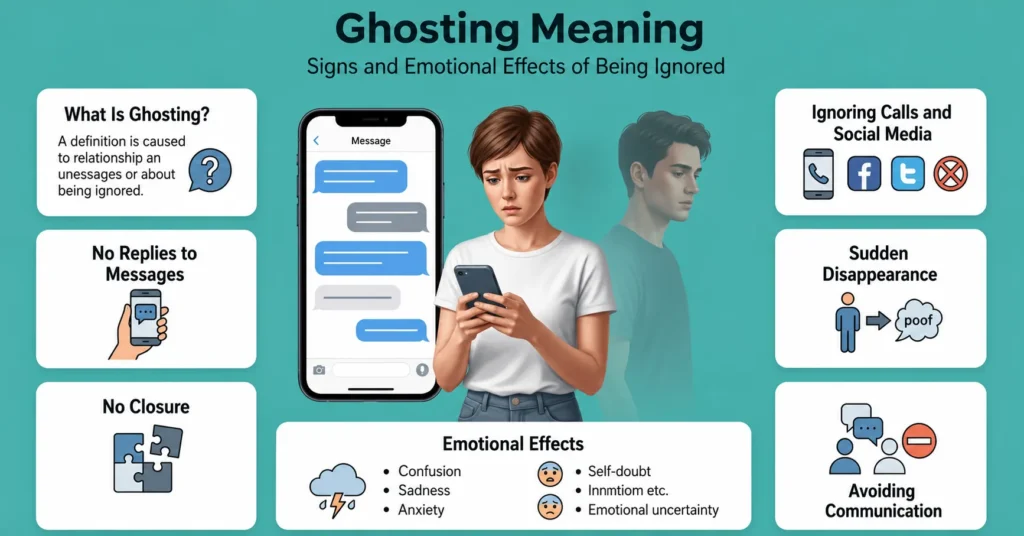
Common signs include:
- Messages are left on read for days.
- Calls are ignored.
- Social media interaction suddenly stops.
- Plans are canceled without explanation.
- The person becomes impossible to reach.
The defining feature is the lack of communication. Instead of explaining their feelings, the person chooses silence.
Examples of Ghosting
Understanding real situations makes the concept easier to recognize.
Dating
After several weeks of texting and going on dates, one person suddenly stops replying and disappears without explanation.
Friendship
A close friend gradually ignores messages and eventually cuts off contact without discussing what happened.
Workplace
A job candidate accepts an interview but never responds again or simply fails to show up.
Online Communication
Someone you’ve been talking with regularly on social media suddenly deletes the conversation or stops responding altogether.
Why Do People Ghost?
There isn’t one universal reason. People’s motivations vary depending on the situation.
They Want to Avoid Conflict
Some people find uncomfortable conversations stressful. Instead of explaining why they want to end communication, they disappear.
They Lost Interest
Sometimes feelings change, and rather than having an honest conversation, they choose silence because it feels easier.
Emotional Immaturity
Not everyone has developed healthy communication skills. Ghosting can reflect difficulty handling uncomfortable emotions.
Fear of Hurting Someone
Ironically, some people believe disappearing is kinder than openly rejecting someone, even though it often causes more confusion.
Personal Challenges
Stress, anxiety, depression, family problems, or overwhelming life events may cause someone to withdraw from communication. While these situations can explain silence, they don’t necessarily justify leaving someone without answers.
Is Ghosting Always Intentional?
Not always.
There are situations where someone temporarily disappears because of illness, emergencies, technology issues, or mental health struggles. True ghosting usually involves a deliberate choice to end communication permanently without explanation.
Looking at the overall pattern is more helpful than judging a single unanswered message.
The Emotional Impact of Ghosting
Being ghosted often leaves people with unanswered questions.
Common reactions include:
- Confusion
- Rejection
- Self-doubt
- Frustration
- Anxiety
- Loss of trust
Many people replay conversations, wondering whether they said something wrong. In reality, ghosting often reflects the other person’s communication style more than the person being ghosted.
Is Ghosting Emotionally Harmful?
It can be.
Unlike a direct conversation, ghosting removes the opportunity for closure. Without an explanation, people naturally create their own stories, which are often more painful than the truth.
That uncertainty is one reason ghosting feels emotionally difficult.
How to Respond If Someone Ghosts You
Although it’s painful, there are healthier ways to handle the situation.
Accept What Happened
If repeated attempts receive no response, it may be time to accept that communication has ended.
Avoid Chasing Answers
Sending multiple messages rarely changes the outcome and can increase emotional stress.
Don’t Blame Yourself Immediately
Relationships end for many reasons. Someone else’s choice to ghost doesn’t automatically mean you did something wrong.
Focus on Healthy Relationships
Spend time with people who communicate honestly and consistently.
Learn From the Experience
Every relationship teaches something. Reflect on what you value in communication and use that insight moving forward.
Ghosting vs. Breadcrumbing
People often confuse these terms.
| Ghosting | Breadcrumbing |
| Communication stops completely. | Communication continues occasionally. |
| No explanation is given. | Small messages keep someone interested without commitment. |
| The relationship ends abruptly. | The relationship stays uncertain. |
Ghosting vs. Benching
These behaviors also differ.
| Ghosting | Benching |
| Contact ends entirely. | Contact continues just enough to keep someone as an option. |
| No future interaction. | Occasional interaction without real commitment. |
Is Ghosting Ever Acceptable?
There are situations where ending contact immediately is reasonable.
Examples include:
- Abuse
- Harassment
- Stalking
- Manipulation
- Threats to personal safety
Protecting your safety should always come before maintaining communication.
How to Avoid Ghosting Others
If you no longer want to continue a relationship or conversation, a short and respectful message is often enough.
For example:
“I’ve enjoyed getting to know you, but I don’t think we’re the right match. I wish you the best.”
A brief explanation may feel uncomfortable, but it usually shows more respect than disappearing without a word.
Conclusion
Understanding the ghosting meaning is about more than learning a popular term. It’s about recognizing a behavior that can affect emotions, relationships, and self-confidence. While being ghosted can feel personal, it often says more about the other person’s communication habits than your worth. Healthy relationships are built on honesty, respect, and clear communication, even when conversations are uncomfortable.
If you’ve experienced ghosting, give yourself permission to move forward instead of searching endlessly for answers that may never come. The right people won’t leave you wondering where you stand, and that’s a standard worth holding onto in every relationship.
FAQs
Author

Ethan Carter is an SEO blogger specializing in internet slang, text abbreviations, and social media meanings. He creates clear, accurate, and reader-friendly content backed by thorough research. His goal is to help readers understand modern online language with reliable, easy-to-read guides.




One Comment