
Gaslighting Meaning The Hidden Signs You Need to Know
Have you ever walked away from a conversation wondering if you were overreacting, remembering things incorrectly, or even questioning your own judgment? It can be confusing when someone repeatedly dismisses your feelings or insists that events happened differently than you remember. Over time, those moments can leave you doubting yourself more than the situation itself. That’s where understanding the gaslighting meaning becomes important.
Gaslighting isn’t just another trending buzzword. It’s a form of emotional manipulation that can affect relationships, workplaces, friendships, and even family dynamics. Knowing how to recognize it can help you protect your confidence, trust your instincts, and communicate more effectively.
This guide explains what is gaslighting, provides a clear gaslighting definition, explores common signs and real-life examples, and shows you how to respond if you think it’s happening to you or someone you care about.
Gaslighting Meaning: What It Really Means and How to Recognize It
What Is Gaslighting?
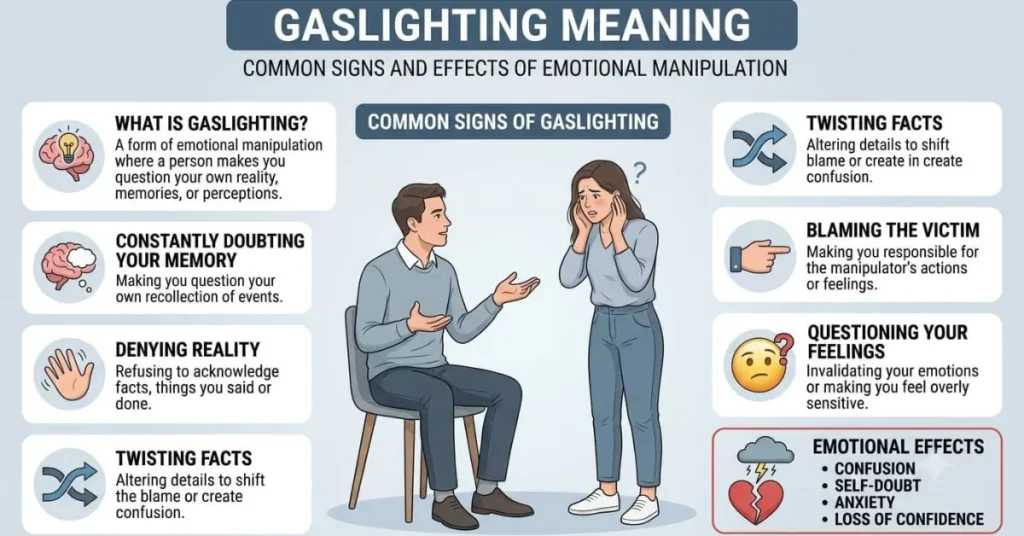
The gaslighting meaning refers to a form of psychological manipulation in which one person repeatedly causes another to question their memories, perceptions, or sense of reality. Instead of having an honest disagreement, the manipulator denies facts, twists conversations, or dismisses emotions until the other person begins to doubt themselves.
The modern gaslighting definition comes from the 1938 play Gas Light, later adapted into films, where a husband subtly manipulates his wife into believing she is losing her sanity by denying obvious changes in their home.
Today, the term describes a pattern of behavior rather than a single argument or misunderstanding.
Gaslighting Definition in Simple Words
A simple gaslighting definition is:
Gaslighting is a pattern of emotional manipulation that makes someone question their own memory, judgment, or perception of reality.
It often happens gradually, making it difficult to recognize until the behavior becomes a repeated pattern.
How Does Gaslighting Work?
Gaslighting usually doesn’t begin with obvious lies. It often starts with small moments that seem harmless but slowly become more frequent.
A person may:
- Deny saying something they clearly said.
- Claim you’re “too sensitive” whenever you express your feelings.
- Rewrite past events to favor their version of the story.
- Minimize your concerns.
- Shift blame onto you, even when they’re responsible.
Over time, this repeated behavior can make someone rely more on the manipulator’s version of reality than their own instincts.
Common Signs of Gaslighting
Recognizing the signs is often the first step toward protecting yourself.
You Constantly Second-Guess Yourself
You begin wondering whether your memory is accurate, even about recent conversations.
You Frequently Apologize
You find yourself saying “I’m sorry” even when you’re unsure what you did wrong.
You Feel Confused After Conversations
Simple discussions leave you feeling emotionally drained or unsure about what actually happened.
Your Feelings Are Regularly Dismissed
Instead of listening, the other person tells you that you’re overreacting, imagining things, or being dramatic.
You Start Losing Confidence
Repeated manipulation can make you doubt your decisions and rely on someone else for reassurance.
Examples of Gaslighting
Understanding real-life situations makes the concept easier to recognize.
In a Relationship
You remember your partner making a hurtful comment.
They respond:
“I never said that. You’re making things up.”
At Work
A manager changes project instructions but later insists you misunderstood them from the beginning.
Between Friends
A friend repeatedly jokes at your expense.
When you mention it hurts, they reply:
“Can’t you take a joke? You’re way too sensitive.”
Within Families
A family member dismisses childhood experiences by saying:
“That never happened. You always exaggerate.”
Gaslighting vs. Lying
These terms are related but not identical.
| Gaslighting | Lying |
| Makes someone question reality | Hides the truth |
| Usually repeated over time | Can happen once |
| Creates self-doubt | Focuses on avoiding consequences |
| Involves emotional manipulation | Doesn’t always involve manipulation |
A lie becomes gaslighting when it’s used repeatedly to make another person distrust their own memory or perception.
Gaslighting vs. Healthy Disagreement
People naturally remember events differently. That alone isn’t gaslighting.
Healthy disagreements involve listening, discussing different perspectives, and respecting each other’s experiences.
Gaslighting involves denying reality, dismissing feelings, and repeatedly making someone doubt themselves.
Why People Gaslight Others
Not everyone gaslights for the same reason. Some people do it intentionally to gain control, while others repeat unhealthy behaviors they learned growing up.
Common reasons include:
- Wanting power or control
- Avoiding responsibility
- Protecting their self-image
- Manipulating conflicts
- Maintaining unhealthy relationship dynamics
Regardless of the reason, the impact on the other person can be significant.
The Emotional Effects of Gaslighting
Long-term gaslighting can affect emotional well-being.
People may experience:
- Lower self-confidence
- Anxiety
- Confusion
- Difficulty making decisions
- Constant self-doubt
- Feeling emotionally isolated
Recognizing these effects early can help prevent deeper emotional harm.
How to Respond to Gaslighting
If you believe you’re experiencing gaslighting, there are practical ways to protect yourself.
Trust Your Observations
If something consistently feels wrong, don’t ignore your instincts.
Keep Records
Writing down important conversations or events can help you confirm your own memory.
Set Clear Boundaries
Calmly explain what behavior you won’t accept.
Talk to Someone You Trust
Friends, family members, or a mental health professional can provide an outside perspective.
Don’t Feel Pressured to Win Every Argument
Gaslighting often turns discussions into endless debates. Sometimes protecting your peace is more valuable than proving a point.
Common Misconceptions About Gaslighting
Every Argument Is Not Gaslighting
People can disagree without manipulating each other.
Forgetfulness Isn’t Automatically Gaslighting
Honest mistakes happen. Gaslighting involves repeated patterns of denial and manipulation.
Anyone Can Experience Gaslighting
It can happen regardless of age, gender, or background.
Conclusion
Understanding the gaslighting meaning is about more than learning a definition it’s about recognizing behaviors that can slowly undermine confidence and distort reality. Whether it happens in a relationship, at work, among friends, or within a family, gaslighting often develops gradually, making it easy to overlook at first.
Knowing the signs helps you separate healthy disagreements from patterns of manipulation and reminds you that your thoughts and feelings deserve to be taken seriously. If something consistently leaves you doubting yourself or feeling confused, it’s worth paying attention to. The more informed you are, the better equipped you’ll be to build healthier relationships, set stronger boundaries, and trust your own judgment with confidence.
FAQs
Author

Ethan Carter is an SEO blogger specializing in internet slang, text abbreviations, and social media meanings. He creates clear, accurate, and reader-friendly content backed by thorough research. His goal is to help readers understand modern online language with reliable, easy-to-read guides.




2 Comments