

What Does SYBAU Mean in Text and on TikTok Explained
Have you ever opened a comment section or received a message with “SYBAU” and had no idea what it meant? You’re not alone. Internet slang changes so quickly that even people who spend hours online can come across abbreviations that seem completely unfamiliar.
The challenge is that some slang terms are harmless, while others can sound rude or carry a stronger meaning than you might expect. Replying without understanding them can easily lead to awkward conversations or misunderstandings.
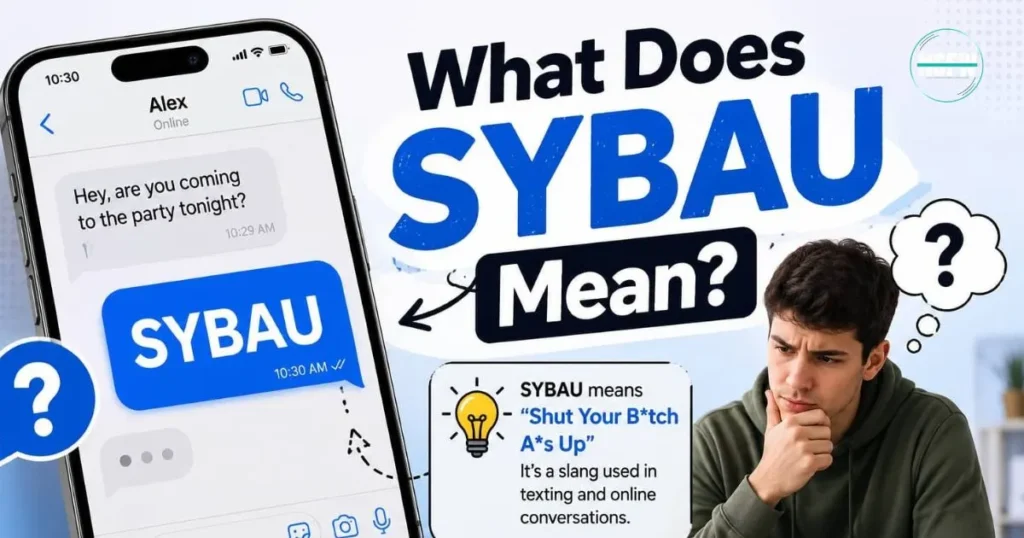
This guide explains what does SYBAU mean in text, where it came from, how people use it on platforms like TikTok, Instagram, Snapchat, and X (Twitter), and whether you should use it yourself. You’ll also find real examples, alternative phrases, and answers to common questions so you can recognize the term whenever you see it online.
What Does SYBAU Mean in Text?
SYBAU is an internet slang abbreviation that most commonly stands for:
“Shut your bitch ass up”
It is an offensive and insulting way of telling someone to stop talking. The phrase is intentionally shortened into initials so users can avoid typing the full expression while still making the meaning obvious to people familiar with internet slang.
Although the abbreviation hides the explicit words, the meaning remains the same. Because of its rude tone, it is usually used during online arguments, heated gaming sessions, or sarcastic exchanges.
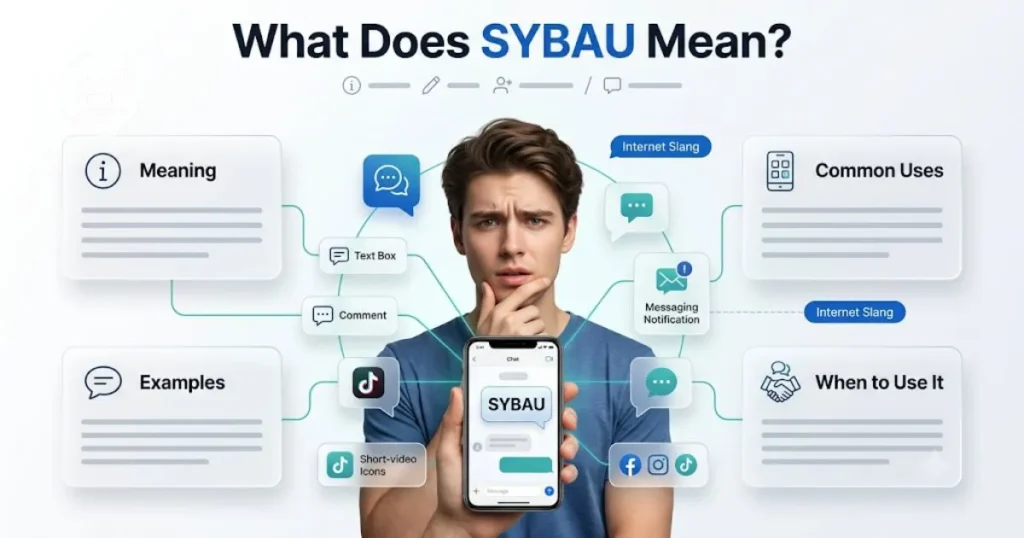
SYBAU Meaning at a Glance
| Term | Meaning |
| SYBAU | Shut Your B**** A** Up |
| Category | Internet Slang |
| Tone | Rude, Aggressive, Insulting |
| Common Platforms | TikTok, Instagram, Snapchat, X, Discord |
| Suitable for Formal Use | No |
Where Did SYBAU Come From?
Like many internet abbreviations, SYBAU became popular through social media communities where users prefer typing shortcuts instead of full phrases.
The slang spread through:
- TikTok comments
- Gaming chats
- Discord servers
- Instagram replies
- X (Twitter) conversations
- Meme culture
People often use abbreviations to save time or avoid content moderation filters while still expressing strong emotions.
What Does SYBAU Mean on TikTok?
On TikTok, SYBAU usually appears in comment sections during disagreements or playful roasting.
For example:
Person A: That movie was terrible.
Person B: SYBAU 😂
Sometimes the abbreviation is meant as a joke between friends. Other times, it is genuinely disrespectful. The context matters a lot.
What Does SYBAU Mean on Snapchat?
On Snapchat, SYBAU usually appears in private chats between friends.
Examples include:
- “Bro, SYBAU 😂”
- “SYBAU you’re so annoying.”
Among close friends, it may simply be teasing. Between strangers, however, it is generally considered offensive.
What Does SYBAU Mean on Instagram?
Instagram users commonly use SYBAU in:
- Reels comments
- Story replies
- Meme pages
- Argument threads
Because Instagram comments can become heated quickly, abbreviations like SYBAU often replace full insults.
What Does SYBAU Mean in Gaming?
Competitive games are full of internet slang.
Players may type:
“SYBAU and focus.”
or
“SYBAU you’re throwing.”
Gaming chats often become emotional, which explains why aggressive abbreviations are common.
Is SYBAU Offensive?
Yes.
SYBAU is generally considered offensive because it represents a profanity-based insult.
Using it with strangers can:
- Start arguments
- Sound disrespectful
- Hurt someone’s feelings
- Create a toxic conversation
Even if friends use it jokingly, it isn’t appropriate for school, work, or professional communication.
Should You Use SYBAU?
Most people should avoid using it unless they clearly understand the context.
Instead of replying with an insult, consider more respectful alternatives such as:
- Calm down.
- Let’s move on.
- I disagree.
- Please stop.
- Let’s change the subject.
These responses help avoid unnecessary conflict.
Examples of SYBAU in Text Messages
Example 1
Friend 1: You still haven’t finished your homework.
Friend 2: SYBAU 😂
Example 2
Player A: You lost us the match.
Player B: SYBAU.
Example 3
Comment:
“SYBAU nobody asked.”
This is clearly intended as an insult.
Why Do People Use Abbreviations Like SYBAU?
Internet users often shorten long phrases because they are:
- Faster to type
- Easier during gaming
- Popular in meme culture
- Less obvious than writing profanity
- Recognized by younger online communities
Many slang abbreviations become trends simply because they spread quickly on social media.
Similar Internet Slang You May See
If you’re learning online slang, you may also encounter these abbreviations:
| Slang | Meaning |
| STFU | Shut The F*** Up |
| IDK | I Don’t Know |
| IMO | In My Opinion |
| TBH | To Be Honest |
| BRB | Be Right Back |
| SMH | Shaking My Head |
| FWIW | For What It’s Worth |
| NGL | Not Gonna Lie |
| FR | For Real |
| IYKYK | If You Know, You Know |
When You Should Avoid Using SYBAU
Avoid using this abbreviation when:
- Talking to teachers
- Messaging coworkers
- Writing professional emails
- Speaking with customers
- Posting on business accounts
- Communicating with people you don’t know
Because it contains profanity, it can create a negative impression.
Is SYBAU Ever Used Positively?
Occasionally, yes.
Some close friends use it jokingly without intending to offend each other. Similar playful insults are common in friend groups that understand each other’s humor.
Even then, what feels funny to one person may sound offensive to another. If you’re unsure, it’s better not to use it.
Common Translations or Interpretations of SYBAU
Although SYBAU has one primary meaning, people often interpret it in slightly different ways depending on the situation. Here are the most common interpretations you’ll come across online:
- “Shut up” – The simplest and most common interpretation. People use it as a blunt way of telling someone to stop talking.
- “Be quiet” (in a rude way) – Unlike a polite request, SYBAU carries an aggressive or disrespectful tone and is usually meant as an insult.
- An internet clapback – On platforms like TikTok, X (Twitter), and Instagram, SYBAU is often used as a quick comeback during arguments, roasting, or sarcastic exchanges.
While the wording may vary, the overall meaning remains the same: it’s a profanity-based expression intended to dismiss what someone has said.
Common Uses of SYBAU
The meaning of SYBAU doesn’t change across platforms, but the way people use it depends on the conversation. Here are some common situations where you might see it online.
Gaming Chats
Competitive games can become heated, and players sometimes use SYBAU to tell another player to stop complaining, arguing, or giving unwanted advice.
Example:
Player 1: “You missed every shot.”
Player 2: “SYBAU and play.”
Social Media Arguments
On TikTok, Instagram, Reddit, and X (Twitter), SYBAU is often used as a short, aggressive reply during online debates or comment section arguments.
Example:
“Nobody asked. SYBAU.”
Memes and Jokes
Some friend groups and meme pages use SYBAU sarcastically rather than seriously. In these cases, it’s meant as playful teasing instead of a genuine insult, though the phrase can still offend people who don’t understand the context.
Example:
Friend: “I’m the best player here.”
Friend: “SYBAU 😂”
Understanding the context is important because the same abbreviation can come across as humorous between friends or offensive when directed at strangers.
Final Thoughts
If you’ve been wondering what does SYBAU mean in text, the answer is simple: it is an abbreviation for an offensive phrase telling someone to be quiet. While you’ll often see it on TikTok, Snapchat, Instagram, gaming chats, and other social platforms, its tone is usually rude or sarcastic rather than friendly.
Understanding internet slang helps you avoid misunderstandings and recognize the intent behind online conversations. Even if you never plan to use SYBAU yourself, knowing what it means makes it much easier to navigate social media and messaging apps with confidence.
learn more about wyll meaning
FAQs
Author

Ethan Carter is an SEO blogger specializing in internet slang, text abbreviations, and social media meanings. He creates clear, accurate, and reader-friendly content backed by thorough research. His goal is to help readers understand modern online language with reliable, easy-to-read guides.

One Comment