
Woke Meaning What It Really Means In Today’s World
Have you ever heard someone called “woke meaning” and wondered whether it was a compliment, an insult, or something in between? The word appears everywhere online, in conversations, news, and social media debates, but its meaning can change depending on who is using it and why.
Understanding the woke meaning can be confusing because the term has evolved over time. Some people use it to describe awareness of social issues, while others use it as criticism toward certain opinions or behaviors. Without context, it is easy to misunderstand what someone actually means when they say “woke.”
This article will explain what does woke mean, where the term came from, how its woke meaning changed, and how people use it today. Whether you are seeing it online or hearing it in everyday conversations, this guide will help you understand the term clearly.
Woke Meaning: What Does Woke Mean and How Is It Used?
The word woke has become one of the most discussed terms in modern language. You may see it in social media posts, political discussions, or casual conversations, but many people still wonder about its actual meaning.
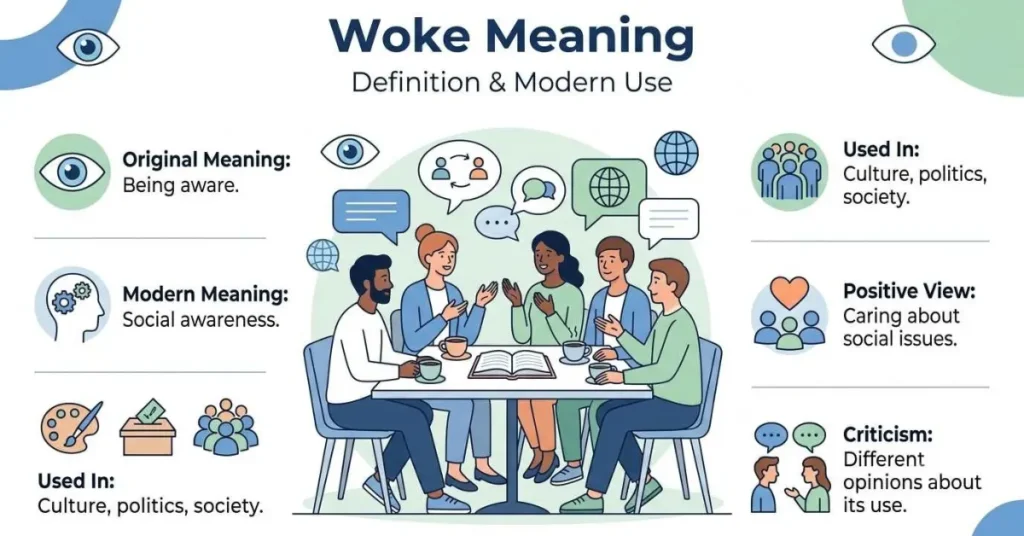
At its simplest, woke means being aware of social issues, especially problems related to inequality, discrimination, and injustice. The term originally described someone who was paying attention to unfair treatment in society and was willing to recognize problems that others might ignore.
Over time, the meaning of woke changed. Today, different groups use the word in different ways. Some people use it positively to describe awareness and concern for social issues. Others use it negatively to criticize ideas or actions they believe go too far.
The meaning often depends on the speaker, the situation, and the intention behind using the word.
Woke Definition: Where Did the Word Come From?
The modern use of “woke” has roots in African American communities, where the phrase “stay woke” was used as a reminder to remain alert and aware of racial injustice and social challenges.
The word comes from the past tense of “wake,” but its cultural meaning goes beyond simply being awake. It became a way of saying that someone was mentally aware of issues affecting people around them.
Over time, the term gained wider attention through social movements, music, and online conversations. As more people started using it, the meaning expanded beyond its original context.
What Does Woke Mean Today?
Today, the word “woke” can have different meanings depending on the conversation.
Someone might say:
- “She is woke because she cares about social equality.”
In this case, the word is being used positively.
However, someone else might say:
- “That company is too woke.”
Here, the person may be criticizing a brand, message, or viewpoint they disagree with.
This is why understanding the context matters. The same word can communicate support, criticism, or even humor depending on how it is used.
Why Is the Word Woke So Controversial?
The debate around woke comes from the fact that people have different opinions about social change and cultural issues.
For some, being woke represents awareness, empathy, and responsibility toward others. They see it as a positive quality that encourages people to notice unfair situations.
For others, the term has become associated with political or cultural ideas they disagree with. They may use “woke” as criticism when they feel certain topics are being emphasized too strongly.
Because of these different viewpoints, the word often carries emotional meaning beyond its basic definition.
Examples of How Woke Is Used
Here are a few examples:
Positive use:
“Being woke means understanding how certain groups experience society differently.”
Negative use:
“Some people think the movie was too woke because of its messaging.”
Neutral use:
“The meaning of woke has changed a lot over the years.”
These examples show why looking at the surrounding conversation is important before deciding what someone means.
Is Woke a Good or Bad Thing?
There is no single answer because it depends on personal beliefs and the context.
Some people view being woke as a sign of awareness and compassion. Others believe the term is sometimes used to describe excessive focus on social issues.
Rather than judging the word alone, it is more helpful to understand the intention behind it. Language changes over time, and words often develop new meanings as society changes.
Conclusion
The woke meaning has changed significantly over time, which is why the word can be confusing when you first encounter it. Originally connected to awareness of social issues and injustice, the term has developed different meanings depending on who uses it and in what situation.
Understanding what does woke mean is less about choosing whether the word is good or bad and more about recognizing the context behind it. Some people use it to describe awareness and empathy, while others use it as criticism of certain ideas or movements.
Like many evolving words, “woke” reflects changes in culture and conversation. Knowing its history and modern usage helps you understand discussions more clearly and avoid misunderstandings when you see the term online or hear it in real life.
FAQs
Author

Ethan Carter is an SEO blogger specializing in internet slang, text abbreviations, and social media meanings. He creates clear, accurate, and reader-friendly content backed by thorough research. His goal is to help readers understand modern online language with reliable, easy-to-read guides.

2 Comments