Karen Meaning What The Viral Slang Really Means Today
Have you ever seen someone called a “karen meaning” online and wondered what it actually means? The term appears everywhere in comments, videos, and everyday conversations, but its meaning is not always as simple as it seems. Some people use it as a joke, while others see it as a criticism of a certain type of behavior.
Understanding the karen meaning matters because slang words often carry more than just a definition. They reflect social attitudes, internet culture, and the way people describe common experiences. Without context, it can be easy to misunderstand whether someone is making a harmless joke or using the term negatively.
This guide will explain what is a karen, where the karen slang term came from, how people use it today, and what behaviors are usually associated with the phrase. Whether you saw it on social media or heard someone say it in conversation, you’ll have a clearer understanding by the end.
Karen Meaning: What Does the Term Karen Really Mean?
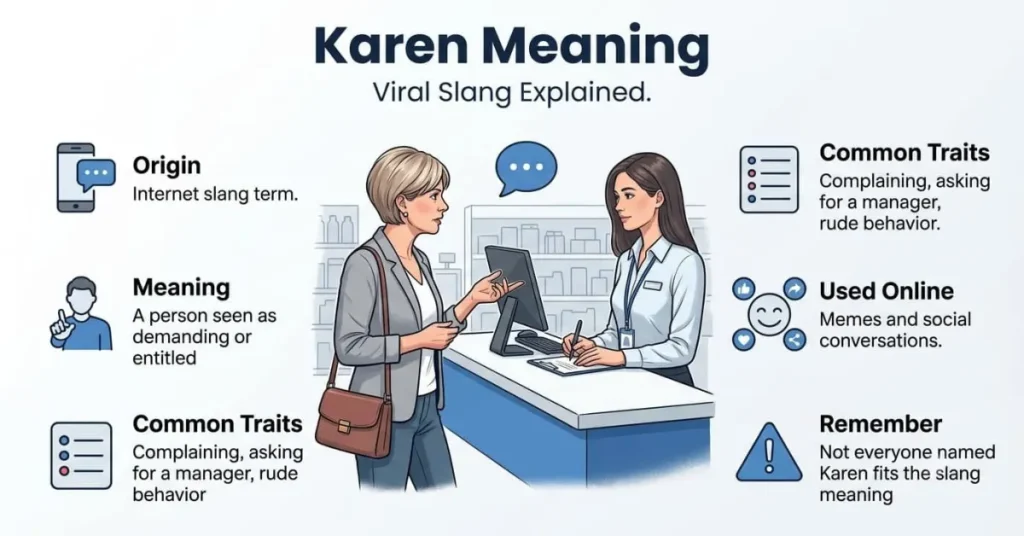
The karen meaning refers to a slang term used to describe a person, usually a woman, who is perceived as acting entitled, demanding, or overly controlling, especially when dealing with employees, businesses, or public situations.
The term became popular online as a way to describe someone who complains excessively, expects special treatment, or tries to use their perceived authority to get what they want. However, it is important to understand that “karen meaning” is about a pattern of behavior, not a specific person or all people with that name.
For example, someone might say:
“She asked to speak to the manager because the restaurant would not give her a special exception. People online called her a Karen.”
The label is usually connected to actions rather than appearance, background, or personality alone.
What Is a Karen?
So, what is a karen exactly?
A Karen is often described as someone who:
- Makes unreasonable complaints
- Demands to speak with a manager
- Acts as though rules should not apply to them
- Treats service workers disrespectfully
- Tries to control situations that do not involve them
The phrase is commonly used online, especially on platforms like TikTok, Reddit, and Twitter (X), where people share videos or stories about frustrating public interactions.
However, the term can also be used too broadly. Not every complaint or disagreement makes someone a Karen. A person can raise a genuine concern without behaving in an entitled or disrespectful way.
Karen Slang Meaning and Internet Culture
The karen slang term became a major part of internet culture because it gave people a short way to describe a recognizable behavior pattern.
Like many slang terms, its meaning developed through memes, social media discussions, and viral videos. People began using “Karen” as a nickname for situations involving unnecessary arguments, public confrontations, or someone trying to gain control over others.
The popularity of the term also sparked conversations about fairness. Some people believe it helps highlight rude or entitled behavior, while others feel it can sometimes be used unfairly as a simple insult.
Where Did the Term Karen Come From?
The exact origin of the slang term is difficult to pinpoint because it developed gradually through internet communities. Before becoming widely popular, the name “Karen” was used in jokes and memes to represent a stereotypical demanding customer.
Over time, the phrase became connected with the idea of someone who complains, acts privileged, or expects exceptions. Social media helped spread the term quickly, turning it into one of the most recognizable examples of modern internet slang.
Why Is the Term Karen Controversial?
Although “Karen” is often used humorously, it is not always viewed positively.
Supporters argue that the term gives people a simple way to talk about harmful behaviors, especially when someone abuses power or mistreats others.
Critics argue that the word can sometimes become a general insult and may unfairly judge people based only on limited information. A person asking a question, making a complaint, or wanting help does not automatically make them a Karen.
Like most slang, the meaning depends heavily on context and intention.
Examples of Karen Behavior
Here are some common examples where people might use the term:
Example 1:
A customer becomes angry because a store employee follows a normal policy and demands an exception.
Example 2:
Someone complains about a harmless situation and tries to involve a manager instead of having a reasonable conversation.
Example 3:
A person attempts to control what others are doing even when it does not affect them.
The important point is that the label usually focuses on attitude and behavior, not simply disagreement.
Is Karen an Insult?
Yes, “Karen” is generally considered a negative slang term because it is used to criticize certain behaviors. However, the seriousness depends on how it is used.
Among friends, it may be used jokingly. Online, it is often used as a criticism during debates or discussions. Understanding the situation around the word is the best way to know the intended meaning.
Conclusion
The karen meaning has changed from a simple name into a widely recognized internet slang term connected with certain attitudes and behaviors. While it is often used to describe someone who acts entitled, demanding, or disrespectful, the word should always be understood in context.
Knowing what is a karen and how karen slang is used can help you better understand online conversations, memes, and everyday discussions. Like many slang terms, it reflects how language evolves with culture and social media. The best approach is to focus on the behavior being described rather than using the label without understanding the situation behind it.
FAQs
Author

Ethan Carter is an SEO blogger specializing in internet slang, text abbreviations, and social media meanings. He creates clear, accurate, and reader-friendly content backed by thorough research. His goal is to help readers understand modern online language with reliable, easy-to-read guides.