
MK Meaning Text: 20+ Powerful & Shocking Meanings You Need to Know
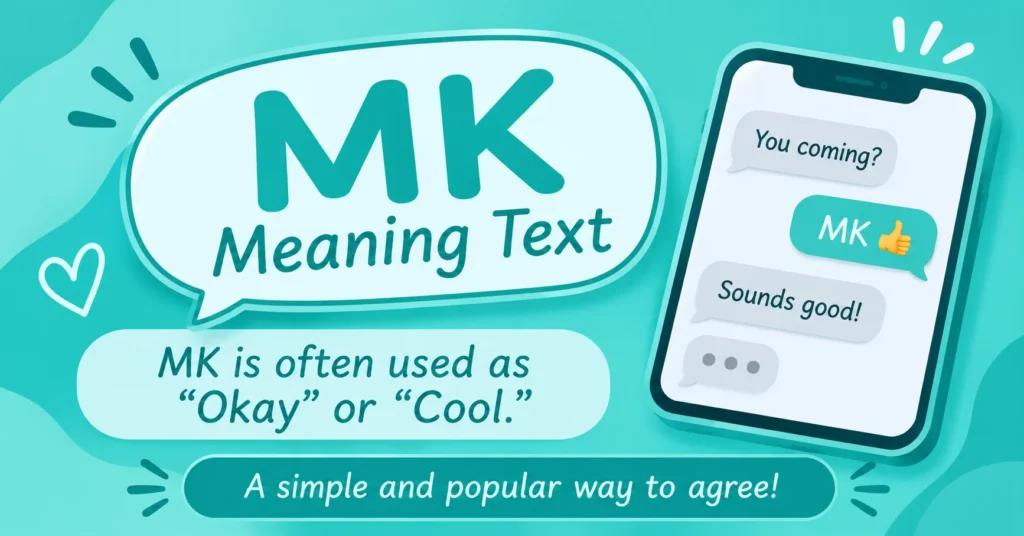
If you’ve received a message containing “MK” and wondered whether the sender agrees, feels annoyed, or simply wants to end the conversation, you’re not alone. The mk meaning text users most commonly encounter is “okay” or “mm-kay,” a casual way to acknowledge a message, confirm a plan, or express mild agreement.
In everyday digital communication, this short expression appears in SMS messages, Snapchat, Instagram DMs, TikTok comments, and WhatsApp chats. Having researched online slang and conversational language, the important distinction is that mk meaning text doesn’t automatically communicate anger or enthusiasm. Its meaning becomes clearer through punctuation, emojis, relationship context, and the conversation surrounding it.
Quick Meaning: What Does MK Meaning in Text?
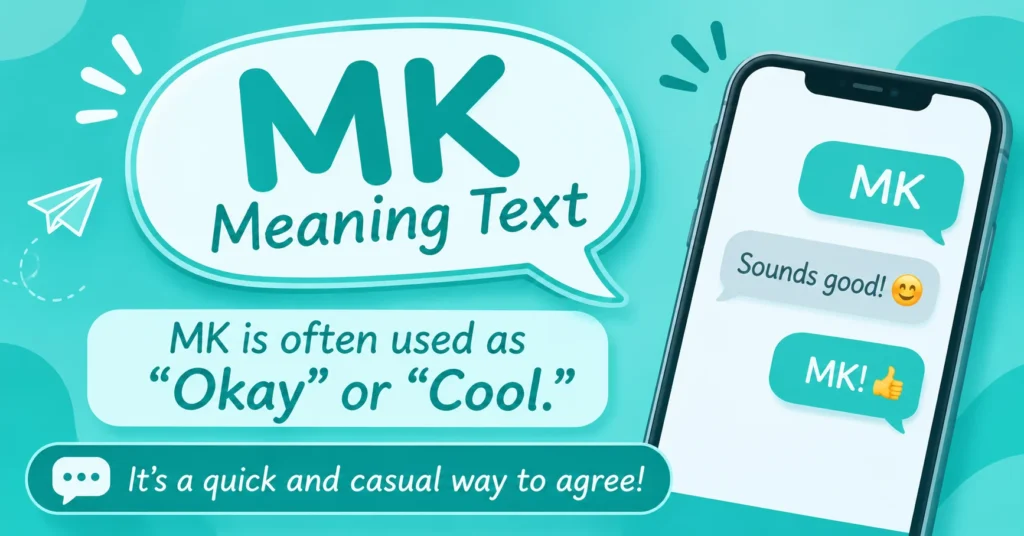
MK usually means “okay,” “mm-kay,” or “mmm, okay” in text messages. It is an informal texting abbreviation people use to acknowledge information, agree with a suggestion, confirm arrangements, or respond without typing a complete sentence.
For example, if someone texts, “I’ll pick you up at 6,” replying “MK” communicates that you’ve received the information and understand the arrangement. It is similar to saying “alright,” “sure,” or “got it.” The expression is short, convenient, and common in casual online conversations.
What Does MK Stand For?
Unlike abbreviations such as LOL (laughing out loud) or BRB (be right back), MK is not generally understood as two separate words represented by the letters M and K. It is a shortened written form associated with “mm-kay,” an informal pronunciation of okay.
The extra initial sound can make the expression feel slightly more hesitant or conversational than a straightforward “OK.” Depending on the speaker and situation, it may suggest agreement, mild uncertainty, or playful skepticism.
MK in Slang: Is There More to It?
Although the basic MK slang meaning is okay, the expression can communicate different attitudes. Someone might use it to confirm plans, acknowledge a request, accept an explanation, or avoid extending a conversation. The abbreviation itself doesn’t establish exactly how the sender feels.
Consider the difference between “MK, sounds good!” and “mk.” The first feels more welcoming because the additional words show cooperation. The second provides less emotional information and might seem distant if it follows an important or sensitive message.
The Key Attitudes Embedded in MK
There are several possible interpretations of this short reply. A friendly acknowledgment suggests agreement, while a reluctant response might mean someone accepts a situation without being particularly excited. In a disagreement, it can also sound sarcastic or dismissive.
The best approach is to examine the conversation rather than assume an emotional meaning. Someone who normally sends short messages may use MK without intending anything negative. A sudden change in communication style, however, may deserve attention.
Origin: Where Did MK Come From?
MK is associated with the spoken expression “mm-kay” or “m’kay,” an informal variation of okay. Dictionary.com recognizes m’kay as an informal form of OK, while its explanation of mmk describes the expression as a casual, half-humming way to communicate agreement or mild disapproval.
The expression also became recognizable through popular culture. Mr. Mackey, the school counselor in the animated television series South Park, is associated with the catchphrase “m’kay.” However, that association should not be confused with proof that the character invented the expression.
From M’Kay to Modern Texting
As SMS messaging and internet communication became everyday habits, people increasingly used shorter written responses. Forms such as OK, K, KK, MK, and MKAY fit this preference for quick communication. Their popularity reflects a broader habit of using abbreviated language in informal digital conversations.
Today, MK is recognizable in group chats, direct messages, and social media replies. Although its precise first use as a texting abbreviation is difficult to establish, its connection with the informal pronunciation of okay explains why people interpret it as an acknowledgment.
Usage in Different Contexts
The meaning of MK depends partly on the situation in which it appears. In ordinary texting, it usually communicates agreement or acknowledgment. In a gaming conversation, however, the capital letters might refer to a game. In a technical discussion, the abbreviation may have an entirely different meaning.
Understanding the surrounding words prevents unnecessary confusion. If someone responds to an invitation with “MK,” okay is a sensible interpretation. If a friend asks whether you want to play MK, the intended reference may be Mortal Kombat or another game-related subject.
Formal vs. Informal: Where MK Fits
MK is best suited to informal communication between friends, relatives, and people comfortable with texting shorthand. It can make everyday conversations quicker, especially when confirming a simple arrangement. However, it may appear too casual in professional emails, academic writing, or important workplace messages.
For example, responding “MK” to a friend arranging dinner is generally understandable. Responding that way to a manager confirming a deadline may seem abrupt. Using “Understood,” “Confirmed,” or “Okay, I’ll take care of it” communicates professionalism more clearly.
MK Meaning in Chat: WhatsApp, Instagram, TikTok, and More
The core MK meaning generally remains the same across messaging platforms: okay, alright, or understood. The platform doesn’t automatically change the definition. However, the surrounding conversation, relationship between users, and communication style can affect how the response is interpreted.
On WhatsApp, someone might use it to confirm a family arrangement. On Instagram, it could acknowledge a direct message. In TikTok comments, it might simply react to another person’s statement. These are different communication environments using the same informal expression.
WhatsApp Usage: Fast, To the Point
WhatsApp conversations often involve quick replies, group discussions, and everyday planning. MK can be useful when someone wants to acknowledge a message without writing a lengthy response. For example, “Dinner is ready at 7” followed by “MK, see you there” communicates a straightforward confirmation.
Instagram and TikTok: Trendy, Sometimes Sarcastic
Instagram DMs and TikTok comments allow people to communicate casually through short phrases, reactions, and emojis. MK can appear as a quick acknowledgment or playful response. A message such as “MK 😂” may feel lighthearted, while “MK.” after an argument could seem less welcoming.
Similar Terms & Alternatives to MK
Several texting expressions communicate a similar idea, but their tone can differ. Understanding these alternatives helps you choose the right reply for a particular situation. Although MK, OK, K, and KK can all indicate acknowledgment, they don’t always create the same impression.
Some people prefer a full “okay” because it feels clearer, while others use shorter expressions to keep conversations moving. The best choice depends on how familiar you are with the recipient and whether the conversation is casual or important.
| Expression | Meaning | Typical tone |
| MK | Okay / mm-kay | Casual, sometimes hesitant |
| OK | Okay | Neutral |
| K | Okay | Very brief, sometimes cold |
| KK | Okay | Friendly or casual |
| MKAY | Mm-kay | Playful or sarcastic |
| Aight | Alright | Relaxed and informal |
| Bet | Sure / agreed | Confident, casual |
| Gotcha | I understand | Friendly acknowledgment |
MK vs. K
MK and K can both communicate agreement, but they may feel different in a conversation. K is an extremely short response that some people interpret as cold or dismissive, particularly after a detailed message. MK has a slightly more conversational quality because it is associated with “mm-kay.”
For example, replying “K” to an invitation may feel abrupt, while “MK, sounds good” gives the other person more reassurance. Neither expression is automatically rude. Personal texting habits and surrounding messages matter more than the letters alone.
Differences From Similar Words in Chat Slang
Texting abbreviations often appear interchangeable, but small differences can change how a response feels. MK usually signals acknowledgment, whereas “mmm” can suggest someone is thinking, considering an idea, or expressing uncertainty. “OK” is generally more straightforward and easier to interpret.
These distinctions become important when conversations involve emotional subjects. A short response to a casual question may not need much explanation. However, when discussing plans, misunderstandings, or personal feelings, a clearer message can prevent unnecessary confusion.
| Message | Possible interpretation |
| MK | Okay, understood |
| MK! | Cheerful agreement |
| MK 😊 | Friendly acknowledgment |
| MK 😂 | Playful acceptance |
| MK. | Potentially brief or dismissive |
| Mmm, okay | Thoughtful or hesitant agreement |
Remember that punctuation and emojis are clues, not reliable proof of someone’s emotions. A period doesn’t automatically mean anger, and an emoji doesn’t always guarantee enthusiasm.
How to Respond to MK When Someone Uses It With You
When someone sends MK, you usually don’t need to overthink the response. If the conversation involves making plans or confirming information, a simple acknowledgment is enough. You can reply with “Sounds good,” “Perfect,” “Okay,” or another expression that naturally continues the discussion.
If the message arrives after a disagreement or an emotional conversation, consider whether the other person may need more time. Rather than immediately assuming they’re angry, you can ask a respectful follow-up question if the situation calls for one.
Recommended Replies and Tactics
Your response should match the situation. For ordinary arrangements, keep it simple. For a potentially tense conversation, use language that encourages clarity instead of escalating a misunderstanding. This approach makes digital communication more considerate and avoids reading too much into a two-letter reply.
Here are some natural responses:
- “Sounds good, see you then!”
- “Perfect, thanks.”
- “Got it!”
- “Okay, talk later.”
- “Everything alright?”
- “No worries, take your time.”
If someone repeatedly gives short responses during a serious discussion, focus on the broader communication pattern instead of treating one MK as a definite sign of disinterest.
Real-Life Conversation Examples Using MK
Examples make the meaning easier to understand because the same abbreviation can appear in different situations. Whether someone is arranging a meeting, confirming an invitation, or responding to a joke, MK usually communicates a quick acknowledgment. The emotional impression comes from the wider exchange.
Below are original sample conversations showing how the expression can work in everyday American texting. They are illustrative examples, not claims about the frequency of particular usage patterns.
Everyday Planning
Person A: “I’ll meet you outside the restaurant at 7.”
Person B: “MK, see you there!”
Meaning: Person B understands the arrangement and agrees to the meeting.
Mild Disagreement
Person A: “I think we should watch a comedy tonight.”
Person B: “MK, if that’s what everyone wants.”
Meaning: The reply suggests acceptance, although the wording may indicate that Person B has another preference.
After a Joke
Person A: “You’re officially the worst singer in our friend group 😂”
Person B: “MK 😂”
Meaning: The response is likely playful, particularly because the laughing emoji keeps the conversation light.
Group Chat Chaos
Person A: “Everyone, we’re meeting at the park on Saturday.”
Person B: “MK.”
Person C: “Sounds good!”
Meaning: Both people acknowledge the plan, but they use different texting styles.
After an Argument
Person A: “I’m sorry I misunderstood what you meant earlier.”
Person B: “MK.”
Meaning: Person B acknowledges the apology, but the short reply doesn’t establish whether they’ve completely forgiven the other person.
MK on Different Social Media Platforms
MK can appear across several social and messaging services because users frequently carry their everyday texting habits into online communities. Its basic interpretation remains connected to okay, but the context changes depending on the conversation and platform.
A quick reply in a private message may feel different from a public comment. Understanding the surrounding discussion is therefore more useful than assuming every occurrence carries the same emotional message.
Snapchat
Snapchat conversations often involve short direct messages, quick reactions, and informal communication. Someone might reply “MK” after receiving an invitation or confirming when to meet. It usually functions as a simple acknowledgment rather than a separate Snapchat-specific definition.
On Facebook, MK may appear in Messenger conversations, group discussions, or comment threads. Someone could use it to confirm an event invitation or acknowledge a friend’s message. Its meaning is generally the same as in ordinary text messages.
Discord and Gaming Platforms
On Discord, the context becomes especially important because MK can refer to gaming subjects rather than texting slang. For example, a conversation about Mortal Kombat may use MK as the game’s abbreviation. In an ordinary group chat, however, it can still mean okay.
Twitter/X
People may use MK in short replies, discussions, or informal exchanges on X. It can indicate agreement, acknowledgment, or mild sarcasm depending on the surrounding post. The same principle applies: read the complete conversation before interpreting the sender’s attitude.
Is It Positive or Negative?
MK is not inherently positive or negative. Its basic meaning is usually an acknowledgment, but the tone can range from friendly acceptance to reluctant agreement. The words around it, punctuation, emojis, and relationship between the people communicating provide useful clues.
For instance, “MK, absolutely!” sounds more enthusiastic than a standalone “mk.” after a disagreement. However, even a short reply shouldn’t be treated as definite proof of anger, boredom, romantic interest, or disapproval. Context is more reliable than speculation.
When NOT to Use It
MK works best in casual digital conversations where both people understand informal shorthand. It is generally better to avoid it in formal emails, job applications, academic assignments, and professional messages requiring clear confirmation.
For example, instead of replying “MK” to a supervisor assigning an important task, write “Understood. I’ll complete it by Friday.” The fuller response communicates responsibility and removes ambiguity. In sensitive conversations, using complete sentences also helps show that you’re paying attention.
Conclusion
Understanding the mk meaning text users encounter is relatively simple: it usually means “okay,” “mm-kay,” or “alright.” People use it in everyday texting, group chats, Snapchat, Instagram, WhatsApp, and TikTok to acknowledge messages or confirm arrangements.
However, the tone is not always identical. A friendly “MK!” can express easy agreement, while a short “mk.” may seem distant in certain situations. Neither version proves what someone is feeling. Consider the conversation, punctuation, and relationship before drawing conclusions.
When in doubt, a clear and friendly response is better than making assumptions. Understanding small expressions like MK can make online conversations easier, more natural, and less confusing.
FAQs
Author

Ethan Carter is an SEO blogger specializing in internet slang, text abbreviations, and social media meanings. He creates clear, accurate, and reader-friendly content backed by thorough research. His goal is to help readers understand modern online language with reliable, easy-to-read guides.