

Goon Meaning: Slang, Texting & What It Really Means
“Goon” usually means a silly, foolish, or clumsy person in casual U.S. slang, but it can also mean a hired thug or enforcer, especially in crime, sports, or older usage. If you have seen the word in texting, memes, TikTok, gaming, or a movie, the surrounding context matters. After researching modern slang, American English usage, dictionary definitions, and real-world examples, I found that the confusion comes from one word carrying several very different meanings. This guide makes those meanings easier to recognize so you can understand whether “goon meaning” is playful teasing, a serious description, sports terminology, or a niche internet reference.
What Does Goon Mean
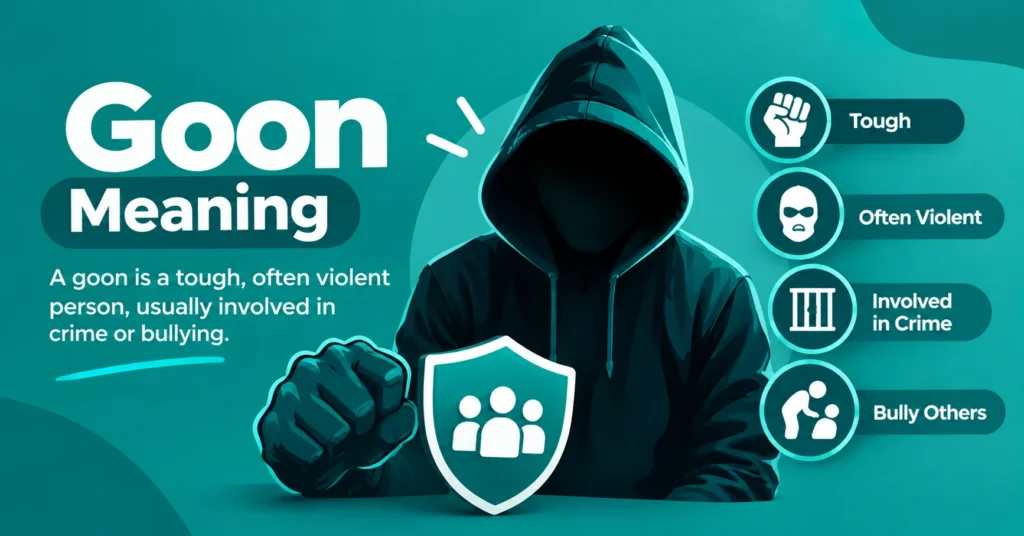
In everyday American conversation, “goon meaning” often describes someone who is acting silly, awkward, foolish, or unusually goofy. A friend might say, “You’re such a goon,” after you make an embarrassing mistake. In that setting, the word usually feels more like playful teasing than a serious insult. The tone, relationship, and situation determine how strongly it lands.
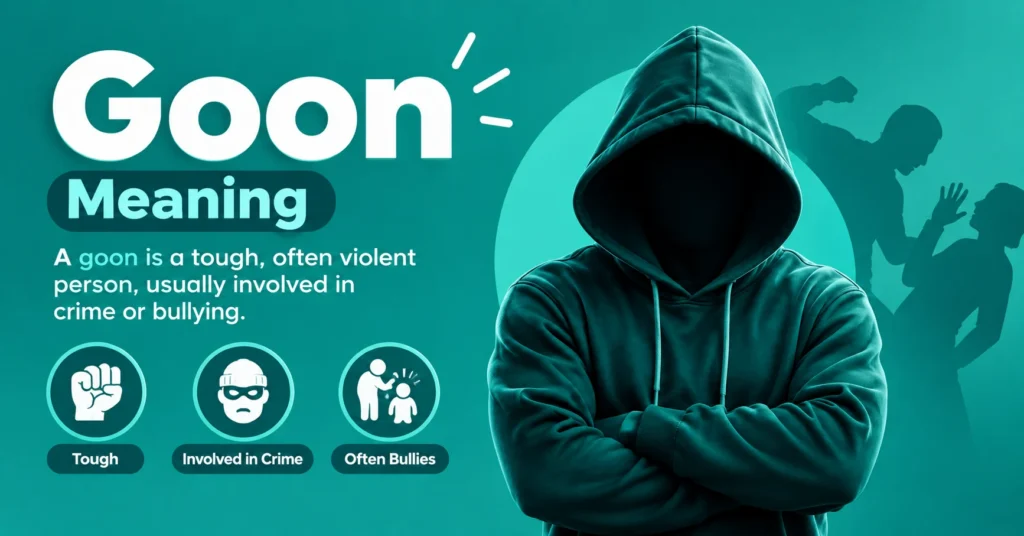
The traditional meaning is tougher. A goon can be a hired thug, enforcer, or person paid to threaten or hurt others. This sense appears in crime stories, discussions of organized violence, labor disputes, and descriptions of hired muscle. Established dictionaries also record the foolish-person meaning, showing why the word can feel confusing when different generations or communities use it differently.
Goon Slang Meaning Explained
Modern slang has softened the word considerably in many casual conversations. When someone calls a friend a goon after they spill coffee, forget their keys, or make an awkward joke, the intended meaning is usually close to “goofball,” “fool,” or “silly person.” It can even sound affectionate when used between people who already have a friendly relationship.
The tougher meaning has not disappeared, though. In a sentence such as “The boss sent his goons,” the word suggests hired muscle or intimidating enforcers rather than goofy friends. Sports language can add another layer: hockey has historically used “goon” for an aggressive player associated with physical enforcement. Modern internet culture adds still more niche uses, so context remains essential.
How Goon Slang Meaning Differs From the Original Definition
The easiest way to understand the difference is to examine the setting. “You absolute goon” after a friend makes a silly mistake is lighthearted. “The gang brought several goons” is serious and implies intimidation. The same spelling therefore carries opposite emotional signals. In online spaces, newer slang may also use related forms such as “gooning,” which should not automatically be treated as the noun’s ordinary meaning.
Goon Meaning in Slang on Social Media and Texting
Texting is where many people encounter the modern, playful version of the word. A message such as “Bro, you’re a goon 😂” normally describes someone behaving foolishly, clumsily, or hilariously. Emojis, laughter, friendship, and the surrounding conversation can make the intended tone obvious. Without those signals, however, the word can be easier to misunderstand.
On social platforms, “goon meaning” can appear in memes, captions, comments, gaming conversations, and group chats. Some communities use it as a joking label for chaotic behavior, while others retain the older tough-person meaning. TikTok, Instagram, Snapchat, and X can all contain different subcultures, so there is no single platform-wide definition. Always read the sentence around the word before deciding what the speaker means.
Goon Meaning in Text Messages
In text messages, the most common casual interpretation is usually a silly or goofy person. For example, “You locked your keys in the car again? You’re such a goon” is teasing rather than a declaration that the person is dangerous. The same word can become harsher during an argument, particularly when it is aimed at a stranger.
A useful clue is what happens immediately before the word. If someone has made a harmless mistake, “goon meaning” probably means goofy or clumsy. If the conversation mentions violence, gangs, intimidation, or hired muscle, the older meaning becomes more likely. In close friendships, it can even function almost like an affectionate nickname.
Goon Meaning in Online Conversations and Memes
Meme culture gives slang words room to become exaggerated. Online, “goon,” “goon squad,” and related expressions can be used humorously to describe a chaotic group or someone behaving dramatically. These uses are often deliberately over-the-top rather than precise dictionary definitions. Internet communities can also develop temporary meanings that may not spread beyond that community.
There is another important distinction: “goon,” “gooner,” and “gooning” are not interchangeable in every context. Some adult internet communities use “gooning” for prolonged sexual stimulation or an associated trance-like state. That is a separate, niche usage and is not what dictionaries mean when they define the ordinary noun “goon” as a foolish person or hired thug.
Goon Word Meaning and Etymology: Where Did It Come From
The word has a surprisingly long and unusual history. Dictionary.com dates the American noun to the early 1920s and connects it with dialectal “gooney,” a word associated with a simpleton. Collins similarly traces the word through “gooney” or “gony” and notes the influence of Alice the Goon, the comic-strip character created by E. C. Segar.
That history helps explain why the modern meanings seem so far apart. The word could describe foolishness while also developing a tougher association with intimidating hired muscle. The Popeye connection helped give “goon” a recognizable cultural image, while labor disputes, crime stories, sports, and later internet communities continued reshaping its associations.
The Comic Strip Connection
Alice the Goon appeared in E. C. Segar’s Popeye comic-strip world during the 1930s. The character was physically imposing and frightening-looking, which made the existing word “goon” especially memorable for audiences. The character did not single-handedly create every meaning of the word, but the association helped reinforce the image of a large, intimidating, not-particularly-bright figure.
The comic connection is useful because it sits between the older foolish-person meaning and the later popular image of hired muscle. Over time, movies, television, comics, sports commentary, and crime stories continued using “goon” for intimidating background characters. Modern slang then pushed the word back toward humor and silliness in many everyday conversations.
Goon Meaning Timeline
The history can be understood as a series of overlapping stages. Earlier forms were connected with foolishness or awkwardness; the American noun became established in the early twentieth century; popular culture strengthened the intimidating image; and later sports and internet communities developed their own meanings. These meanings did not replace one another completely. Older senses remain alive today.
That is why an American reader can encounter “goon” in a dictionary, a hockey article, a gangster movie, a group chat, or a meme and see apparently different definitions. They are not necessarily contradictions. English slang often keeps older meanings alive while adding new ones, and “goon” is a particularly clear example of that process.
Goon Pronunciation
“Goon” is pronounced like “goon meaning,” with the long “oo” sound heard in words such as “moon,” “spoon,” and “room.” It is a single-syllable word, so pronunciation is generally straightforward for American English speakers. The pronunciation does not change dramatically between the major English varieties, even though the associated meanings can vary by region.
If you are learning English, the pronunciation is probably the easy part; context is the harder part. Hearing “hired goons,” “hockey goon,” and “you’re such a goon” requires different interpretation even though the spoken word sounds exactly the same. Pay attention to the surrounding nouns, verbs, and conversational tone.
Goon Example Sentence: Seeing the Word in Action
Here are examples that show the main senses without treating them as interchangeable:
| Context | Example | Likely meaning |
| Friends | “You forgot your wallet again, you goon.” | Silly or clumsy person |
| Comedy | “That was a total goon move.” | Foolish behavior |
| Crime | “The boss sent two goons.” | Hired enforcers |
| Hockey | “The team had a goon protecting its stars.” | Aggressive enforcer |
| Meme | “The whole group is acting like goons.” | Playful, chaotic people |
| Casual text | “Bro, you’re such a goon 😂” | Friendly teasing |
| Formal setting | “He was called a goon.” | Potentially insulting or inappropriate |
A simple real-life test is to replace “goon” with “goofball.” If the sentence still makes sense and the conversation is friendly, the playful meaning is probably intended. If replacing it with “enforcer” or “hired muscle” makes more sense, the serious meaning is probably being used.
Goon vs Thug: What’s the Real Difference
“Goon” and “thug” overlap when both refer to an intimidating or violent person, but they are not perfect synonyms. “Thug” generally carries a more consistently negative association with violence or criminal behavior. “Goon,” on the other hand, can describe a silly friend, a sports enforcer, or a hired intimidator depending on context.
That difference is especially important in casual American English. Calling your best friend a goon after a ridiculous mistake can be affectionate. Calling someone a thug generally does not have the same playful flexibility. In a crime-related sentence, however, the two words may overlap considerably, especially when “goon” means hired muscle.
Is Goon a Bad Word
“Goon” is not generally a profanity or a swear word. In casual conversation, it can be a mild insult or playful tease, especially when directed toward a friend. The phrase “you’re such a goon” may be completely harmless between people who know each other well. The same phrase can sound disrespectful when directed at a stranger.
Context also determines whether the word sounds threatening. In a discussion about crime, violence, gangs, or intimidation, “goon” can carry a much darker meaning. In sports, it may function as descriptive terminology. In memes and texting, it may be deliberately silly. Because of these differences, there is no single emotional level attached to the word.
In professional communication, it is safer to avoid calling someone a goon. Workplace messages lack some of the facial expressions, shared jokes, and relationship cues that make teasing obvious. If you mean “clumsy,” “unprofessional,” “enforcer,” or “aggressive player,” using the precise word can prevent misunderstanding.
Goon Meaning Explained Simply
In the simplest terms, goon usually means a silly, foolish, or clumsy person when used casually, but it can also mean a hired thug or enforcer in a more serious context. Hockey has a related sports meaning, and internet communities have created additional niche uses. The surrounding conversation tells you which definition is intended.
If you see “goon” in a text from a friend after they make a mistake, it is probably playful. If you see “hired goons” in a crime story, it means enforcers. If you hear “hockey goon,” think of the sport-specific role. And if you encounter “gooning” or “gooner” online, check the context carefully because those related forms can refer to a separate adult internet meaning.
The word is a good example of how slang evolves. A term can begin with one association, gain another through popular culture, develop a specialized meaning in sports, and later become playful internet language. Understanding the context is therefore more useful than memorizing a single definition.
For everyday U.S. English, the safest mental shortcut is: goon = goofy person when the tone is playful; goon = enforcer when the context is serious. When the word appears online, look at the platform, surrounding words, relationship between speakers, and any clues about the community using it. That small amount of context usually reveals the intended meaning quickly.
Conclusion
Understanding the goon meaning depends largely on the context, tone, and platform where the word appears. Traditionally, “goon” has described a tough, intimidating, or aggressive person, while modern slang may use it more casually for someone acting silly, chaotic, or overly devoted to something. Since slang continues to evolve, the intended meaning can vary between conversations and online communities.
When you see “goon” used online, look at the surrounding words and overall tone before deciding what it means. Knowing these differences can make internet conversations easier to understand and help you avoid confusion when familiar words develop new slang meanings.
FAQs
Author

Ethan Carter is an SEO blogger specializing in internet slang, text abbreviations, and social media meanings. He creates clear, accurate, and reader-friendly content backed by thorough research. His goal is to help readers understand modern online language with reliable, easy-to-read guides.
2 Comments