

Citrine Meaning: Symbolism, Benefits & Birthstone Guide
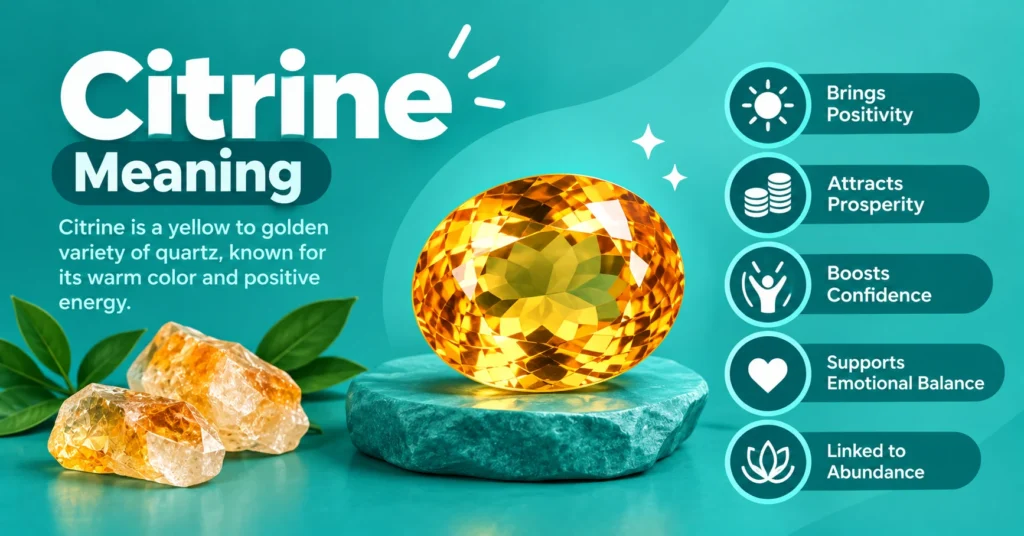
Citrine meaning is traditionally connected with abundance, confidence, optimism, creativity, motivation, and personal power. If you’ve ever held a warm golden crystal and wondered why it feels so uplifting, you’re not alone. After years of researching gemstone symbolism and mineral information, I’ve found that citrine is especially interesting because its story blends quartz, jewelry, birthstone tradition, crystal symbolism, prosperity, and personal growth.
The practical side matters, too. Citrine is a yellow-to-orange variety of quartz, while its spiritual associations belong to cultural and crystal-healing traditions rather than established medical science. This guide separates gemological facts from folklore, explains the merchant’s stone, explores the Solar Plexus Chakra, and shows what to know before buying natural or heat-treated citrine.
What Is Citrine?
Citrine meaning is a yellow, golden, or orange variety of quartz, with its characteristic color associated with trace iron in the crystal structure. It belongs to the same mineral family as amethyst and smoky quartz and has a Mohs hardness of 7, making it a practical choice for many jewelry designs. Its color can range from pale lemon to deeper golden and amber tones.
One detail surprises many first-time buyers: natural citrine is relatively uncommon, while much commercial material has been heat-treated from amethyst or smoky quartz. That does not automatically make treated material fake; it remains quartz. The important issue is honest disclosure, especially when a seller describes a stone as natural, untreated, or rare.
Citrine Meaning
The core citrine meaning revolves around light, abundance, confidence, optimism, creativity, and forward movement. Its golden color naturally lends itself to symbolism involving sunlight and warmth, while the traditional nickname “Merchant’s Stone” connects it with prosperity and commercial success. In modern crystal practice, abundance can also mean opportunity, energy, ideas, courage, and personal growth.
Rather than viewing citrine meaning as a promise of instant luck, many people use its symbolism as a reminder to act on meaningful goals. Imagine keeping a small golden stone beside a planner: the crystal does not complete the plan, but it can represent the mindset behind it confidence, consistency, openness to opportunity, and the willingness to take the next practical step.
Citrine Spiritual Meaning
The spiritual citrine meaning is commonly associated with self-trust, clarity, optimism, creativity, confidence, and purposeful action. Its sunny appearance has made it a natural symbol of warmth and renewal. Within modern crystal traditions, people may use citrine during meditation or intention-setting when they want a physical reminder of hope, personal agency, or a fresh beginning.
These spiritual associations should be understood as tradition and personal symbolism rather than scientific effects. A useful way to approach the stone is to let it support reflection rather than replace action. Holding citrine while asking, “What do I want to build, and what can I do today?” keeps the symbolism connected to real-world behavior.
Citrine Metaphysical Properties
Traditional crystal practices associate citrine meaning with energy, motivation, manifestation, confidence, personal power, creativity, and prosperity awareness. It is often described as an active or sunny stone because its golden appearance fits themes of movement and vitality. Practitioners may use it during meditation, journaling, visualization, or intention-setting.
There is an important distinction between metaphysical tradition and scientific evidence. Claims that citrine can heal disease, regulate the body, or guarantee financial success are not established medical facts. Its metaphysical value is better understood as symbolic: a meaningful object can help someone focus on a goal, create a ritual, or remember an intention without claiming that quartz itself produces a measurable outcome.
Citrine Benefits
The commonly described citrine benefits are primarily symbolic, emotional, practical, and aesthetic, rather than medical. People may appreciate its cheerful color, use it as a focus object, wear it as jewelry, or keep it nearby during reflection. Its association with abundance can also make it a meaningful gift for someone beginning a new job, business, creative project, or personal chapter.
For everyday life, the most useful interpretation is simple: let the stone represent the quality you want to practice. Confidence might mean speaking up in a meeting. Creativity might mean finishing an unfinished idea. Abundance might mean noticing resources you already have. The crystal becomes a reminder, while the actual result still comes from decisions and consistent effort.
Citrine and the Solar Plexus Chakra
Citrine is strongly associated in modern crystal traditions with the Solar Plexus Chakra, also called Manipura. This energy center is traditionally connected with confidence, willpower, identity, self-esteem, and purposeful action. Citrine’s golden-yellow appearance reinforces that symbolic relationship, which is why it frequently appears in discussions about personal power and motivation.
People who follow chakra practices may hold citrine during meditation, place it near a journal, or wear it as a personal reminder of self-trust. This is a spiritual framework rather than a medical diagnosis or treatment system. For many users, the value lies in creating a quiet moment to reflect on boundaries, confidence, choices, and goals.
Citrine in Love, Career, and Abundance
Citrine symbolism changes slightly depending on the part of life where someone applies it. In relationships, it can represent openness, self-respect, optimism, and honest communication. For career goals, it can symbolize initiative, creativity, visibility, and the courage to act. In abundance practices, it commonly represents prosperity, opportunity, responsible growth, and purposeful effort.
A helpful interpretation is to connect the symbolism with a specific behavior. If you’re using citrine for career motivation, pair it with a concrete task such as sending the proposal or completing the application. If you’re thinking about abundance, pair the intention with budgeting or skill-building. This keeps spiritual symbolism grounded instead of turning the gemstone into a promise.
Love and relationships
In relationships, citrine symbolizes openness, confidence, self-respect, and communication. Rather than treating the stone as a way to attract a particular person, many people use its symbolism as a reminder to remain honest about their needs and boundaries. Its warm color can also make citrine jewelry a thoughtful gift representing optimism and affection.
Career and creativity
For career and creative goals, citrine can symbolize initiative, visibility, motivation, and the courage to share an idea. Keeping a small piece near a workspace can create a visual cue to prioritize the next step. The practical power comes from the habit attached to it: planning, creating, following up, learning, or finishing.
Money and prosperity
Citrine meaning has one of the strongest prosperity associations among popular crystal traditions and is often called the Merchant’s Stone. Still, a gemstone cannot guarantee financial results. A healthier interpretation is to pair abundance symbolism with practical actions such as saving, budgeting, developing valuable skills, negotiating, or building a sustainable business.
How to Use Citrine
Citrine can be worn as jewelry, carried as a small stone, displayed in a home or workspace, or incorporated into meditation and journaling. A simple practice is to choose one intention, hold the stone for a moment, and identify one action that supports that intention. The combination makes the ritual more meaningful than expecting the crystal to create instant change.
Placement can also be personal. A citrine pendant can function as a daily reminder, while a small specimen on a desk can connect the stone with work or creativity. During meditation, you might hold it while focusing on confidence or purposeful action. These practices are symbolic, so choose whatever feels comfortable and meaningful rather than following rigid rules.
Natural Citrine vs. Heat-Treated Citrine
Natural citrine is relatively rare, while much commercial citrine is produced by heat-treating amethyst or smoky quartz. Natural material is often associated with softer yellow, champagne, honey, or pale golden tones, while treated stones can show stronger orange or reddish-brown coloration. However, color alone is not a reliable enough test for identifying treatment with certainty.
This distinction matters most when you’re buying a stone marketed as natural or untreated. Heat-treated quartz is not automatically worthless or fake; treatment is common in the gemstone trade. The important point is accurate disclosure. If natural origin matters to you, ask the seller directly and, for valuable purchases, consider documentation or an assessment from a qualified gemologist.
Citrine as November’s Birthstone
Citrine is one of the November birthstones, alongside topaz. GIA describes citrine as a transparent yellow to brownish-orange variety of quartz and notes that it has been used in jewelry for thousands of years. GIA also explains that most citrine in today’s marketplace results from heat treatment of amethyst, making treatment awareness especially relevant to buyers.
For someone born in November, citrine has a particularly straightforward personal meaning: it connects a beautiful golden gemstone with a birth month. It can be used in rings, pendants, bracelets, or personalized gifts. Citrine is also associated with the 13th wedding anniversary, giving it another traditional occasion for meaningful jewelry.
Citrine vs Yellow Topaz What’s the Difference?
Citrine and yellow topaz can look remarkably similar because both occur in yellow, golden, and warm amber shades, but they are different minerals. Citrine is quartz with a Mohs hardness of 7, while topaz is harder at 8. Their traditional symbolic associations also differ, with citrine commonly linked to joy, abundance, confidence, and action.
For jewelry buyers, the distinction can matter because hardness, rarity, treatment, price, and appearance vary. If you’re choosing a November birthstone, both are legitimate options. Citrine offers its characteristic golden quartz appearance and affordability, while topaz provides greater hardness. The best choice depends on the stone’s documented characteristics, design, budget, and the meaning you personally want the gift to carry.
Conclusion
Citrine meaning is often connected with positivity, confidence, abundance, warmth, and personal growth. Its bright golden color has made it a popular crystal for people who enjoy using stones as reminders of optimism and motivation. While many spiritual traditions associate citrine with energy, success, and emotional balance, these beliefs are personal and are not scientifically proven.
What makes citrine meaningful can ultimately depend on your own intentions and experiences. Whether you keep it as jewelry, home décor, or a personal symbol, citrine can serve as a simple reminder to stay hopeful and focused. Choose the meaning that genuinely resonates with you and let it add a little brightness to your everyday life.
FAQs
Author

Ethan Carter is an SEO blogger specializing in internet slang, text abbreviations, and social media meanings. He creates clear, accurate, and reader-friendly content backed by thorough research. His goal is to help readers understand modern online language with reliable, easy-to-read guides.






2 Comments