Death Moth Tattoo Meaning: 7+ Powerful Symbols Explained
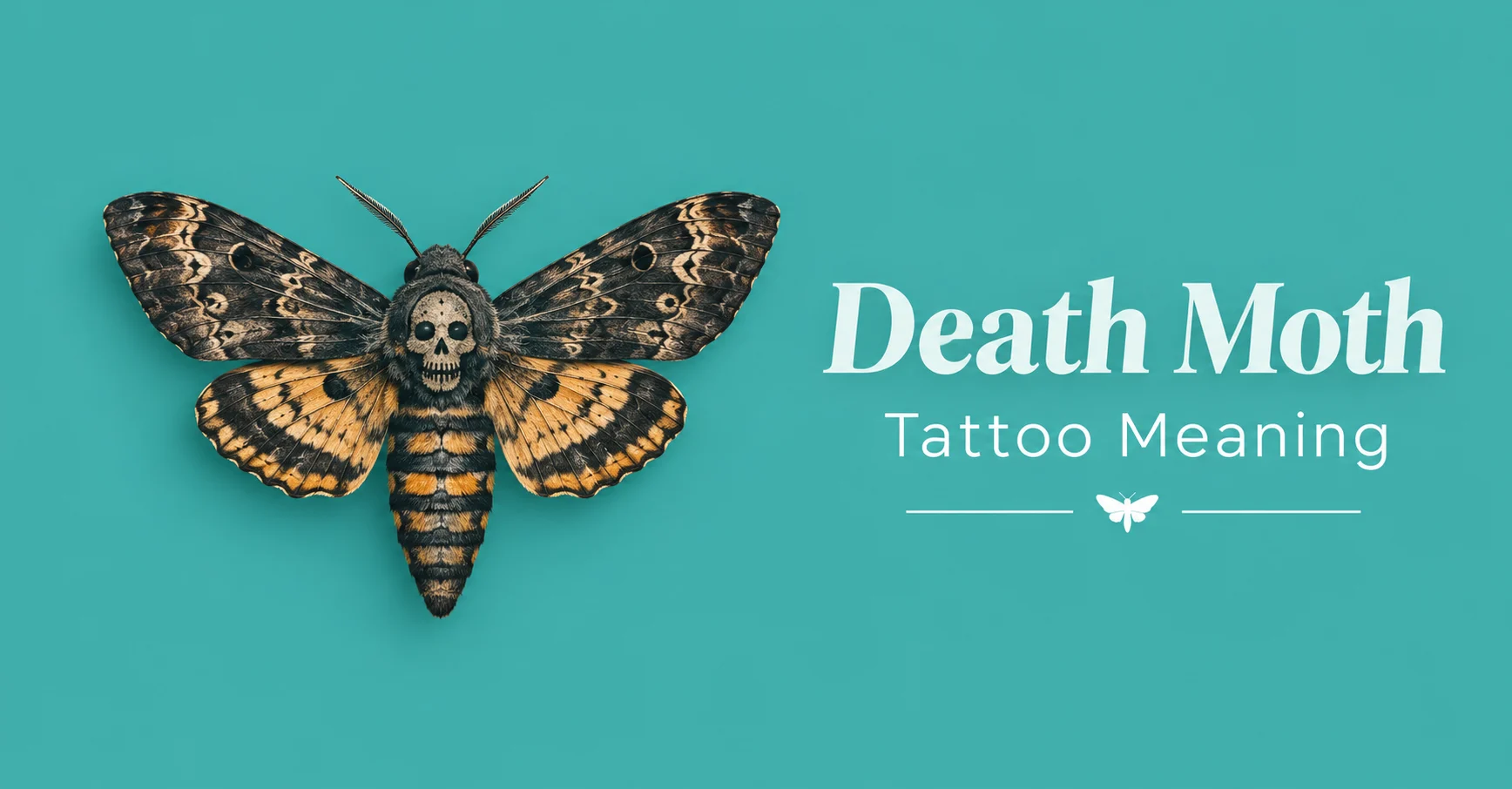
A death moth tattoo meaning is most commonly associated with mortality, transformation, rebirth, and accepting life’s impermanence. Its skull-like marking and delicate wings create a striking symbol that can represent both the end of one chapter and the beginning of another.
For someone considering this tattoo, the appeal often goes beyond its dark appearance. The death’s-head hawkmoth, gothic artwork, memento mori symbolism, and personal growth all offer different ways to interpret the design. Understanding these associations can help you choose artwork that reflects your experiences, whether you connect with resilience, mystery, remembrance, or the courage to embrace change.
What Does a Death Moth Tattoo Meaning?
The death moth tattoo meaning usually centers on mortality, transformation, resilience, and the relationship between life and death. Its skull-like marking gives it a darker appearance than many other insect tattoos, while its wings and natural life cycle introduce themes of change, renewal, and the beauty of impermanent things.
For example, someone who has overcome a difficult period might choose a death moth to represent the person they became afterward. Another person may appreciate its gothic aesthetic or use it as a reminder to live intentionally. There is no single interpretation that applies to everyone who wears this tattoo.
The most common meanings include:
- Mortality: Recognizing that life is temporary.
- Transformation: Leaving an old chapter behind.
- Rebirth: Beginning again after a major change.
- Resilience: Continuing despite hardship.
- Mystery: Embracing the unknown and the darker side of life.
- Individuality: Expressing a personal connection to alternative art.
These interpretations overlap, but the wearer’s own story ultimately determines which meaning matters most.

The Origin of the Death Moth Symbol
The design is commonly inspired by the death’s-head hawkmoth, a real group of large moths in the genus Acherontia. One well-known species is Acherontia atropos. These moths have a distinctive marking on their thorax that resembles a human skull, giving them an unusual appearance that has attracted attention in folklore and popular culture.
The skull-like pattern is a natural feature of the insect, not a marking deliberately placed there to warn humans about death. However, people have interpreted the resemblance through their own beliefs about mortality, omens, and the supernatural. These historical associations helped make the moth an enduring symbol in darker visual art.
The moth also has a connection to modern horror through The Silence of the Lambs. The film helped bring death’s-head moth imagery to a wider audience, although a tattoo inspired by the insect does not automatically reference the movie.
For tattoo enthusiasts, the combination of a real natural feature and centuries of human interpretation creates an especially interesting design. It can be appreciated as an insect illustration, a symbol of mortality, or an emblem of personal transformation.
Death Moth vs Butterfly Symbolism
Death moths and butterflies share a biological connection: both undergo complete metamorphosis. Yet their visual styles often lead people to associate them with different emotional themes. Butterfly tattoos commonly evoke freedom, joy, renewal, and visible change, while death moth tattoos lean toward mystery, introspection, mortality, and transformation through difficult experiences.
Neither interpretation is universal. A butterfly can represent grief or remembrance, and a death moth can represent hope and new beginnings. The difference often comes down to the design and the story behind it rather than a fixed rule about what each insect must mean.
| Feature | Death moth tattoo | Butterfly tattoo |
| Common symbolism | Mortality, mystery, resilience | Freedom, renewal, joy |
| Visual mood | Dark, dramatic, gothic | Delicate, bright, expressive |
| Popular styles | Blackwork, realism, fine line | Color, realism, fine line |
| Personal message | Accepting change and impermanence | Celebrating growth and new beginnings |
| Skull imagery | Often a defining feature | Usually absent, but possible |
If you want a design that acknowledges life’s difficult moments without hiding them, a death moth may feel more appropriate. If you prefer a lighter visual expression of change, a butterfly may suit you better. Both can carry deeply personal meanings.
Symbolism of Death in Death Moth Tattoos
The word death can make this tattoo seem frightening, but it does not automatically mean that the wearer is celebrating death or expecting something bad to happen. In symbolic art, death can represent an ending, the passage of time, or the acceptance that nothing remains unchanged forever.
This idea connects with memento mori, a Latin expression meaning “remember that you must die.” In art and philosophy, the concept encourages people to recognize mortality and consider how they spend their limited time. A death moth tattoo can express a similar idea without requiring a religious or spiritual belief.
For one person, it might commemorate someone they have lost. For another, it might represent leaving behind a destructive habit, a difficult relationship, or an identity that no longer feels right. These are examples of possible personal meanings, not a universal code shared by all tattoo wearers.
A death moth can therefore look dark while communicating something constructive: appreciate the present, make room for change, and remember what matters before time passes.
Transformation and Rebirth Themes
Transformation is one of the most recognizable interpretations of moth tattoos. Moths develop through distinct life stages, changing from eggs to larvae, then pupae, and finally adults. That biological process gives people a natural image through which to express personal development, although the symbolic meaning itself comes from human interpretation.
Adding death imagery introduces the possibility that something must end before a new chapter can begin. The tattoo may represent a former identity, a difficult transition, or the strength it took to move forward after loss. Rather than suggesting that change is always easy, it can acknowledge that growth sometimes comes with discomfort.
Imagine someone who has spent years rebuilding their confidence after a difficult period. A death moth tattoo could serve as a quiet reminder of that progress. It would not erase what happened, but it could mark the distance between who they were and who they are now.
In this sense, rebirth does not have to mean becoming an entirely different person. It can mean learning from experience, developing healthier boundaries, and finding a new perspective while still honoring the past.
The Skull Motif and Its Meaning
The skull-shaped marking is often the first detail people notice about a death moth tattoo. On the real insect, the pattern occurs on the thorax, the central body region between the head and abdomen. Tattoo artists may emphasize this natural resemblance to create a design that feels eerie, realistic, or symbolically powerful.
Skull imagery has several possible interpretations in tattoo art. It may communicate mortality, remembrance, fearlessness, or acceptance of life’s limits. When paired with moth wings, the skull creates a contrast between a living creature and a symbol that many people associate with death.
The meaning can change when other elements are added:
- Skull and flowers: A contrast between mortality and beauty.
- Skull and moon: A connection to nighttime imagery and cycles.
- Skull and candle: A possible reminder of time, desire, or life’s fragility.
- Skull and hourglass: A visual expression of time passing.
- Skull with symmetrical wings: A balanced design emphasizing the moth’s natural form.
These are creative interpretations rather than fixed definitions. If the skull is the central element that attracts you, consider whether you prefer a scientifically recognizable moth or a more stylized gothic illustration.
Spiritual Meaning of the Death Moth
Some people interpret a death moth as a spiritual symbol of transition, inner reflection, and acceptance of the unknown. Its nighttime associations can suggest exploring parts of life that are difficult to understand, while its life cycle offers a familiar metaphor for change and renewal.
A spiritual interpretation might connect the moth with the idea of finding direction during uncertain times. Others may associate it with remembrance, the soul, or the relationship between life and death. These beliefs vary widely, and there is no universally established spiritual meaning that every death moth tattoo carries.
It is also important to distinguish personal spirituality from claims about supernatural powers. A death moth tattoo does not scientifically predict death, guarantee protection, or prove that a person has a particular spiritual gift.
If the design feels meaningful to you, you can give it a personal interpretation based on your beliefs, experiences, or values. The symbolism can be significant without needing to be treated as a universal spiritual rule.
Design Variations: From Traditional to Fine Line
A death moth tattoo can look dramatically different depending on the artist’s technique. The most recognizable version features symmetrical wings and a clearly defined skull-like marking, but the same basic subject can be interpreted through traditional tattooing, realism, fine-line illustration, blackwork, or dotwork.
Here are four common approaches to discuss with your tattoo artist:
- Traditional: Strong outlines and simplified shapes create a bold, recognizable image.
- Realism: Detailed wing textures and natural proportions emphasize the actual insect.
- Fine line: Thin outlines and delicate details produce a lighter visual effect.
- Blackwork and dotwork: Dark areas, patterned shading, and dots create contrast and texture.
Additional motifs can change the emotional character of the tattoo. Flowers can soften its appearance, a crescent moon can emphasize nighttime symbolism, and a flame can introduce themes of desire or risk. A minimal design may focus on the moth’s silhouette, while a larger piece can include more intricate wing patterns.
Choose the style based on the design you want and the artist’s portfolio. Very small artwork may not preserve every wing detail as the tattoo ages, so discuss the minimum practical size with an experienced professional.

Placement and How It Ages on Skin
Placement affects the appearance, visibility, and practical maintenance of a death moth tattoo. Its symmetrical wings can work particularly well on the chest, sternum, upper back, or forearm, while smaller interpretations may suit the ankle or area behind the ear. The best location depends on the shape of the design and how much detail it requires.
Before deciding, consider the following:
| Placement | What to consider |
| Sternum or chest | Suits a symmetrical, centered design; can be painful |
| Forearm | Easy to see and works well with vertically oriented artwork |
| Upper back | Offers room for larger wings and intricate details |
| Upper thigh | Provides space for larger compositions and can be covered easily |
| Ankle or behind the ear | Suits compact designs, but intricate details may be limited |
Tattoo longevity depends on factors including ink placement, design detail, skin characteristics, sun exposure, and aftercare. Fine lines and tiny gaps can become less distinct over time, so ask your artist how the chosen size will age. Follow professional aftercare instructions and protect healed tattoos from excessive sun exposure.
Who Gets This Tattoo and How to Make It Personal
There is no single type of person who chooses a death moth tattoo. Some people appreciate gothic illustration, while others are drawn to its associations with mortality, transformation, or remembrance. The design can also appeal to people who want an insect tattoo that feels more mysterious than a conventional floral or butterfly motif.
The most meaningful designs often begin with a question: What do I want this tattoo to remind me of? If it represents a difficult chapter, you might choose a small date or a flower connected to that experience. If it symbolizes renewal, a moon or botanical detail might communicate that idea more effectively than adding more skull imagery.
You can also keep the design simple. A recognizable death’s-head moth does not need a long quote or several extra symbols to feel significant. Sometimes the insect itself is enough.
Before booking, collect a few reference images, decide which details matter most, and talk through the meaning with your artist. Ask for an original composition rather than copying another person’s tattoo exactly. A thoughtful design can reflect your story while remaining visually clear and distinctive.
Conclusion
A death moth tattoo meaning carries deep symbolism, often representing transformation, mortality, mystery, and the beauty of embracing life’s uncertainties. For some, it serves as a reminder that change is inevitable and that even difficult experiences can lead to personal growth. Others choose this design for its dark aesthetic, spiritual associations, or connection to themes of life and death.
Its meaning can also reflect resilience, new beginnings, or acceptance of the unknown. Ultimately, a death moth tattoo is more than just a striking design; it can tell a personal story about how someone views life, change, and their own journey. The most meaningful interpretation is the one that resonates with you.
FAQs
Author

Ethan Carter is an SEO blogger specializing in internet slang, text abbreviations, and social media meanings. He creates clear, accurate, and reader-friendly content backed by thorough research. His goal is to help readers understand modern online language with reliable, easy-to-read guides.