
Butterfly Tattoo Meaning: Symbolism, Colors & Styles
A butterfly tattoo meaning usually centers on transformation, personal growth, freedom, rebirth, and the courage to become someone new. From the caterpillar and chrysalis to the final wings, the butterfly offers a natural metaphor for change, healing, renewal, beauty, and resilience. Current tattoo-artist guidance also shows that the symbolism is personal rather than fixed: the same butterfly can represent recovery, remembrance, family, independence, or simply a love of its form.
If you’re considering ink that should carry an emotional story as well as visual beauty, this guide brings together tattoo-studio perspectives, symbolism, color meanings, popular styles, placement, and design context. It also separates documented cultural associations from assumptions, so you can choose a butterfly design that feels genuinely yours rather than copying a symbolism chart.
What Does a Butterfly Tattoo Mean?
A butterfly tattoo most commonly represents transformation and growth, because metamorphosis turns a caterpillar into a winged adult. It can also express freedom, rebirth, resilience, hope, remembrance, beauty, or a new chapter. The important point is that none of these meanings is compulsory. The wearer’s story gives the symbol its deepest meaning.
That flexibility explains why the design appears in memorial tattoos, recovery-inspired pieces, minimalist first tattoos, family artwork, and personal milestones. A butterfly can quietly mark something that happened years ago, celebrate who you are now, or simply remind you that change does not erase your past it becomes part of your story.
Transformation and growth
Transformation is the strongest recurring interpretation. The caterpillar, chrysalis, and butterfly create a visual story of becoming: an earlier identity gives way to something different. For someone beginning again after heartbreak, relocation, recovery, career change, or personal growth, the wings can represent the visible result of an invisible process.
Freedom
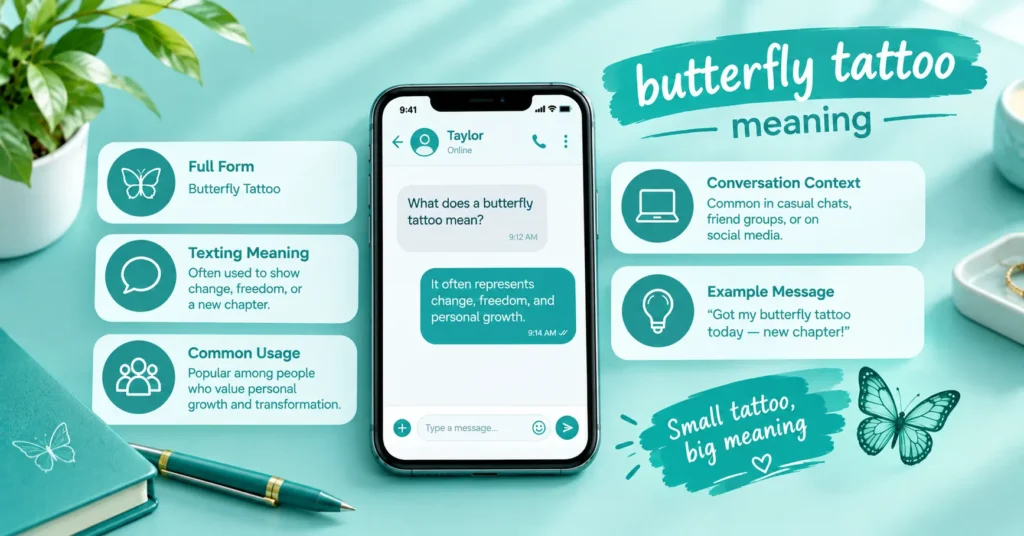
Freedom adds another layer to the butterfly tattoo meaning. Open wings and flight can represent independence, leaving restrictions behind, or choosing your own direction. Someone leaving an unhealthy relationship, changing careers, moving away, or simply becoming more self-directed may connect with this interpretation. The design can feel especially expressive when the butterfly appears mid-flight.
The soul and remembrance
Butterflies have longstanding associations with the soul in Western art and mythology. The Metropolitan Museum of Art documents butterfly imagery associated with Psyche, while the Smithsonian documents monarch symbolism connected with ancestors and remembrance in Mexican traditions. These historical associations help explain why butterflies frequently appear in memorial art.
A memorial butterfly does not have to represent one specific religious belief. It might simply honor a parent, child, partner, friend, or another person whose memory remains important. A name, date, flower, or meaningful color can make the remembrance personal without relying on a universal symbolism claim.
The semicolon butterfly: mental health
The semicolon-butterfly combination has developed as a contemporary tattoo symbol associated with continuing one’s story, transformation, recovery, and mental-health awareness. The semicolon supplies the idea of continuation while the butterfly adds change and emergence. Its meaning should remain personal rather than being treated as a reliable biography of the person wearing it.
Colors and what they mean
Color can influence the emotional tone of a butterfly tattoo, but there is no universal color dictionary that every tattoo wearer follows. Contemporary tattoo guides commonly associate blue with calm or spirituality, black with strength or transformation, monarch orange-and-black with endurance and remembrance, red with passion, and white with new beginnings. Treat these as creative associations, not fixed rules.
| Butterfly color/style | Common contemporary association |
| Blue | Calm, hope, spirituality |
| Black | Strength, change, remembrance |
| Orange + black monarch | Endurance, heritage, remembrance |
| Red | Passion, courage, energy |
| White | New beginnings, purity |
| Black fine-line | Minimal, timeless, understated |
| Watercolor | Emotion and artistic expression |
A stronger design usually connects the color to something personal. Blue might remind you of the ocean rather than “spirituality.” Black may simply match your existing tattoos. A monarch may matter because of migration, family, or Mexican cultural heritage. The personal reason is more meaningful than forcing your tattoo to follow an online color chart.
Styles that work right now
Tattoo style changes how a butterfly looks and feels, but it does not dictate a mandatory meaning. Fine-line and minimalist work can make the design quiet and understated, while realistic, geometric, watercolor, or floral compositions can give the same symbol a completely different visual personality.
When choosing a style, think about the level of detail you want, the body area available, how large the tattoo can realistically be, and whether you want the butterfly to look natural or intentionally artistic.
Fine-line
Fine-line butterfly tattoos use thin outlines and restrained shading to create a delicate appearance. They work particularly well for small designs on areas such as the wrist, collarbone, or behind the ear. Because tiny details can become difficult to preserve as a tattoo ages, your artist should determine an appropriate size rather than simply copying a small digital reference.
Micro / minimalist
A micro or minimalist butterfly reduces the design to its essential silhouette and a few carefully chosen details. This can suit a first tattoo or someone who wants a private-looking symbol. The simpler the design, the more important the outer shape becomes, especially when the tattoo is placed on a small area of skin.
Realistic / 3D
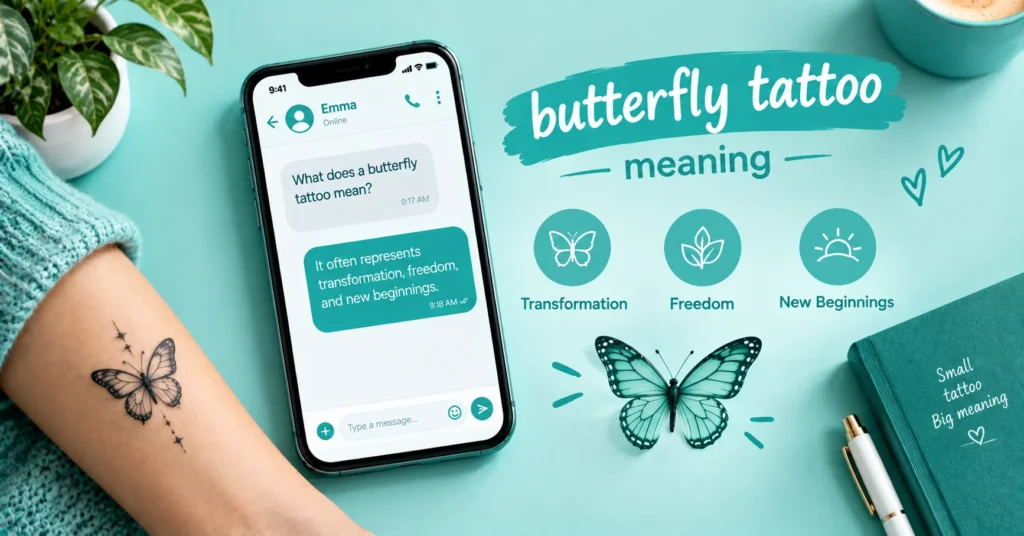
Realistic butterfly tattoos emphasize wing veins, natural patterns, shading, and species-specific details. They generally need more space than a simple outline because visual detail requires room to remain readable. A realistic monarch on the forearm, shoulder, upper back, or thigh can therefore create a much stronger visual presence than a micro butterfly.
Watercolor
Watercolor butterflies use soft color transitions and painterly effects rather than relying entirely on crisp outlines. The result can feel expressive, fluid, and artistic. If you are considering this style, discuss how the chosen pigments and design are expected to age with your artist instead of assuming every watercolor tattoo will remain identical to a fresh reference image.
Geometric
Geometric butterflies use symmetry, structured lines, negative space, and shapes to reinterpret natural wings. Triangles, intersecting lines, circles, or mandala-inspired elements can make the butterfly feel more graphic and contemporary. This style is useful when you like the symbolism of transformation but want something less traditionally delicate.
Butterfly + flowers
Flowers can make a butterfly design more personal by adding a second visual story. A rose, cherry blossom, wildflower, or meaningful birth flower can connect the tattoo to love, family, memory, place, or a particular stage of life. The strongest combinations give each element enough visual space rather than crowding every available detail into the design.
Best placements (and what each one says)
Placement influences visibility, scale, composition, and how often you see your tattoo. It does not automatically determine symbolism. The same butterfly can mean freedom on the wrist, remembrance on the shoulder, or personal growth on the spine because the meaning comes from the wearer rather than a body-location code.
Think about your clothing, work environment, desired privacy, body shape, and the design’s dimensions before choosing a location. A tattoo artist can also tell you whether the intended details will remain readable at your preferred size.
Behind the ear
Behind-the-ear butterfly tattoos are naturally subtle and work especially well with fine-line or micro designs. They can remain partially hidden by hair and become visible when you want them to. The area is small, so a clean silhouette generally works better than a heavily detailed wing pattern.
Wrist
The wrist is a practical location for a small butterfly because it is easy to see and relatively easy to cover with clothing or accessories. It can work well as a daily reminder of a personal transformation, while a simple outline keeps the design readable without requiring a large canvas.
Collarbone
The collarbone provides a graceful horizontal area for a single butterfly or a balanced pair. Fine-line designs can follow the body’s natural direction, while a larger composition can extend toward the shoulder. Consider how clothing will interact with the design if visibility is important to you.
Forearm
The forearm offers more room for a realistic butterfly, a larger composition, or multiple butterflies moving along the arm. It is also highly visible, making it suitable when you want the tattoo to function as an outward expression rather than something mostly private.
Shoulder and upper back
The shoulder blade and upper back give open-wing butterflies room to breathe. This placement can accommodate realistic wing details, larger flowers, or a symmetrical composition. It is particularly useful when the design needs width and you want the tattoo to remain relatively easy to conceal beneath ordinary clothing.
Ankle
Ankle butterflies tend to work well when the design is playful, compact, or understated. A simple outline can follow the narrow body area without becoming visually crowded. Because shoes and friction can affect exposed tattoos, discuss the practical implications of the location with your artist.
Spine
A vertical butterfly sequence along the spine can turn the tattoo into a visual journey rather than a single symbol. Different sizes, spacing, or stages of the butterfly can create movement from one point to another. It is particularly effective when the concept is about continuing growth or a life journey.
Are butterfly tattoos basic?
Popularity does not automatically make a tattoo meaningless. Butterfly tattoos are common precisely because their shape is recognizable, adaptable, and capable of carrying very different personal stories. A minimalist butterfly and a highly detailed monarch may share the same basic subject while communicating completely different visual identities.
The better question is whether the design feels personal to you. If you choose a butterfly simply because you love butterflies, that is a complete reason. If it represents a major transition, someone you remember, or a new chapter, you can build those details into the species, color, composition, placement, or accompanying imagery.
Meaning starts with your own connection
The most useful approach to butterfly tattoo meaning is to begin with your own story instead of asking an online symbolism list to decide what your tattoo should mean. Competitor artist guidance makes this point strongly: a butterfly can represent change, freedom, grief, recovery, family, a new stage of life, or nothing more complicated than loving its wings.
Before speaking with an artist, complete a simple sentence:
“I want this butterfly to remind me of ______.”
Your answer might be a person, place, relationship, achievement, recovery, move, family connection, or personal change. Once that central idea is clear, the visual decisions become easier: species, color, number of butterflies, movement, size, placement, and additional symbols can all support the same story.
One butterfly, a pair or a moving group
One butterfly creates a clear focal point and leaves more room for distinctive wing details. Two butterflies can visually represent two people, two stages, siblings, partners, friends, or connected memories but there is no universal rule requiring two butterflies to mean romance. The wearer decides what the relationship represents.
Three or more butterflies can create a sense of movement across the body. They might represent family, multiple memories, stages of personal growth, or simply a flight pattern you find beautiful. Varying size, direction, and spacing often makes a group feel intentional rather than like repeated copies of one stencil.
Butterfly and moth need different drawings
Butterflies and moths share the broad experience of metamorphosis, but their anatomy and visual character are different. Butterfly designs often emphasize open wings, movement, color, and recognizable daytime species, while moth artwork may use broader forms, stronger symmetry, nocturnal imagery, or a darker visual mood.
If your concept specifically calls for a butterfly, give your artist a reference showing the species or silhouette you like. That matters more than relying on a loose label. A good reference helps the artist understand wing shape, posture, pattern, and scale while still allowing them to redraw the design for your body.
Size and longevity
Very small butterfly tattoos require careful editing. Fine wing veins, lettering, flowers, and multiple decorative elements may become difficult to keep distinct when compressed. Competitor guidance recommends trusting the artist’s minimum size and protecting negative space rather than forcing every detail into a tiny design.
Build a useful design brief
A practical tattoo brief can include the intended meaning, species, number of butterflies, body location, approximate size, color palette, style, essential details, and two or three focused visual references. This gives an artist useful direction without asking them to copy another person’s tattoo.
Which style suits a first butterfly tattoo best?
A simple fine-line or minimalist butterfly is one option for a first piece because it can remain relatively small and adaptable, although the right choice depends on your preferred look and the artist’s strengths. Portfolio quality matters more than choosing a style because an online guide calls it “safe” or “best.”
Before committing, review healed examples from your chosen artist when available, discuss realistic sizing, and ask how the design should be adapted to your skin and body area. The final tattoo should be designed for your body, not merely reproduced from a Pinterest screenshot.
A butterfly tattoo meaning is ultimately less about memorizing a symbolism list and more about choosing what the wings represent in your life. Transformation, freedom, growth, rebirth, remembrance, and beauty are common interpretations, but your own connection can be much more specific. When color, species, style, number, placement, and personal details all support that central idea, the tattoo becomes more than a popular motif it becomes a visual reminder of your own story.
Conclusion
A butterfly tattoo can carry many meanings, from personal growth and transformation to freedom, resilience, hope, and new beginnings. For some people, it represents leaving a difficult chapter behind and embracing change, while others simply connect with the butterfly’s beauty and symbolism. Its meaning can also depend on the design, color, placement, and the personal story behind it.
There is no single interpretation that applies to everyone. Whether chosen as a reminder of growth, a symbol of independence, or simply a meaningful piece of art, a butterfly tattoo can reflect something deeply personal. Ultimately, the most meaningful tattoo is one whose symbolism connects naturally with the person wearing it.
FAQs
Author

Ethan Carter is an SEO blogger specializing in internet slang, text abbreviations, and social media meanings. He creates clear, accurate, and reader-friendly content backed by thorough research. His goal is to help readers understand modern online language with reliable, easy-to-read guides.

One Comment