
API Meaning: What Is an API and How Does It Work?
API stands for Application Programming Interface, a defined way for software applications to communicate, exchange data, or use functionality from another system. If terms such as API endpoint, request, response, REST, or API key feel confusing, you are not alone. Many beginner explanations jump straight into technical jargon instead of explaining the simple idea first.
The easiest way to understand the API meaning is to picture a controlled doorway between software systems. One application makes a request, the API follows its rules, and another system returns a response. From payment processing and Google Maps to social login and cloud applications, APIs quietly make connected digital experiences possible.
What Is an API? API Meaning
An API, or Application Programming Interface, is a set of rules, protocols, and definitions that allows software applications to communicate. In practical terms, an API lets one program request data or functionality from another without needing access to that system’s internal code, database structure, or backend implementation.
The simplest API meaning is therefore a defined interface for software-to-software communication. A weather application might request forecast data, a payment page might request transaction processing, and a mobile app might request account information. The API controls what can be requested, how the request is formatted, and what response is returned.
What does API stand for?
API stands for Application Programming Interface. “Application” refers to software, “programming” indicates that the interface is designed for programs to use, and “interface” means the defined point of interaction. Together, the phrase describes a structured way for software components to communicate.
How Does an API Work? API Meaning
An API generally follows a request-and-response pattern. A client sends a request to an API endpoint, the receiving system processes that request, and a response is returned. Depending on the service, the response may contain requested data, confirmation of an action, or an error explaining what went wrong.
For a simple example, imagine an online store using a payment service. When a customer clicks the payment button, the store sends the necessary information through an API. The payment system processes the request and returns a result. The store can then show the customer whether the payment succeeded without building its own payment network.
The basic flow
The basic flow is straightforward: client → request → API endpoint → server/service → response. The request can include a method, headers, authentication information, parameters, and sometimes a body. The response commonly contains a status code, headers, and data, often formatted as JSON in modern web APIs.
For example, a request might ask for a customer’s order status. The endpoint receives it, verifies permissions, retrieves the relevant information, and returns a response. A 200 status generally indicates success, while codes such as 401, 404, or 429 communicate different problems or restrictions.
Why Are APIs Important in Software Development? API Meaning
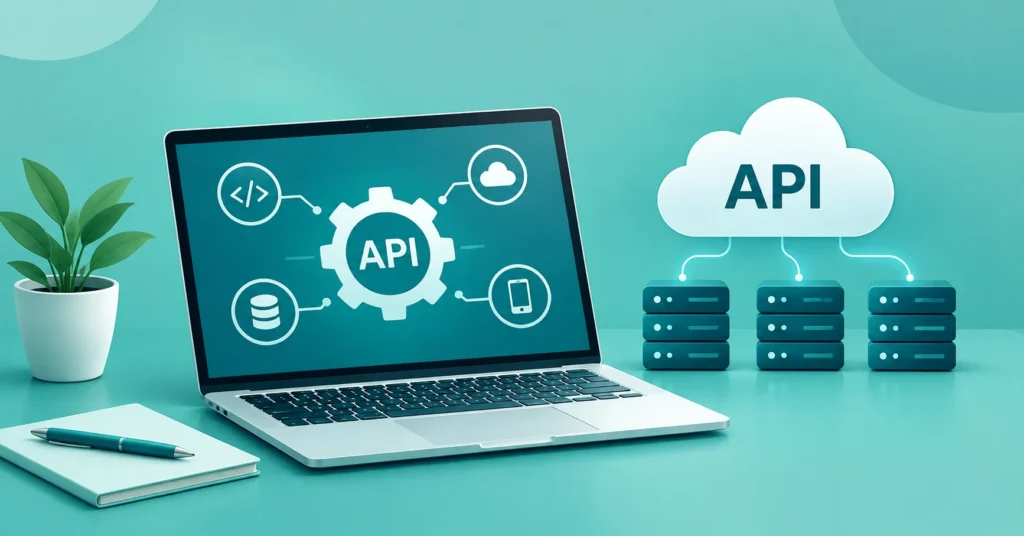
APIs make software integration practical. Without them, applications would need many custom connections to communicate with other services. APIs provide predictable interfaces that allow developers to reuse functionality, exchange information, automate processes, and keep different parts of a technology stack separated.
This matters beyond programming. Businesses use APIs to connect payment providers, customer relationship management systems, analytics platforms, shipping services, cloud applications, and internal tools. Instead of rebuilding every feature, teams can connect existing services through defined interfaces, reducing duplicated work and making larger systems easier to organize.
Where the business value shows up
The business value appears through integration, automation, reuse, scalability, and interoperability. A company can connect its website to a payment provider, synchronize customer information with a CRM, or automatically send shipping data to a carrier. The API becomes the controlled mechanism through which those systems exchange information.
APIs can also support faster product development. A team may use an existing mapping, authentication, messaging, or payment service instead of creating equivalent infrastructure from scratch. That does not eliminate engineering work, but it can let developers concentrate their effort on the product’s unique functionality.
What Are the Main Types of APIs? API Meaning
APIs can be classified in different ways. One common classification looks at who is allowed to use the interface: public or open APIs, partner APIs, internal or private APIs, and composite APIs. Another classification looks at architecture or communication style, such as REST, SOAP, GraphQL, RPC, or WebSocket.
It is important not to mix these categories. “Public” describes access, while “REST” describes an architectural approach. A public API can use REST, and an internal API can also use REST. Understanding that distinction prevents a common beginner mistake: treating every API label as though it describes the same characteristic.
Public, partner, private, and internal APIs
Public APIs are made available to external developers, usually with documentation and access controls. Partner APIs are shared with selected organizations. Private or internal APIs are intended for systems and teams within an organization. Composite APIs combine multiple services or operations into a single request.
The appropriate model depends on the organization’s requirements. External access generally requires careful authentication, authorization, rate limiting, documentation, monitoring, and governance. Internal APIs also need protection; “internal” does not automatically mean safe. Access should always match the sensitivity of the functionality and data being exposed.
What Is the Difference Between REST and SOAP? — API Meaning
REST and SOAP are two approaches associated with API communication, but they are not the same kind of concept. REST is an architectural style built around web principles and resources, while SOAP is a protocol with a formal XML-based messaging structure. Both can support communication between applications.
REST APIs commonly use HTTP methods such as GET, POST, PUT, PATCH, and DELETE and frequently exchange JSON. SOAP uses XML and has more formal messaging conventions. REST is widely used for web and mobile applications, while SOAP remains relevant in enterprise environments where formal contracts and established standards are important.
| Feature | REST | SOAP |
| Nature | Architectural style | Protocol |
| Common data format | JSON, XML and others | XML |
| Typical use | Web and mobile APIs | Enterprise integrations |
| Communication | Commonly HTTP/HTTPS | HTTP and other supported protocols |
| Structure | Generally lightweight | More formal |
Neither should automatically be considered “better.” The appropriate choice depends on data requirements, clients, security needs, existing infrastructure, transaction complexity, and operational constraints.
What Are Real-World API Examples and Use Cases? API Meaning
The API meaning becomes much easier when you see it in everyday technology. When you sign in with Google, view an embedded map, make an online payment, track a package, or synchronize information between applications, APIs may be working behind the scenes to connect separate systems.
Consider an online retailer. Its website may communicate with a payment provider, inventory platform, shipping company, analytics service, and customer database. Each system can remain specialized while APIs allow the retailer’s software to request information or trigger actions when necessary.
Everyday examples
Payments: Payment APIs allow websites and applications to send transaction requests and receive payment results.
Maps: Mapping APIs let applications display maps, locations, routes, or geographic information without building an entire mapping platform.
Social login: Authentication APIs can allow users to sign in through an established identity provider.
Shipping: Carrier APIs can provide package status, shipping rates, labels, and delivery information.
Cloud applications: SaaS platforms often expose APIs so customers can connect them to other business systems.
These examples reveal the common pattern: one system needs something another system already provides, and the API defines how that interaction happens.
API Protocols, Architectural Styles and Languages API Meaning
Modern APIs can use different protocols, architectural styles, data formats, and programming languages. Common terms include REST, SOAP, GraphQL, RPC, gRPC, WebSocket, HTTP, JSON, and XML. These terms describe different parts of the technical communication model rather than different definitions of an API itself.
For example, REST is an architectural style, GraphQL provides a query language and runtime approach, and gRPC is a high-performance RPC framework. JSON is a data format, while HTTP is a network protocol commonly used by web APIs. Keeping these concepts separate makes technical documentation much easier to understand.
APIs, Web Services and Microservices API Meaning
An API and a web service are related but not identical. A web service is a network-accessible software component that exposes functionality or data, while an API is a broader interface concept. An API can exist without being a web service, because APIs can also describe interactions inside software, operating systems, or other environments.
Microservices add another layer. A microservices architecture divides an application into smaller services that can operate independently. APIs often provide the communication boundaries between those services, allowing components to exchange information without directly exposing their internal implementation.
APIs versus web services
A useful distinction is simple: web services are a type of network-based service interface, while APIs are the broader concept of a defined software interface. Many modern web APIs use HTTP, but the term API is not restricted to the public internet.
APIs, microservices and cloud-native development
In cloud-native systems, APIs can connect independent services, applications, databases, identity systems, and external platforms. A mobile application might communicate with several backend services through APIs, while each service remains responsible for a specific business capability.
This separation can make systems easier to develop and maintain, although it also introduces challenges such as network failures, authentication, monitoring, versioning, latency, and dependency management.
API Benefits API Meaning
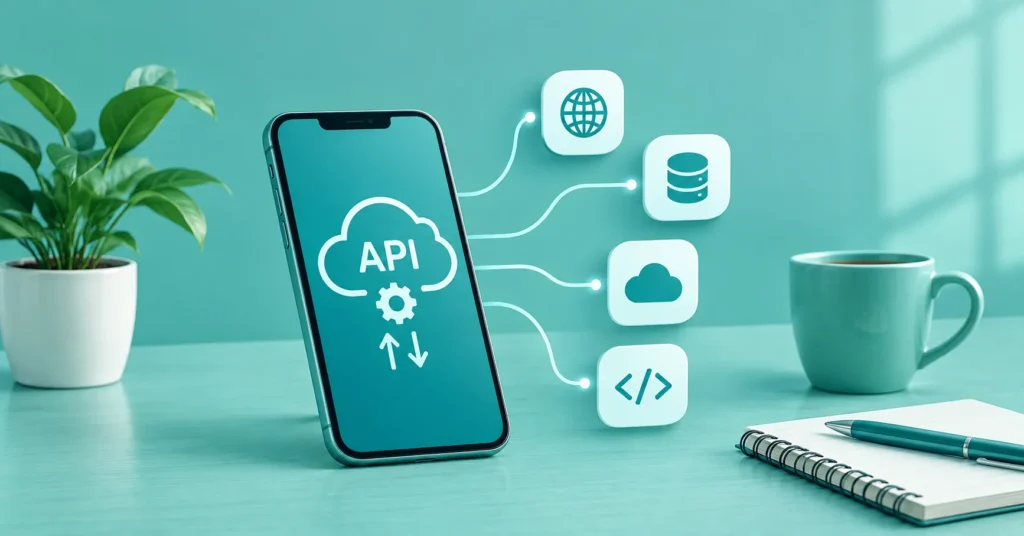
The major benefits of APIs include integration, automation, reuse, scalability, interoperability, and controlled access. Developers can use existing services rather than reproducing every capability themselves. Businesses can connect systems that were built by different vendors, teams, or technology stacks.
APIs also help establish boundaries. Instead of exposing an entire database, a service can expose only the data and actions a client needs. This controlled interface can reduce unnecessary coupling between systems and make it possible to change internal implementation while keeping the external contract stable.
For organizations, APIs can support new products and partnerships as well. A company may expose selected capabilities to customers, developers, or business partners, creating an ecosystem around its services. That makes API design a technical concern as well as an architectural and business consideration.
What Are the Common API Security Basics? API Meaning
API security is important because an API can expose valuable data and powerful actions. Authentication establishes who or what is making a request, while authorization determines what that caller is permitted to access. These controls work together but solve different problems.
Other protections include HTTPS encryption, input validation, rate limiting, secure credential storage, logging, monitoring, and appropriate error handling. API keys and tokens should be protected rather than placed carelessly in source code or public repositories. Sensitive endpoints deserve especially careful access controls and monitoring.
Key security controls
Common controls include authentication, authorization, encryption, rate limiting, validation, logging, and monitoring. HTTPS protects data in transit, while authentication and authorization help restrict access. Rate limits can reduce abuse and excessive traffic, while logs help teams investigate unusual activity.
Security should be considered during API design rather than added after an interface is already widely deployed. Resources such as the OWASP API Security project and NIST guidance can provide useful references when evaluating API risks and security controls.
What Is API Documentation and Why Does It Matter? API Meaning
API documentation explains how developers can use an interface correctly. Useful documentation normally identifies endpoints, supported methods, parameters, authentication requirements, request formats, response structures, examples, errors, and version information. Without this information, even a technically functional API can become difficult to adopt.
Good documentation reduces uncertainty. A developer should be able to determine what an endpoint does, what information it accepts, what it returns, and what happens when a request fails. Clear examples are especially valuable because they transform abstract specifications into something developers can test and understand.
What strong documentation includes
Strong API documentation typically includes an endpoint reference, request examples, response examples, authentication instructions, error codes, parameter descriptions, version information, and notes about limits or pagination. It should also explain important edge cases instead of assuming every request will succeed.
The goal is not simply to document every technical detail. Good documentation helps a developer successfully complete a task with fewer guesses, fewer failed requests, and less dependency on support teams.
What Is the Future of APIs? API Meaning
APIs are likely to remain foundational because software systems continue becoming more connected. Cloud services, automation platforms, mobile applications, SaaS products, partner ecosystems, and AI-powered applications all need reliable ways to exchange information and invoke capabilities.
AI adds another reason for well-defined interfaces. An AI application may need to retrieve information, call a service, perform an action, or connect to another system. In each case, a clearly defined API can provide a controlled path between the application and the capability it needs.
The future is therefore not simply about having more APIs. It is about better interfaces, stronger security, clearer documentation, reliable versioning, observability, governance, and easier integration. As software becomes more interconnected, the quality of those interfaces becomes increasingly important.
Quick API meaning reference
| Term | Simple meaning |
| API | A defined interface for software interaction |
| API call | A request sent to an API |
| Endpoint | A specific location for an API operation |
| Client | The application making a request |
| Server | The system processing the request |
| Request | Information sent to an API |
| Response | Information returned by an API |
| API key | A credential commonly used to identify or authorize requests |
| REST | An architectural style commonly used for web APIs |
| SOAP | A formal protocol for structured messaging |
| JSON | A common data format used by web APIs |
| Authentication | Verifying who is making a request |
| Authorization | Determining what that caller can access |
Conclusion
Understanding the API meaning does not require memorizing complicated programming terminology. At its core, an API is a defined interface that lets software communicate, request information, use functionality, and exchange results in a predictable way.
Once you understand the request-and-response model, concepts such as endpoints, API calls, REST, SOAP, authentication, and JSON become much easier to place in context. You can then recognize APIs in familiar experiences such as online payments, maps, social login, shipping updates, SaaS integrations, and AI applications.
The most useful takeaway is simple: an API is not merely a technical connection. It is a contract between software systems. When that contract is clear, secure, documented, and maintained carefully, different applications can work together without exposing everything behind the interface.
FAQs
Author

Ethan Carter is an SEO blogger specializing in internet slang, text abbreviations, and social media meanings. He creates clear, accurate, and reader-friendly content backed by thorough research. His goal is to help readers understand modern online language with reliable, easy-to-read guides.




One Comment