
YKTV Meaning in Text: 7+ Powerful & Surprising Ways to Understand This Slang
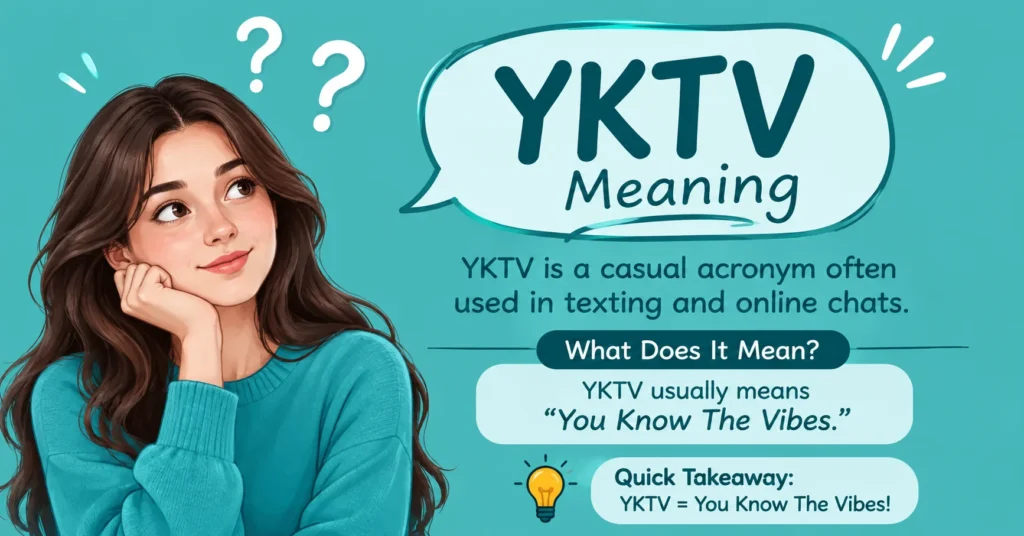
If you have seen YKTV meaning in a text message or social media caption, it usually means “You Know The Vibe” or “You Know The Vibes.” This informal internet slang expresses shared understanding, a familiar mood, or an experience that does not need a lengthy explanation. People use it in texting, Instagram captions, Snapchat stories, and casual conversations.
Understanding texting abbreviations can feel confusing when a friend uses unfamiliar internet slang without explaining it. After researching established slang dictionaries, published explanations, and real-world examples, this guide explains the YKTV meaning, its full form, conversational tone, and practical replies so you can understand the message without guessing.
YKTV in one line
YKTV is a casual abbreviation that means “You Know The Vibe” or “You Know The Vibes.” In everyday digital communication, it tells someone that they already understand a particular mood, situation, or shared experience. Instead of explaining everything, the sender assumes the other person gets the feeling.
For example, imagine your friend posts a picture from a weekend road trip with music playing and writes “Best weekend ever, YKTV.” They are expressing excitement while suggesting that their friends already understand the atmosphere. It creates a relaxed sense of familiarity and connection.
Full Form of YKTV
The full form of YKTV is commonly written as “You Know The Vibe” or “You Know The Vibes.” Both versions express essentially the same idea. The singular version emphasizes one particular atmosphere, while the plural version can suggest an overall mood, experience, or shared energy.
| Abbreviation | Full form | Meaning |
| Y | You | Addressing another person |
| K | Know | Understanding something |
| T | The | Connecting the phrase |
| V | Vibe Vibes | Mood or atmosphere |
The word vibe describes the general feeling or atmosphere associated with a person, place, situation, or experience. In informal texting, it can communicate excitement, relaxation, familiarity, or even mild frustration.

The tone of YKTV
The tone of YKTV is generally relaxed, friendly, and conversational. It can sound excited when someone discusses weekend plans or a memorable event, but it may also sound neutral when describing an everyday routine. The surrounding message, punctuation, and emojis help determine the intended emotion.
How Is YKTV Used in Chat?
People use YKTV in conversations when they believe the other person already understands the situation. It often appears at the end of a sentence, after discussing plans, music, friendships, or familiar experiences. It works as a conversational shortcut that communicates more than its four letters suggest.
Consider a friend saying, “Another Friday night with our favorite playlist, YKTV.” They are not asking you to explain the music or mood. Instead, they are reminding you of something you both enjoy. This makes the expression particularly useful in relaxed group chats and direct messages.
Example 1
Friend A: Finally finished work. Pizza, movies, and no responsibilities tonight.
Friend B: YKTV!
Here, the reply expresses agreement and shared excitement. Both friends understand why having a relaxing evening feels enjoyable after a busy workday.
Example 2
Friend A: Beach sunset, cold drinks, and my favorite people.
Friend B: That sounds perfect, YKTV.
In this conversation, the abbreviation reinforces the positive atmosphere. It suggests that the sender understands the enjoyable experience without requiring additional explanation.
Example 3
Friend A: Another Monday morning and three meetings before lunch.
Friend B: YKTV
Here, the expression carries a slightly humorous or resigned tone. It communicates that the sender understands the familiar frustration of a busy workday.
What Does YKTV Mean in Text and Texting?
The YKTV meaning in text remains the same as its general social media meaning: “You Know The Vibe” or “You Know The Vibes.” It usually suggests that the recipient understands the mood, feeling, or situation being discussed. The precise interpretation depends on the conversation.
For example, someone might text, “Our usual coffee shop after class, YKTV.” This means the location and experience are already familiar. It can also be used as a standalone response when someone mentions a situation that both people recognize.
A useful way to understand it is to replace YKTV with “You already know what I mean.” If that replacement makes sense in the conversation, the sender is probably using the abbreviation in its ordinary slang meaning.
YKTV Examples You’ll Actually See
YKTV can appear in several everyday situations. The following original examples show how the abbreviation can communicate excitement, familiarity, agreement, and shared understanding without making a conversation sound overly formal.
Weekend plans with a friend
Person A: Are we going out Saturday night?
Person B: Obviously! Same restaurant, same crew, YKTV.
The message suggests that both friends already know what makes their usual weekend plans enjoyable. It adds a casual, confident feeling.
Group chat party invite
Person A: Everyone at my place at 8. Music, snacks, and good company.
Person B: Say less, YKTV!
Here, YKTV reinforces excitement and familiarity. The sender understands the type of gathering being planned and does not need additional explanation.
A food recommendation
Person A: Have you tried those burgers downtown?
Person B: Absolutely. Extra cheese and fries, YKTV!
In this example, the abbreviation communicates shared enthusiasm for a familiar food experience. It makes the recommendation feel more personal and conversational.
Venting about something routine
Person A: Another long shift with barely any breaks.
Person B: I know, YKTV.
This example demonstrates that the expression does not always describe something exciting. It can also acknowledge a familiar inconvenience or frustrating routine.
What YKTV means from a girl (or a guy)
Person A: We should definitely plan another road trip.
Person B: This time with better music and more stops, YKTV!
The expression has the same basic meaning regardless of who sends it. It can create a friendly, playful atmosphere, but the surrounding message matters more than the abbreviation itself when interpreting someone’s intentions.
What Does YKTV Mean From a Girl / Boy?
When a girl or boy sends YKTV, the basic meaning generally stays the same: “You Know The Vibe” or “You Know The Vibes.” It usually indicates familiarity, shared understanding, or a relaxed conversational mood rather than communicating a special romantic message.
From a Girl
If a girl texts YKTV, she may be referring to a shared joke, familiar experience, enjoyable plan, or comfortable friendship. For example, “Our favorite songs and late-night drives, YKTV” expresses a shared feeling. It does not automatically mean she is flirting.
From a Boy
If a boy uses YKTV, he may be expressing agreement, excitement, confidence, or familiarity. For example, “Game night with the boys, YKTV” suggests that everyone already understands the atmosphere. The phrase itself does not reveal romantic interest or a hidden intention.
Is YKTV Rude or Polite?
YKTV is generally neither rude nor offensive. It is informal internet slang that people use to express shared understanding or familiarity. In friendly conversations, it usually sounds relaxed and natural. However, someone unfamiliar with the abbreviation might find the message confusing.
The context makes a difference. Using YKTV after a funny comment can feel playful, while using it during a serious conversation might sound dismissive if the other person expects a detailed response. For professional communication, standard wording is usually a better choice.
Best Replies to YKTV
The best reply depends on the conversation and your relationship with the sender. If you understand the reference, a short response is usually enough. If the meaning is unclear, there is nothing wrong with asking what the person means.
| Reply | When to use it |
| Exactly! | When you completely agree |
| Facts! | When confirming something |
| For real! | When expressing agreement |
| You already know! | When sharing the same feeling |
| Say less! | When you understand the plan |
| Bet! | When accepting an invitation |
| Haha, true! | In a playful conversation |
| What’s the vibe? | When you need clarification |
A natural reply might be:
Friend: Friday night, good music, and our favorite place. YKTV!
You: Always! You already know.
The best response is one that matches the tone of the original message rather than forcing another abbreviation into the conversation.
YKTV on Snapchat, Instagram and TikTok
The general YKTV meaning does not change significantly between social media platforms. However, its placement and conversational purpose can differ. It might appear in a Snapchat story, Instagram caption, TikTok comment, or private message.
| Platform | Where it appears | Typical purpose |
| Snapchat | Stories and snaps | Sharing a familiar moment |
| Captions, comments, and DMs | Expressing a mood | |
| TikTok | Video captions and comments | Reacting to relatable content |
| Personal and group chats | Showing shared understanding |
On WhatsApp, YKTV commonly fits casual messages between friends. Someone might write, “Sunday dinner with the family, YKTV.” The expression communicates familiarity and a shared feeling without needing a detailed explanation.
On Instagram, people may include YKTV in captions, comments, and direct messages. For example, a vacation picture with the caption “Summer memories with my favorite people, YKTV” suggests that the audience understands the enjoyable experience.
Snapchat
On Snapchat, YKTV can accompany stories about parties, road trips, food, or everyday activities. A person might post a sunset picture with “Golden hour hits different, YKTV.” It gives followers a hint about the mood.
TikTok
On TikTok, the abbreviation can appear in comments or video captions, particularly when someone relates to a shared experience. For example, a video about staying up late watching movies might receive the comment “Weekend energy, YKTV.”
Similar Slang Words Like YKTV
Several internet slang expressions communicate agreement, familiarity, or shared understanding. However, their full forms and conversational purposes are not identical. Learning the differences helps you interpret messages more accurately.
FR
FR means “For Real.” It is commonly used to express agreement, sincerity, or emphasis. Someone might respond “FR!” when they strongly agree with a friend’s statement. Unlike YKTV, it does not specifically refer to a shared atmosphere or familiar experience.
IYKYK
IYKYK stands for “If You Know, You Know.” It often refers to an inside joke, private experience, or reference that only certain people understand. YKTV instead communicates that the recipient already understands the mood or situation.
Vibes
Vibes refers to the emotional atmosphere or general feeling of something. For example, “Good vibes only” expresses a preference for a positive atmosphere. YKTV builds on this concept by suggesting that another person already understands the feeling.
No Cap
No Cap means “No lie” or “I’m being honest.” It is used to emphasize sincerity or truthfulness. For example, “That was the best concert ever, no cap.” YKTV is different because it focuses on shared understanding rather than honesty.
Mood
Mood is an informal expression used when something reflects a person’s current feelings or experience. Someone might comment “Mood” on a relatable picture or video. YKTV can communicate a similar sense of relatability, although it emphasizes an understood vibe.
Quick comparison
| Slang | Full meaning | Main purpose |
| YKTV | You Know The Vibe(s) | Shared understanding |
| IYKYK | If You Know, You Know | Insider reference |
| FR | For Real | Agreement |
| No Cap | No lie | Sincerity |
| Mood | Relatable feeling | Emotional identification |
When to use YKTV, and when to skip it
YKTV works best when the conversation is informal and the recipient understands internet slang. It is suitable for friendly chats, social media captions, comments, and conversations about shared experiences. The abbreviation makes communication feel relaxed, especially when both people already understand the reference.
However, it is better to avoid YKTV in situations where clear and professional communication matters. For example, a job application, business proposal, academic assignment, or formal email should use complete sentences. A reader should never have to guess what an important message means.
Conclusion
The YKTV meaning is “You Know The Vibe” or “You Know The Vibes.” It is a casual internet expression used to communicate shared understanding, familiar feelings, and relatable experiences. You may encounter it in text messages, Instagram captions, Snapchat stories, TikTok comments, and everyday conversations.
The most important thing is to understand the surrounding context. Someone might use YKTV to express excitement about weekend plans, agree with a friend, or describe a familiar situation. It is generally friendly and informal, rather than rude or offensive.
Now that you understand YKTV, you can recognize it in online conversations and respond naturally. When the meaning is unclear, simply asking “What’s the vibe?” is perfectly acceptable.
FAQs
Author

Ethan Carter is an SEO blogger specializing in internet slang, text abbreviations, and social media meanings. He creates clear, accurate, and reader-friendly content backed by thorough research. His goal is to help readers understand modern online language with reliable, easy-to-read guides.