
GPI Meaning Slang: 10+ Powerful & Surprising Definitions You Need to Know
Have you ever opened Instagram and noticed someone commenting “GPI” under pictures of friends enjoying dinner, traveling, or attending a party? GPI meaning slang usually refers to “Gracias Por Invitar,” a Spanish phrase meaning “Thanks for inviting me.” In texting, this internet abbreviation often expresses playful sarcasm when someone feels left out of social plans.
Understanding GPI meaning slang makes online conversations easier, especially when interacting with bilingual friends or exploring Mexican internet slang. From WhatsApp messages to TikTok comments, this guide explains its Spanish translation, texting abbreviation, sarcastic tone, social media usage, and natural replies so you can understand exactly what someone means.
Quick Answer: What Does GPI Mean in Text?
GPI stands for Gracias Por Invitar, a Spanish expression that translates to “Thanks for inviting me.” In casual texting, it is commonly used sarcastically when someone discovers that friends attended a party, dinner, trip, or gathering without including them.
The interesting part is that the sender usually was not invited at all. Instead, GPI becomes a humorous complaint, suggesting, “Thanks for leaving me out!” It is especially recognizable in Spanish-language internet conversations and social media interactions involving friends.
GPI Meaning in Text Explained
The GPI meaning in text becomes easier to understand when you examine its three Spanish words. Each letter represents the beginning of a word in the original expression. Together, they create a short texting abbreviation that communicates a familiar social feeling without requiring a complete sentence.
| Letter | Spanish word | English meaning |
| G | Gracias | Thanks |
| P | Por | For |
| I | Invitar | Inviting |
The literal translation is “Thanks for inviting,” but its conversational meaning often carries irony. Imagine seeing your friends posting vacation pictures without you. Commenting “GPI 😂” playfully suggests that you noticed the missing invitation and would have loved to join them.
GPI Meaning in English
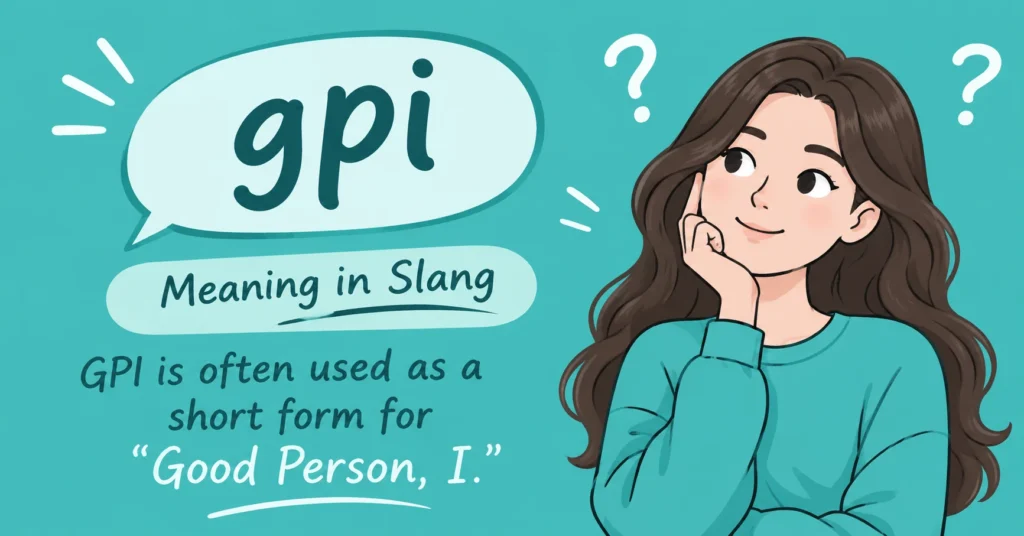
In English conversations, GPI communicates something similar to “Thanks for inviting me,” even when nobody actually extended an invitation. Depending on the situation, it can also suggest “I wish I had been included,” “Why didn’t you invite me?” or “Next time, count me in!”
GPI Full Form and Spanish Translation
The full form is Gracias Por Invitar. It is an informal initialism formed from Spanish words, not a separate English vocabulary word. The expression is particularly associated with Mexican digital communication, although its recognition can extend across Spanish-speaking online communities.
A 2022 academic publication from Universidad Autónoma de Coahuila documents this exact usage in social networks, describing its ironic use when somebody has not been invited to a gathering.
Is GPI an Acronym, Short Form, or Slang?
GPI is best understood as an informal Spanish-language initialism used in digital communication. People use the first letters of Gracias Por Invitar to create a shorter expression that fits naturally into text messages, comments, and group conversations.
It is not a conventional English slang word, nor does it have one universal expansion across every industry. In a conversation about parties or social gatherings, the Spanish expression is the most useful interpretation. In technical or professional material, check the surrounding subject before interpreting it.
GPI as an Internet Abbreviation
Internet abbreviations allow people to communicate quickly without writing lengthy messages. GPI follows this familiar pattern, using three letters to express a recognizable social reaction. Its meaning depends on shared cultural knowledge, conversational history, and the situation being discussed.
Is GPI a Spanish Slang Expression?
Yes. Its origin and commonly documented usage are connected to Spanish-language digital communication, particularly Mexican social media culture. English-speaking users may encounter it through bilingual friendships, online communities, and Spanish-language content, even if they do not speak Spanish fluently.
GPI Meaning Across Platforms
The GPI meaning slang remains essentially the same across social platforms, although the surrounding situation changes how people interpret it. Someone might send the abbreviation privately, comment beneath a photograph, or reply to a Story showing friends enjoying an event.
It is not exclusive to one application. Its visual and conversational context makes it especially suitable for informal online interactions, where a short sarcastic comment can communicate disappointment, humor, or a playful desire to receive an invitation next time.
GPI on Instagram
On Instagram, GPI often appears beneath pictures, Reels, and Stories showing restaurant visits, birthday celebrations, vacations, or parties. Someone who was not included might comment “GPI 😂” to tease their friends about having fun without them.
GPI on TikTok
On TikTok, users may leave GPI in the comments of videos featuring group activities, concerts, trips, and social gatherings. The abbreviation works as a short reaction to seeing something enjoyable that they would have liked to experience themselves.
GPI on Snapchat
On Snapchat, GPI can appear as a reply to a friend’s Story. For example, someone sees a group celebrating at a birthday party and responds with “GPI 😭.” The sender is jokingly pointing out that they missed the invitation.
GPI on WhatsApp and Facebook
WhatsApp group chats and Facebook posts also provide natural settings for GPI. A friend might share photographs from a weekend outing, prompting someone who was absent to send the abbreviation as a humorous reminder that they wanted to be included.
GPI Tone and Context Variations
Although GPI has a recognizable literal translation, its emotional meaning is not always identical. Some people use it purely for entertainment, while others genuinely feel disappointed after discovering that their friends made plans without them.
The relationship between the sender and recipient matters. A close friendship may make the comment feel harmless, but a similar message between acquaintances or coworkers could communicate a more serious complaint about being excluded from an event.
Playful GPI Meaning
A playful GPI message usually includes laughing emojis, friendly punctuation, or additional joking words. It communicates that the sender noticed an outing but is not necessarily upset. For example, “GPI 😂 next time I’m coming too!” keeps the conversation lighthearted.
Sarcastic GPI Meaning
Sarcastic GPI highlights the difference between the literal words and the actual situation. Someone writes “Thanks for inviting me” even though nobody invited them. The irony makes the abbreviation effective as a short, teasing response to social exclusion.
GPI and Genuine Disappointment
Sometimes the abbreviation expresses real disappointment rather than a simple joke. If someone repeatedly misses group activities, a short GPI message might communicate hurt feelings. Consider the conversation and relationship before assuming the sender is only being funny.
Real Chat Examples Using GPI
Examples make unfamiliar texting abbreviations much easier to understand. The following are illustrative conversations showing how GPI might appear in everyday digital communication. They demonstrate different situations, including missed invitations, friendly teasing, and social media reactions.
Notice how the abbreviation remains unchanged while the emotional message changes. Emojis, punctuation, and additional words provide useful clues about the sender’s intention, helping readers distinguish playful sarcasm from genuine disappointment.
Example 1: Friends at a Restaurant
Friend A: We tried that new Italian restaurant last night!
Friend B: Saw your pictures. GPI 😂
Friend A: Haha, next time you’re coming!
Here, GPI is a playful complaint. Friend B noticed the outing and jokingly suggests that they should have been invited.
Example 2: Instagram Vacation Pictures
Friend A: Best weekend at the beach! 🌊
Friend B: GPI 😭
Friend A: We need to plan another trip!
The comment communicates that Friend B would have enjoyed joining the vacation. The crying emoji exaggerates the feeling for humorous effect.
Example 3: WhatsApp Group Chat
Friend A: Everyone, yesterday’s birthday party was amazing!
Friend B: GPI, guys! 😂
Friend C: Sorry! We thought you were busy.
This example shows how the abbreviation can create an opportunity for friends to explain a missed invitation and arrange another gathering.
Example 4: Concert Plans
Friend A: That concert was incredible last night!
Friend B: GPI 😒
Friend A: We should have told you. Next time!
Here, the expression sounds slightly more disappointed because of the annoyed emoji. The sender might be joking, but the recipient should consider whether the person genuinely feels excluded.
How to Reply When Someone Says “GPI”
The best response depends on your relationship with the sender and whether the missed invitation was intentional. If a close friend comments GPI under your party pictures, a friendly response can turn the situation into an opportunity to make future plans.
You do not need a complicated explanation. Acknowledge their comment, respond naturally, and consider extending an invitation if appropriate. When someone seems genuinely upset, a sincere message is usually better than another sarcastic joke.
Funny Replies to GPI
If the conversation is playful, you can respond with humor:
- “Next time, you’re definitely coming!”
- “We saved you a spot!”
- “Don’t worry, the next one is yours!”
- “You missed all the fun 😂”
- “Your invitation is coming!”
These responses maintain a friendly atmosphere without making the other person feel ignored.
Friendly Replies to GPI
A warm reply works better when the sender is a close friend who genuinely wanted to participate. You could say, “Sorry, we should have told you,” or “Let’s plan something together this weekend.”
Spanish Replies to GPI
If you are comfortable using Spanish, you can respond with:
| Spanish response | English meaning |
| La próxima vez | Next time |
| Perdón, amigo | Sorry, friend |
| Te invitamos la próxima | We’ll invite you next time |
| Vente con nosotros | Come with us |
| No te preocupes | Don’t worry |
These expressions can help maintain a natural conversation with Spanish-speaking friends.
Is GPI Rude or Bad?
GPI is not inherently rude, offensive, or inappropriate. It is an informal social expression that usually communicates playful disappointment about missing an invitation. However, its sarcastic wording can occasionally sound passive-aggressive, especially when the relationship is not particularly close.
The surrounding conversation determines how the message feels. A laughing emoji and friendly follow-up often suggest humor, while a serious tone or repeated complaints might indicate genuine frustration. When uncertain, ask what the sender means instead of assuming.
When GPI Can Sound Rude
GPI may feel uncomfortable when somebody uses it to publicly embarrass a friend or repeatedly criticize social plans. If the sender genuinely feels excluded, dismissing their feelings with jokes can make the misunderstanding worse.
When GPI Is Harmless
Between close friends who regularly joke with one another, GPI is usually a harmless expression. It can communicate that someone wants to participate in future activities without creating a serious disagreement or making an uncomfortable conversation unnecessarily complicated.
Origin and Internet Culture Behind GPI
GPI comes from the Spanish phrase Gracias Por Invitar, which became shortened in informal digital communication. Its humor comes from the contrast between a polite expression of gratitude and the reality that the person sending it was never invited.
The expression is particularly associated with Mexican internet culture. A scholarly publication from Universidad Autónoma de Coahuila documents its ironic use in Facebook and WhatsApp conversations, while Mexican media outlet N+ also describes its sarcastic use when someone is excluded from an event, gathering, or trip.
GPI in Mexican Internet Culture
In Mexican social conversations, GPI can be used after friends share photographs from a party, family gathering, restaurant, or weekend trip. Its meaning is often understood without a lengthy explanation because the shared social context makes the joke recognizable.
How Social Media Helped GPI Spread
Social media makes short expressions easy to reuse across communities. A person might encounter GPI in an Instagram comment, understand its meaning, and start using it with bilingual friends. However, recognition is not universal, especially among people unfamiliar with Spanish slang.
Common Mistakes People Make With GPI
One common mistake is assuming that GPI is an English abbreviation with a fixed definition. Its established slang interpretation is connected to Spanish, and understanding the original phrase makes its sarcastic use much easier to recognize.
Another mistake is interpreting every message as genuine anger. GPI often communicates playful teasing rather than a serious complaint. However, ignoring the surrounding context can also lead to misunderstandings, particularly when someone genuinely feels excluded from a group activity.
Confusing Literal and Implied Meaning
The literal translation is “Thanks for inviting,” but the implied meaning can be “You didn’t invite me.” Recognizing this difference is essential when interpreting the expression in messages and social media comments.
Assuming GPI Has the Same Meaning Everywhere
Initialisms can have different expansions in unrelated subjects. A social media comment about a party should be interpreted differently from GPI appearing in a medical document, economics report, or technical discussion.
Treating Every GPI Message as Anger
Not every sarcastic expression indicates a serious emotional problem. Friends often exaggerate disappointment to make conversations entertaining. Read the emojis, previous messages, and relationship before deciding whether someone is genuinely upset.
When Should You Use GPI?
GPI is appropriate for informal conversations where people understand the Spanish expression and its sarcastic meaning. You can use it beneath a friend’s vacation photograph, in a group chat about a missed gathering, or when someone shares exciting plans you would have enjoyed.
It is generally best reserved for friends, family members, and familiar online communities. If the recipient does not recognize Spanish internet slang, a straightforward English message such as “Invite me next time!” will communicate your intention more clearly.
Good Situations for Using GPI
- Friends post pictures from a party without you.
- Someone shares a weekend trip you missed.
- Your group organizes a restaurant visit.
- You discover a gathering through social media.
- You want to tease friends about forgetting your invitation.
When to Avoid Using GPI
Avoid relying on GPI in professional emails, formal conversations, or sensitive discussions about exclusion. Its sarcastic meaning can be misunderstood by unfamiliar audiences. In these situations, using complete words helps communicate your feelings more respectfully and clearly.
How to Know If GPI Is a Joke or Serious
Understanding the tone of GPI requires looking beyond its three letters. The sender’s relationship with you, the conversation history, accompanying emojis, and the situation all provide clues about whether the message is playful or genuinely disappointed.
For example, “GPI 😂” beneath a friend’s vacation photograph probably signals teasing. However, a short “GPI.” following several missed invitations might suggest frustration. Context matters more than punctuation alone, so avoid making assumptions based on one message.
Look at the Emojis
Laughing faces, crying-laughing emojis, and playful expressions often soften the sarcastic message. An annoyed face or broken-heart emoji might suggest stronger feelings, although emojis are not reliable proof of someone’s emotional state.
Consider Your Relationship
Close friends often understand each other’s humor without explanations. With acquaintances or coworkers, the same abbreviation may feel uncomfortable. Think about how the sender normally communicates before deciding how seriously to interpret their message.
Read the Previous Conversation
A message about a party, dinner, or trip provides important context. If GPI appears after someone announces an event that the sender missed, the Spanish invitation-related meaning is a much stronger interpretation than an unrelated technical expansion.
GPI Meaning Slang: Final Explanation
GPI meaning slang is generally “Gracias Por Invitar,” a Spanish expression meaning “Thanks for inviting me.” It is commonly used sarcastically when someone discovers that friends attended a social gathering without inviting them.
Whether you see GPI in an Instagram comment, TikTok video, Snapchat reply, or WhatsApp group, the intended message is usually easy to understand once you recognize the humor behind it. When in doubt, consider the conversation and respond with kindness rather than assuming the sender is upset.
Conclusion
Understanding the meaning of GPI slang can make online conversations easier and help you avoid confusion when someone uses it in a message. Depending on the context, GPI may have different interpretations, so it is always helpful to consider the conversation and the person using it. Whether you come across GPI on Snapchat, Instagram, TikTok, or in everyday texting, knowing its possible meanings helps you respond more naturally.
As internet language continues to evolve, new abbreviations appear all the time. When you encounter unfamiliar slang, take a moment to understand the context before deciding what someone means.
FAQs
Author

Ethan Carter is an SEO blogger specializing in internet slang, text abbreviations, and social media meanings. He creates clear, accurate, and reader-friendly content backed by thorough research. His goal is to help readers understand modern online language with reliable, easy-to-read guides.


One Comment