
JS Meaning in Text: 10+ Powerful & Shocking Meanings You Need to Know
Have you ever received a message ending in “js” and wondered whether the person was joking, sharing an opinion, or trying to tell you something indirectly? The JS meaning in texting is usually “Just Saying,” an informal abbreviation used in digital communication, social media comments, and everyday conversations.
Understanding this small expression can make online conversations easier to interpret. In this guide, we’ll explore its full form, internet slang, messaging shorthand, conversational tone, and alternative meaning in JavaScript. You’ll also discover practical examples and ways to respond naturally without misunderstanding someone’s intention.
Meaning & Definition of JS in Text
In everyday texting, JS meaning “Just Saying.” People use this informal abbreviation when sharing an opinion, suggestion, observation, or comment without making it sound overly serious. It commonly appears at the end of a sentence in text messages, social media comments, and private chats.
For example, someone might write, “You should probably get some rest, js.” The sender is offering friendly advice rather than giving a direct instruction. This texting shorthand can make a conversation feel relaxed, although its actual meaning and tone depend on the surrounding words.
The expression is not a guarantee that the speaker is being polite. Sometimes, it introduces a strong opinion or criticism while making the speaker sound less confrontational.
Quick meaning:
| Detail | Explanation |
| Abbreviation | JS or js |
| Full form | Just Saying |
| Category | Internet slang |
| Communication style | Informal |
| Common placement | End of a sentence |
| Typical purpose | Sharing an opinion or observation |
| Tone | Friendly, playful, neutral, or sarcastic |
For instance, imagine your friend says, “That restaurant is much better than the one downtown, js.” They are simply expressing a personal preference. You don’t necessarily need to agree or defend your choice.
Background of the Abbreviation
The phrase “just saying” is part of everyday conversational English. It allows someone to introduce an opinion or observation without presenting it as an absolute statement. As texting and instant messaging became common, users began shortening familiar expressions to make communication quicker and more convenient.
Internet slang developed alongside SMS messaging, online forums, social networking, and mobile applications. Abbreviations such as LOL, BRB, TBH, and IMO became familiar examples of digital shorthand. JS is another abbreviation that some people use to shorten a common conversational phrase.
Unlike some widely recognized internet abbreviations, JS can be less obvious to people unfamiliar with the expression. That is why context is particularly important. A casual message, a social media comment, and a programming discussion can use the same two letters for completely different purposes.
JS Meaning in Different Contexts
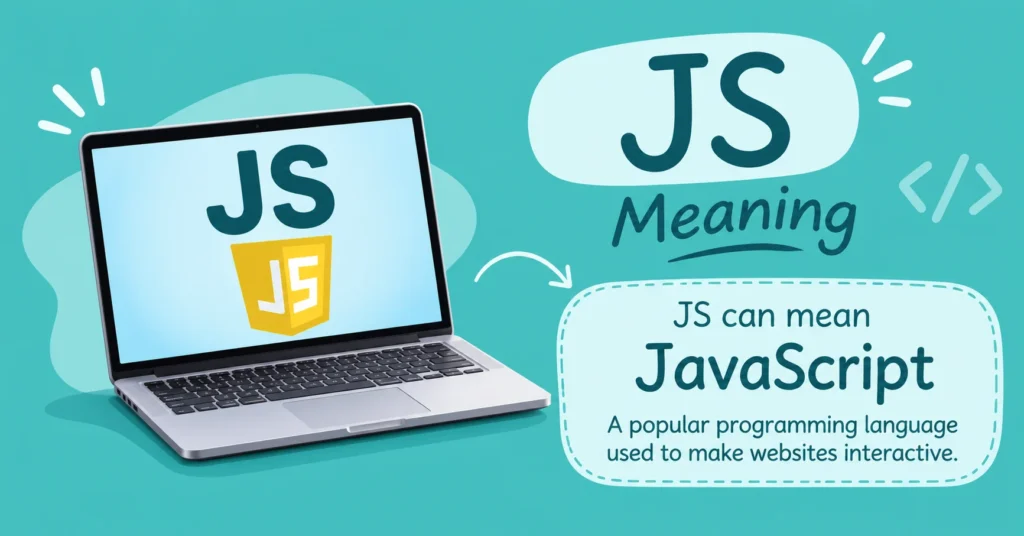
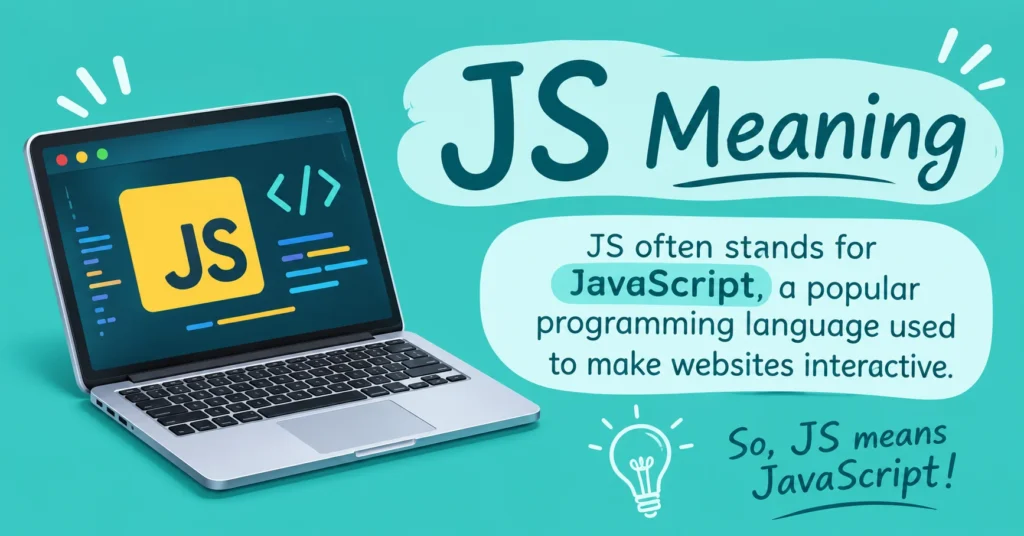
The JS meaning changes according to the subject of a conversation. In casual texting, it generally stands for “Just Saying.” In software development, however, it is commonly used as an abbreviation for JavaScript, a programming language used in browsers and other environments.
In casual texting
Friends may use JS after giving advice, expressing preferences, or making observations. For example, “You should take that opportunity, js” communicates a personal suggestion without demanding agreement. The abbreviation makes the message informal and conversational, particularly when people already understand each other’s texting habits.
In social media comments
Social media users may add JS to comments, captions, or replies when sharing an opinion. Someone commenting, “The original version was better, js,” is expressing a preference. It can sound humorous, confident, or slightly critical depending on the discussion and the reactions of other users.
In gaming
Online gaming communities often use abbreviations to communicate quickly during matches and group discussions. JS may mean “Just Saying” when someone shares an opinion about a strategy. However, gaming terminology varies between communities, so the surrounding discussion should determine the intended interpretation.
In programming
In programming, JS commonly means JavaScript rather than internet slang. Developers use the abbreviation when discussing JavaScript code, web development, application functionality, frameworks, and programming projects. For example, “I’m learning JS” means that someone is learning the JavaScript programming language.
In professional communication
If you encounter JS in a business report, academic document, medical record, or technical discussion, avoid assuming that it means “Just Saying.” Professional abbreviations can have specialized definitions. Check the surrounding subject, document glossary, or relevant professional source before interpreting it.
In personal conversations
In personal messages, JS may communicate more than a simple observation. Someone might write, “You seemed really happy yesterday, js.” Depending on your relationship, this could be a friendly comment, playful teasing, or an attempt to start a deeper conversation.
JS Meaning in Chat, WhatsApp, Instagram, and TikTok
The basic slang meaning generally remains “Just Saying” across popular messaging applications. What changes is the conversational situation, the relationship between the people communicating, and the tone of the message.
Platform comparison
| Platform | Typical usage | Example |
| Snapchat | Short personal messages | You should reply, js |
| Comments and DMs | That picture looks amazing, js | |
| TikTok | Opinions and reactions | The original was better, js |
| Friends and family chats | We should leave early, js | |
| Discord | Group and gaming conversations | That strategy needs work, js |
JS on WhatsApp
WhatsApp conversations often involve friends, family members, and colleagues. Someone might send, “JS, you could have told me earlier.” The sender is pointing out something they noticed while presenting it as a casual comment rather than a formal complaint.
JS on Instagram
On Instagram, JS can appear in direct messages, Story replies, and comment sections. For example, “That color suits you better, js” expresses a personal preference. The phrase may make a compliment feel relaxed, but it does not automatically indicate romantic interest.
JS on TikTok
TikTok comments frequently involve reactions, opinions, and discussions about videos. A user might write, “The second outfit was definitely better, js.” Here, the abbreviation signals that the commenter is sharing a personal view rather than establishing an objective fact.
JS in DMs
Direct messages are more personal than public comments, so the relationship between the sender and recipient matters. For example, “JS, I always enjoy talking to you” might be friendly or slightly flirtatious. However, the abbreviation alone cannot establish romantic intention.
Examples of JS in Conversation
The easiest way to understand an internet abbreviation is to see how people use it in realistic situations. JS can follow compliments, suggestions, observations, and even mild criticism. Its meaning remains “Just Saying,” but the emotional effect changes with the sentence.
Here are original examples illustrating common texting situations:
1. Sharing an opinion
Friend: “Which movie should we watch tonight?”
You: “The comedy looks more interesting, js.”
Meaning: You’re sharing your preference without insisting on your choice.
2. Giving advice
Friend: “I keep missing my morning classes.”
You: “Maybe you should sleep earlier, js.”
Meaning: You’re offering a casual suggestion.
3. Making an observation
Friend: “I haven’t seen Sarah today.”
You: “She usually arrives before everyone else, js.”
Meaning: You’re simply pointing something out.
4. Giving a compliment
Friend: “Do you like my new haircut?”
You: “It actually looks really good on you, js.”
Meaning: You’re expressing a positive personal opinion.
5. Expressing mild criticism
Friend: “I forgot to submit the assignment.”
You: “You could have checked the deadline yesterday, js.”
Meaning: You’re pointing out a mistake, although the comment may sound slightly critical.
6. Making a playful comment
Friend: “I’m ordering another pizza.”
You: “You ordered one yesterday too, js 😂”
Meaning: You’re teasing your friend in a relaxed way.
7. Making a recommendation
Friend: “Should I buy this phone?”
You: “The other model has a better camera, js.”
Meaning: You’re offering another perspective.
These examples demonstrate why reading the entire sentence matters more than focusing on the abbreviation alone.
When to Use and When Not to Use JS
JS works best in informal communication where the people involved understand internet slang. It can help conversations feel relaxed, especially when expressing an opinion, giving a suggestion, or making a playful observation.
When To Use JS
Consider using JS in situations such as:
- Casual conversations with friends.
- Informal text messages.
- Social media comments.
- Private messages.
- Friendly discussions.
- Lighthearted suggestions.
- Playful conversations and jokes.
For example, “We should try that new restaurant, js” sounds like a casual recommendation rather than a formal request.
When Not To Use JS
There are also situations where this abbreviation may create confusion or appear unprofessional.
Avoid using it in:
- Formal business emails.
- Academic assignments.
- Professional reports.
- Serious workplace discussions.
- Legal documents.
- Important customer communications.
- Sensitive personal conversations.
Instead of writing “JS, this needs to be corrected,” use a clearer sentence such as “I recommend correcting this before submission.”
The main principle is simple: choose language that fits your audience. Informal texting shorthand is useful among friends, but clear and complete expressions are usually better in professional communication.
Similar Slang Words or Alternatives
JS is part of a broader collection of internet abbreviations used to express opinions, share information, and communicate emotions. Some expressions have similar purposes, but their meanings are not identical.
| Abbreviation | Full form | Main purpose |
| JS | Just Saying | Adding an opinion or observation |
| IMO | In My Opinion | Expressing a personal viewpoint |
| IMHO | In My Humble Opinion | Sharing a modestly framed opinion |
| TBH | To Be Honest | Introducing an honest statement |
| NGL | Not Gonna Lie | Expressing a candid thought |
| FYI | For Your Information | Sharing useful information |
| IDK | I Don’t Know | Expressing uncertainty |
| BTW | By The Way | Introducing additional information |
“Just saying”
This is the complete expression behind the abbreviation. It is useful when you want to communicate your thought clearly without using texting shorthand.
“IMO”
IMO means “In My Opinion.” It directly identifies a statement as someone’s personal viewpoint. For example, “IMO, the first option is better” clearly communicates a preference.
“TBH”
TBH stands for “To Be Honest.” People commonly use it before expressing a sincere thought, especially when discussing preferences, feelings, or personal experiences.
“Honestly”
Honestly is a natural alternative when you want to communicate openly. It works in both casual and moderately formal conversations, depending on the sentence.
“Just my opinion”
This phrase makes it clear that you’re sharing a personal perspective rather than presenting something as an established fact.
“I’m only saying”
This expression is close to “Just Saying” and can be used when someone wants to emphasize that they are simply making a comment.
“For what it’s worth”
This phrase is slightly more formal. It introduces an opinion or suggestion while allowing the listener to decide how much importance to give it.
Is JS Rude?
No, JS is not inherently rude. Most of the time, it is an informal way to share a thought, observation, or suggestion. However, it can sound sarcastic or passive-aggressive when attached to criticism, personal judgments, or comments that might hurt someone’s feelings.
Consider these two examples:
- Friendly: “You should definitely try that dessert, js 😄”
- Potentially rude: “You never listen to anyone, js.”
The first message feels playful and harmless. The second may sound judgmental because the criticism is directed at the recipient.
Remember that text messages lack facial expressions, vocal tone, and other important communication signals. Emojis, punctuation, previous messages, and the relationship between the sender and recipient can all influence interpretation.
If a message makes you uncomfortable, you do not have to assume the sender intended to offend you. Ask for clarification before making a judgment.
Can JS Mean Something Else?
Yes. Although “Just Saying” is the common meaning in casual texting, JS has other interpretations in different environments. The most important alternative is JavaScript, particularly when discussing software development, websites, or computer programming.
The following examples illustrate how context changes the abbreviation:
| Meaning | Context | Example |
| Just Saying | Texting and social media | That looks better, js |
| JavaScript | Programming | I’m learning JS |
| Initials | Personal identification | JS signed the document |
| Junior School | Educational context | The school uses JS in its name |
| Job-related abbreviation | Workplace documents | Check the document’s glossary |
Not every alternative is universally standardized. Some are organization-specific, regional, or personal abbreviations.
Confusing It With JavaScript
One common misunderstanding occurs when people assume JS always means internet slang. In a developer conversation, “I need help debugging my JS” clearly refers to JavaScript.
According to MDN, JavaScript is a programming language used for dynamic webpage behavior and in other environments, including Node.js. It is distinct from Java, despite the similarity in their names.
Assuming It Means the Same Everywhere
An abbreviation does not have to carry the same definition across every online community. A friend using JS in a private message probably means “Just Saying,” whereas a developer using it in a coding discussion probably means JavaScript.
Thinking It’s Offensive
JS itself is not an insult. However, the surrounding statement may be critical or sarcastic. Understanding the complete message helps prevent unnecessary misunderstandings.
Why Gen Z Uses JS So Frequently
Short messaging expressions are convenient in fast-moving digital conversations. Younger internet users often communicate through abbreviations, emojis, and informal expressions on social platforms. JS fits this communication style because it can add a quick conversational signal without requiring a lengthy explanation.
However, it would be inaccurate to claim that JS is exclusive to Gen Z. People from different age groups use internet shorthand, and individual preferences vary.
Conclusion
Understanding the JS meaning makes everyday digital communication easier. In most casual text messages, JS stands for “Just Saying,” an informal expression people use to share opinions, suggestions, observations, and playful comments.
Its tone can be friendly, neutral, humorous, or occasionally sarcastic. The abbreviation can also refer to JavaScript in programming discussions, so understanding the surrounding conversation is essential. Whether you encounter JS on Snapchat, TikTok, Instagram, WhatsApp, or in a private message, reading the complete sentence will usually help you identify its intended meaning.
FAQs
Author

Ethan Carter is an SEO blogger specializing in internet slang, text abbreviations, and social media meanings. He creates clear, accurate, and reader-friendly content backed by thorough research. His goal is to help readers understand modern online language with reliable, easy-to-read guides.

One Comment