Wheezing Meaning: 7 Essential Facts, Warning Signs & Helpful Causes Explained
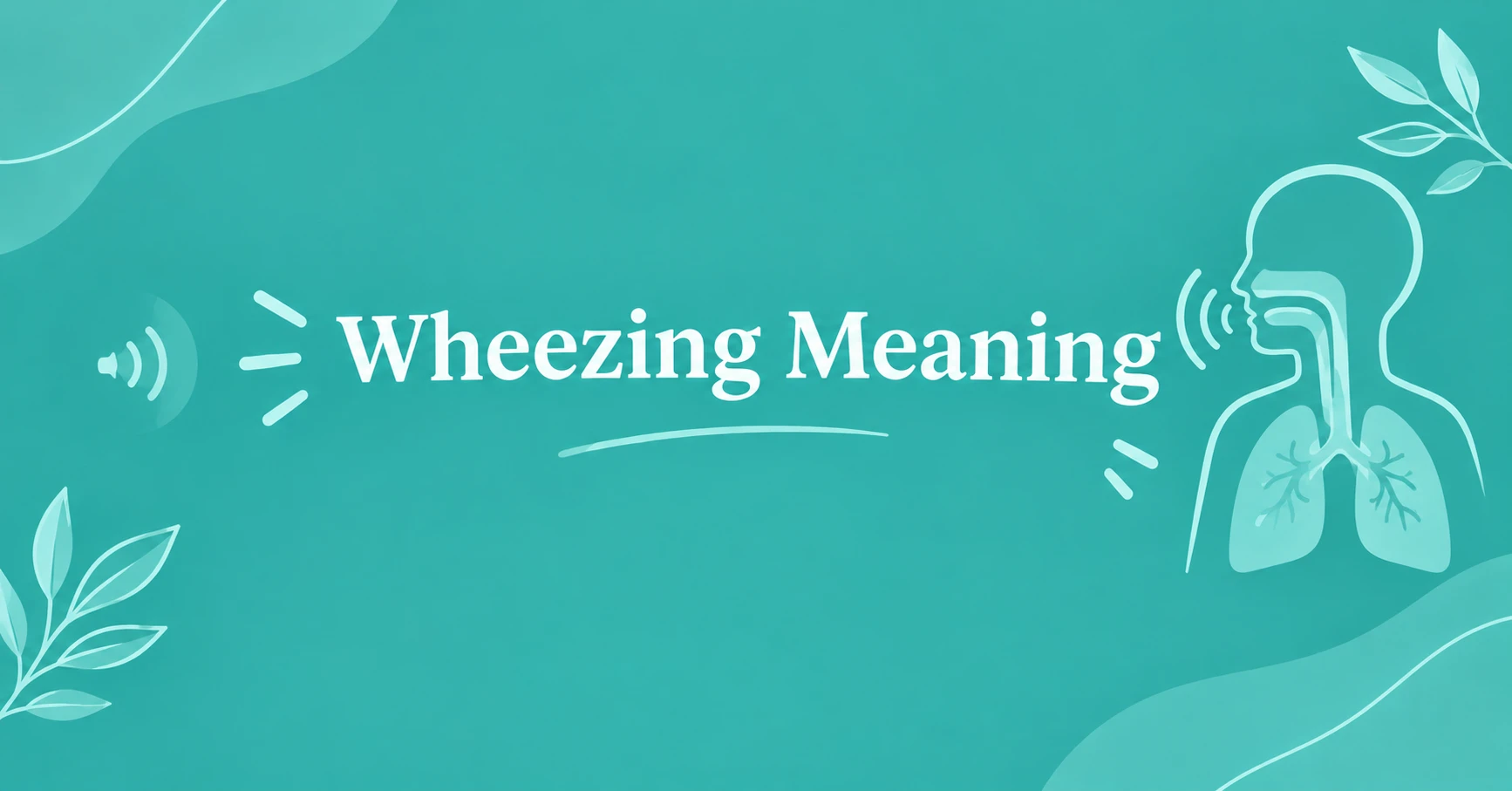
Wheezing meaning is a high-pitched whistling or musical sound produced when air moves through narrowed or partially blocked airways. It is usually easier to hear while breathing out, although some people wheeze while breathing in or during both phases. Wheezing is a symptom rather than a diagnosis and may occur with asthma, allergies, bronchitis, COPD, infections, or other airway problems.
Hearing an unexpected whistling sound, noisy breathing, chest tightness, or shortness of breath can understandably feel frightening. From an evidence-first health-information perspective, the important point is not to assume that every wheeze means asthma. Understanding airway narrowing, respiratory symptoms, possible triggers, diagnosis, and warning signs can help you recognize when ordinary irritation may be involved and when professional care is more appropriate.
What is wheezing?
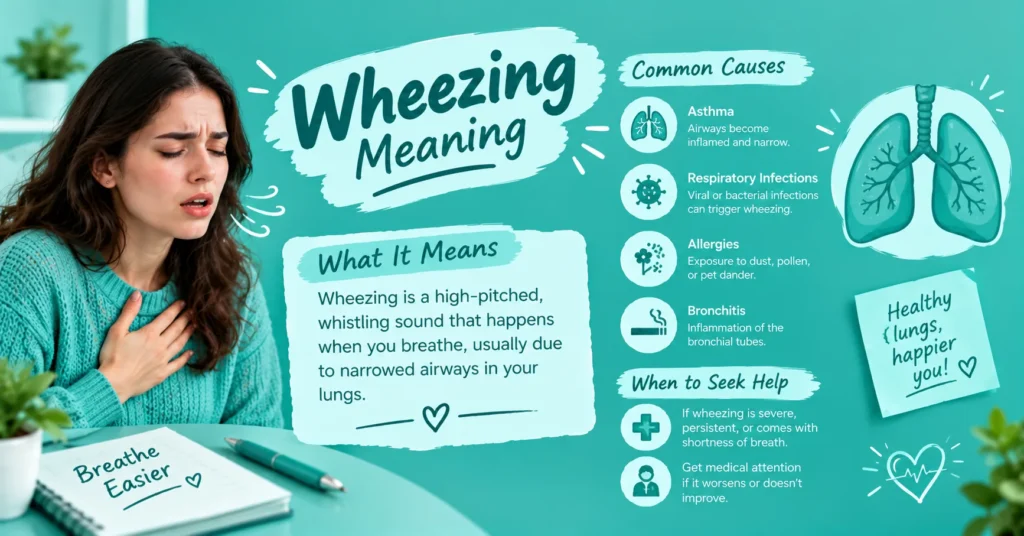
In simple terms, wheezing meaning refers to an abnormal breathing sound created when air passes through narrowed airways. The sound is commonly high-pitched, whistling, squeaky, or musical. Narrowing may occur because of inflammation, muscle tightening, mucus, swelling, or another obstruction affecting airflow through the respiratory system.
Wheezing is a symptom, not a disease by itself. Asthma is a common cause, but allergies, respiratory infections, bronchitis, COPD, pneumonia, acid reflux, foreign-body obstruction, vocal-cord problems, and heart conditions can also be associated with it. That distinction matters because the appropriate treatment depends on the underlying cause rather than the sound alone.
Wheezing meaning in everyday language
When someone says they are “wheezing,” they usually mean their breathing has developed a noticeable whistle or squeak. You may hear it from the chest, especially during exhalation, although some wheezes are subtle enough to require a stethoscope. The experience may occur with coughing, congestion, chest tightness, or breathlessness.
What does wheezing sound like?
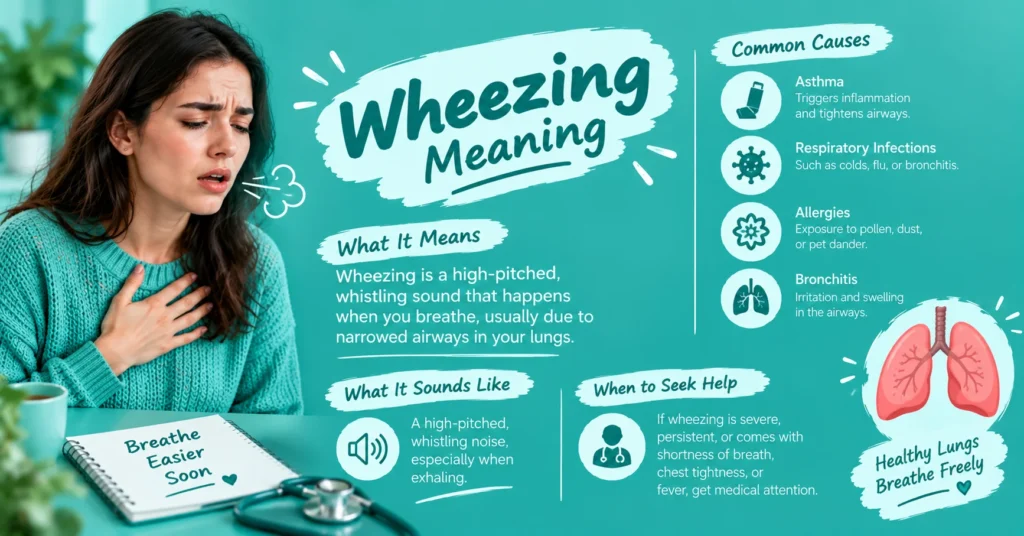
Wheezing meaning usually sounds like a high-pitched whistle, hiss, squeak, or musical tone synchronized with breathing. It is commonly more noticeable during exhalation because the airways can become narrower during that phase. The pitch and character can vary depending on where the airway narrowing occurs.
Not every unusual breathing noise is wheezing. Rhonchi tend to sound lower and more like snoring or gurgling, while stridor is generally a harsh, high-pitched sound associated with the upper airway and is often heard during inhalation. A healthcare professional can distinguish these sounds during a respiratory examination.
| Breathing sound | Typical description | Common association |
| Wheezing | High-pitched whistle or musical sound | Narrowed airways |
| Rhonchi | Low-pitched rattling or snoring sound | Larger-airway secretions |
| Stridor | Harsh, high-pitched sound, often on inhalation | Upper-airway obstruction |
| Crackles | Popping or crackling | Fluid/opening of small airways |
What causes wheezing?
The most common mechanism behind wheezing meaning is restricted airflow. When an airway becomes narrower because of inflammation, muscle tightening, mucus, swelling, or an obstruction, air has to move through a smaller passage. That altered airflow can produce the characteristic whistle.
The possible causes are broad. Asthma and COPD are important causes, but wheezing can also accompany bronchitis, pneumonia, allergies, respiratory viruses, bronchiolitis, bronchiectasis, GERD, heart failure, medication reactions, smoking, or an inhaled foreign object. A new or unexplained wheeze should therefore be interpreted in context.
Causes in babies and children
Children can wheezing meaning for many of the same reasons as adults, but their smaller airways make them particularly susceptible to noisy breathing during viral infections. Bronchiolitis, asthma, allergies and airway obstruction can all be involved. Medical assessment is especially important when a child has significant breathing difficulty or suddenly develops wheezing.
How do doctors diagnose wheezing?
Doctors do not diagnose the underlying cause from the sound alone. They usually ask when the wheezing began, whether it is constant or recurring, what triggers it, and whether symptoms such as cough, chest pain, fever, shortness of breath, or congestion occur at the same time.
A physical examination may include listening to the lungs with a stethoscope and checking oxygen saturation with pulse oximetry. Depending on the situation, clinicians may use chest X-rays, blood tests, or pulmonary function testing. For suspected asthma, spirometry can help assess how well the lungs move air.
| Diagnostic approach | What it may help assess |
| Medical history | Timing, triggers and associated symptoms |
| Lung examination | Type and location of abnormal breathing sounds |
| Pulse oximetry | Blood oxygen level |
| Spirometry | Airflow and lung function |
| Chest X-ray | Certain lung or structural problems |
| Blood tests | Selected infections or other causes |
How do doctors treat wheezing?
Treatment for wheezing meaning depends on why the airways are narrowed. There is no single medicine that is appropriate for every wheeze. Asthma-related symptoms may require prescribed inhalers, while an infection, allergic reaction, COPD flare, foreign-body obstruction, or another condition requires a different management approach.
For asthma, healthcare professionals may prescribe medicines that relax the airways or reduce inflammation. Albuterol, for example, is a bronchodilator used to prevent or treat wheezing and breathing difficulty associated with conditions such as asthma and COPD. Medication should be used according to the individual’s medical plan rather than started solely because wheezing occurs.
What are OTC treatments for wheezing?
Some mild wheezing associated with temporary irritation may improve as the underlying problem resolves, but over-the-counter measures do not treat every cause. Cleveland Clinic and MedlinePlus discuss measures such as avoiding smoke and known irritants, maintaining hydration, and using humidified air for some people. These measures should not replace evaluation when symptoms are severe or persistent.
A useful distinction is between comfort measures and medical treatment. A humidifier may reduce irritation caused by dry air, while avoiding allergens or tobacco smoke may reduce triggers. However, someone with asthma, severe allergy, infection, or another underlying condition may require clinician-directed treatment. Do not assume that a home remedy can safely replace prescribed therapy.
Simple supportive measures
Depending on the underlying situation, people may be advised to reduce exposure to smoke, dust, known allergens and other irritants. Following a prescribed asthma action plan is particularly important for people with diagnosed asthma. The CDC recommends that people with asthma work with their healthcare provider to develop an individualized action plan.
What are the risk factors for wheezing?
Wheezing can occur at almost any age, but some circumstances increase the likelihood. Children have smaller airways and may wheeze during respiratory infections, while adults who smoke or have conditions such as COPD or heart disease may be more susceptible. Asthma and allergies are also important risk contexts.
Environmental exposure can matter as well. Tobacco smoke, allergens, occupational irritants, cold air and certain respiratory infections may trigger airway narrowing or worsen an existing respiratory condition. Recognizing personal triggers can help someone with an established condition reduce avoidable episodes, although trigger avoidance does not replace medical treatment.
When should I be worried about wheezing?
A new, recurring, unexplained, or persistent wheeze deserves medical attention, particularly if it occurs with shortness of breath, chest tightness, chest pain, rapid breathing, confusion, or other concerning symptoms. MedlinePlus recommends contacting a healthcare professional when wheezing occurs for the first time or keeps recurring without an explanation.
Severe breathing difficulty is an emergency. In the United States, call 911 for severe trouble breathing, gasping, bluish discoloration, confusion, or other signs of serious respiratory distress. Sudden wheezing after a food, medication, or insect sting may also indicate a severe allergic reaction requiring urgent emergency care.
When should I go to the ER?
Seek emergency help when wheezing is accompanied by severe difficulty breathing, inability to get enough air, blue or gray discoloration, altered consciousness, or signs of anaphylaxis such as sudden swelling of the face, lips, tongue, or throat. Do not wait for the wheezing to become louder before seeking help.
What are the potential complications of wheezing?
The sound of wheezing itself is not the underlying disease; the potential complications depend on what is causing it. Untreated asthma, severe allergic reactions, serious infections, airway obstruction, or other respiratory conditions can lead to worsening breathing difficulty and, in severe situations, inadequate oxygenation.
That is why recurring wheezing should not simply be dismissed as “just allergies” or automatically labeled asthma. Finding the underlying cause allows the appropriate treatment plan to be used. For people with asthma, the CDC recommends an individualized asthma action plan and ongoing communication with a healthcare professional.
Conclusion
The simplest wheezing meaning is a whistling or musical breathing sound caused by narrowed or partially blocked airways. It is a symptom with many possible explanations, from temporary respiratory irritation to asthma, COPD, allergy, infection or another medical problem. The sound alone cannot determine the diagnosis.
If wheezing is new, persistent, recurrent or accompanied by breathing difficulty, professional evaluation is the safest next step. If severe breathing problems, blue/gray skin or lips, confusion, choking, or a serious allergic reaction occurs, seek emergency help immediately. In the U.S., that means calling 911.
FAQs
Author

Ethan Carter is an SEO blogger specializing in internet slang, text abbreviations, and social media meanings. He creates clear, accurate, and reader-friendly content backed by thorough research. His goal is to help readers understand modern online language with reliable, easy-to-read guides.