Off the Grid Meaning: 9 Essential Facts About Its Hidden Benefits & Risks
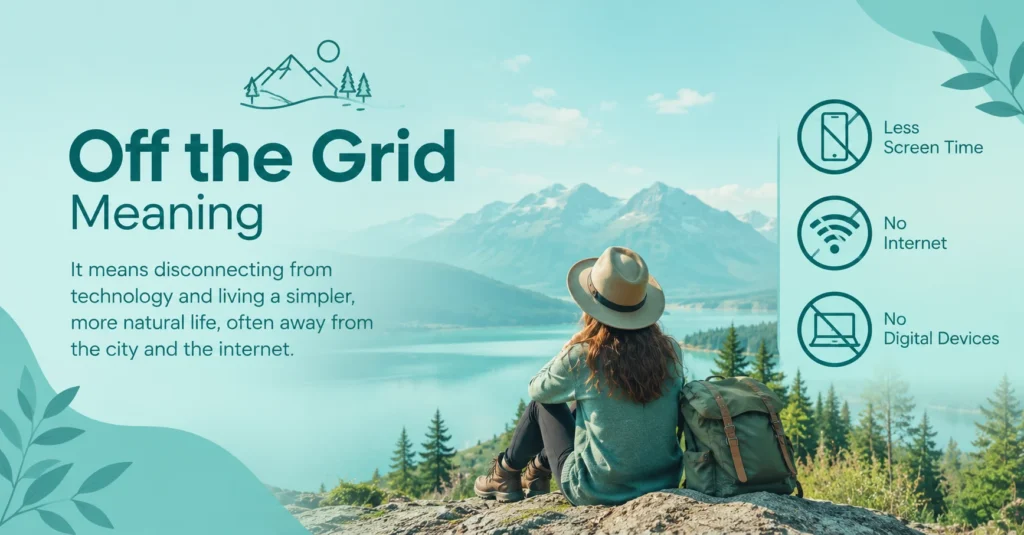
The off the grid meaning is being disconnected from normal systems or communication, either by living independently of public utilities or by stepping away from phones, social media, and everyday contact. In American English, the phrase can describe an independent lifestyle, a remote cabin without public electricity, or someone taking a break from being reachable.
If you’ve ever wondered why a friend says they’re going off the grid, the context makes all the difference. Someone might want a quiet weekend away from notifications, while another person might rely on solar panels and their own water supply. Understanding these meanings makes it easier to interpret the expression in conversations, captions, and everyday American English.
Off the grid meaning and definition
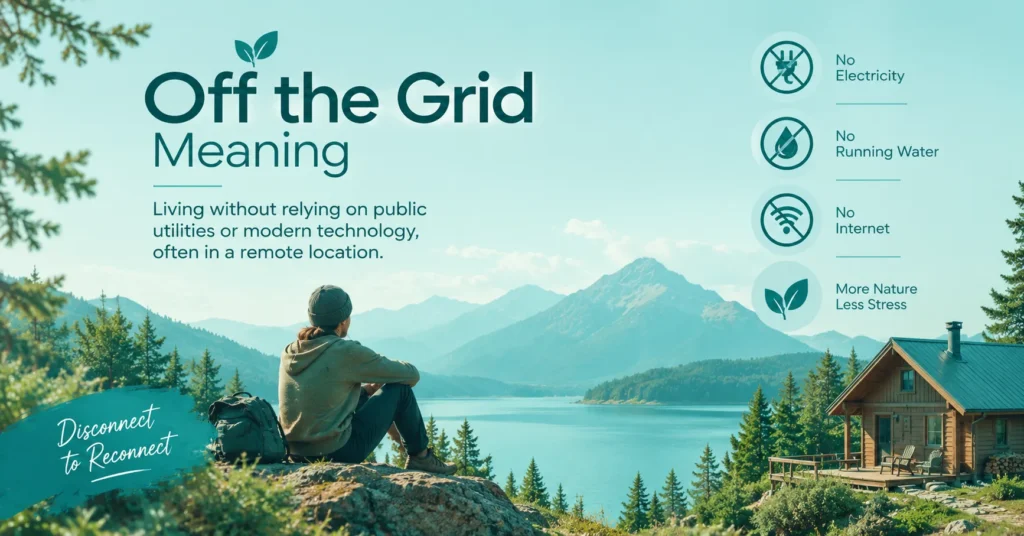
The phrase “off the grid meaning” describes being outside a conventional network or system. Its literal meaning often refers to a home that does not depend on the public electricity grid or other municipal utilities. Its figurative meaning refers to being disconnected from ordinary communication, public visibility, or social expectations.
In casual conversation, the phrase frequently suggests that someone is unavailable or has intentionally stepped away. For example, if a friend says, “I’m going off the grid this weekend,” they probably mean they want some time away from messages, calls, and social media. They do not necessarily mean they are moving to a remote location or giving up modern technology permanently.
What does “off the grid” meaning in simple words?
In simple words, it means being disconnected from the usual systems people rely on. That might mean living without public electricity, going somewhere with no cell service, or choosing not to respond to messages for a while. The surrounding sentence determines whether the expression is literal, figurative, or a little of both.
Explanation
The meaning becomes clearer when you separate the lifestyle definition from the everyday slang definition. In independent living, an off-grid home produces or obtains essential resources without relying on conventional utility connections. Solar panels, batteries, wells, and alternative water systems can help make that possible, depending on the home’s design.
In social situations, the same expression describes a person who is difficult to reach or intentionally unavailable. Someone might turn off notifications, stop posting online, travel to a remote place, or take a break from digital communication. The phrase does not automatically imply secrecy, danger, or a desire to avoid other people forever.
Off the grid in texting and social media
In a text message, “off the grid meaning” commonly means that someone will not be checking messages or maintaining their usual online presence. A person might write, “I’m going off the grid until Monday,” to set expectations before a vacation or personal break. It is a convenient, informal way to communicate temporary unavailability.
The expression can also appear in Instagram captions, group chats, and travel posts. Someone sharing photographs from a mountain cabin might use it to describe a peaceful escape. Another person might use it humorously after ignoring notifications during exam week. The exact tone depends on the relationship, circumstances, and wording.
Is going off the grid always permanent?
No. Going off the grid can describe anything from a few hours offline to a long-term change in lifestyle. A weekend without social media is temporary disconnection, while living year-round without public utility connections is a more substantial commitment. When someone gives a time frame, that detail usually clarifies what they mean.
Origin of off-grid
The expression developed from the literal idea of being outside a connected network, particularly an electrical grid. An electrical grid links power generation and distribution infrastructure to consumers. A home operating independently of that network can be described as off-grid. Dictionary.com records the term off-grid as first appearing in the period 1975–80.
Over time, the expression also came to describe people who live apart from mainstream systems or have limited contact with the outside world. That figurative use fits naturally with the image of being outside a network. Today, the phrase can refer to independent housing, limited connectivity, privacy, or a deliberate break from everyday digital routines.
How the meaning evolved in everyday English
The modern expression can be used without any reference to electricity. A person who turns off their phone before a retreat may say they are off the grid even if they are staying in a hotel with Wi-Fi. The phrase works figuratively because the person has temporarily disconnected from their usual channels of communication.
Example sentences
The following examples show how the expression works in different situations. In a literal context, it describes independent living or a lack of utility connections. In a social context, it can mean being unreachable, taking time off from technology, or choosing privacy. These distinctions help readers interpret the phrase without confusing a lifestyle choice with a temporary absence.
| Example sentence | Meaning |
| “We’re living off the grid in a cabin.” | The home operates independently of conventional utility networks. |
| “I’ll be off the grid this weekend.” | The speaker expects to be unavailable. |
| “She went off the grid after graduation.” | She became less visible or stopped communicating regularly. |
| “Our solar-powered house is off-grid.” | The home generates its own electricity rather than relying on the public grid. |
| “He went off the grid to clear his head.” | He intentionally took time away from ordinary communication. |
| “We were off the grid in the mountains.” | The group may have lacked reliable phone or internet service. |
Example of a conversation between friends
Alex: “Are you going to be online this weekend?”
Jordan: “Probably not. I’m going off the grid for a couple of days.”
Alex: “Nice. Taking a break?”
Jordan: “Yeah, heading out of town and leaving my phone alone for once.”
In this conversation, Jordan is talking about a temporary digital break, not necessarily living independently of public utilities. The expression communicates a desire for quiet and reduced availability without requiring a lengthy explanation.
Example in a work message
“I’m going off the grid during my vacation and may not respond to email until Tuesday.”
Here, the phrase sets a professional boundary. It tells colleagues that replies will be delayed. In a workplace, it’s helpful to provide an alternative contact for urgent issues rather than relying on an idiom to explain every detail.
What people mean when they say off the grid
When people use this phrase, they are generally describing some form of separation from ordinary systems or contact. The separation might be physical, technological, or social. A person living in a remote area without public utilities is off-grid in the literal sense, while someone who stops answering messages for a weekend is using the expression figuratively.
The phrase can communicate different feelings depending on context. It may suggest freedom, privacy, relaxation, or a desire to avoid distractions. In another situation, it might sound mysterious or raise concern because a person has unexpectedly stopped responding. The words alone do not explain the reason; the surrounding conversation supplies that information.
Does “off the grid” mean ignoring someone?
Not necessarily. Someone who says they are off the grid may be deliberately reducing communication, but that does not automatically mean they are ignoring a particular person. They might be traveling, resting, spending time with family, or experiencing poor reception. If the phrase appears in a personal conversation, consider the wider context before assuming it signals rejection.
Does “off the grid” mean being invisible?
Figuratively, it can mean being difficult to find or having a low public profile. However, it does not guarantee anonymity or make someone’s digital activity untraceable. The expression is informal, not a technical description of privacy or security. Someone who wants stronger privacy protections needs to consider their accounts, devices, data, and online activity separately.
How it sounds in the wild
In everyday American English, “off the grid” sounds natural in conversations about travel, outdoor adventures, personal boundaries, and time away from technology. It can make a short absence sound intentional rather than accidental. For example, saying “I was off the grid” suggests a deliberate break or a situation in which regular communication was unavailable.
The expression can also carry a relaxed, adventurous tone. A person might describe a camping trip as an off-the-grid experience, especially if they stayed somewhere remote without dependable service. In other situations, it may sound more serious, such as when a person has stopped communicating unexpectedly. Tone depends on the situation rather than the phrase alone.
When it suggests a peaceful break
If a friend says, “I need to go off the grid for a few days,” they may be expressing a need for rest, privacy, or less screen time. This use is common in informal conversation because it conveys a clear idea without listing every activity the person plans to stop doing.
When it suggests a remote lifestyle
If someone talks about buying land and building an off-grid home, the meaning is more practical. They may be considering energy independence, water access, heating, waste management, and the cost of maintaining essential systems. Here, the phrase describes how a property functions rather than someone’s social-media habits.
Caption, comment, and group chat examples
The expression works well in social captions because it is short and communicates a recognizable mood. People might use it with photographs of forests, camping trips, quiet weekends, or a break from busy routines. In group chats, it can explain why replies will be delayed. The best wording matches the situation rather than making every absence sound dramatic.
Here are original examples suitable for everyday use:
- Vacation caption: “A few days off the grid, back when I’m recharged.”
- Nature post: “Fresh air, quiet trails, and life off the grid.”
- Text to a friend: “I’m going off the grid tonight. I’ll reply tomorrow.”
- Group chat: “Just a heads-up: I’ll be off the grid this weekend.”
- Digital break: “Logging off and going off the grid for some peace.”
- Camping trip: “No signal, no notifications, just a weekend off the grid.”
- Personal update: “Taking some time off the grid to focus on myself.”
Is “off the grid” formal or informal?
The expression is generally informal, particularly when used to describe someone taking a break from messages or social media. It can still appear in professional communication, such as a vacation notice, but clear wording is often better when timing matters. In technical discussions about energy systems, off-grid is also a standard descriptive term.
When it sounds forced
The phrase works best when it communicates a meaningful break, reduced availability, or independence from conventional infrastructure. Using it for a very short delay may sound exaggerated. For example, saying “I went off the grid” after missing one message for ten minutes might be understood as a joke, but it could also seem unnecessarily dramatic.
A more precise expression is useful when other people need practical information. If you will have no phone signal, say so. If you’re taking a break from social media but remain reachable by text, explain that distinction. If you are discussing a home without utility connections, describe the systems it uses. Clear details help prevent misunderstandings.
Better alternatives for everyday conversation
| What you want to communicate | More precise wording |
| Taking a short break | “I’m taking some time offline.” |
| Not checking messages | “I won’t be checking my phone.” |
| Traveling without reception | “I’ll have limited cell service.” |
| Leaving social media temporarily | “I’m taking a social-media break.” |
| Living independently of the public grid | “My home uses an off-grid power system.” |
| Needing personal space | “I need some quiet time to myself.” |
Where off the grid stands now
The expression remains useful because it bridges two familiar ideas: independence from conventional infrastructure and distance from constant communication. Dictionary definitions document the utility-related meaning, while contemporary slang coverage illustrates how the phrase is used for temporary unavailability and digital breaks. Both interpretations remain relevant, so the context should guide the reader.
For readers encountering the expression in a message, caption, song, or conversation, the simplest approach is to ask what kind of disconnection is being described. Is the person talking about electricity and water, being out of cell range, or choosing not to be online? Once that distinction is clear, the phrase is straightforward to understand.
The main takeaway is that off the grid does not have one meaning in every situation. It can describe independent living, limited communication, a remote location, or a deliberate break from digital life. Pay attention to the sentence around it, and you’ll usually understand exactly what the speaker intends.
Conclusion
Understanding the meaning of off the grid helps you recognize how this phrase is used in everyday conversations, social media, and different lifestyles. It can describe someone who disconnects from technology, takes a break from social media, lives independently without public utilities, or chooses to stay away from public attention. The exact meaning depends on the situation and the speaker’s intention.
Sometimes, going off the grid meaning enjoying peace and privacy, while other times, it refers to a more self-sufficient way of living. Whether you want a digital break or a simpler lifestyle, stepping away from constant connectivity can help you focus on what matters most.
FAQs
Author

Ethan Carter is an SEO blogger specializing in internet slang, text abbreviations, and social media meanings. He creates clear, accurate, and reader-friendly content backed by thorough research. His goal is to help readers understand modern online language with reliable, easy-to-read guides.