ALR Meaning in Text: 10+ Powerful & Shocking Meanings You Should Know
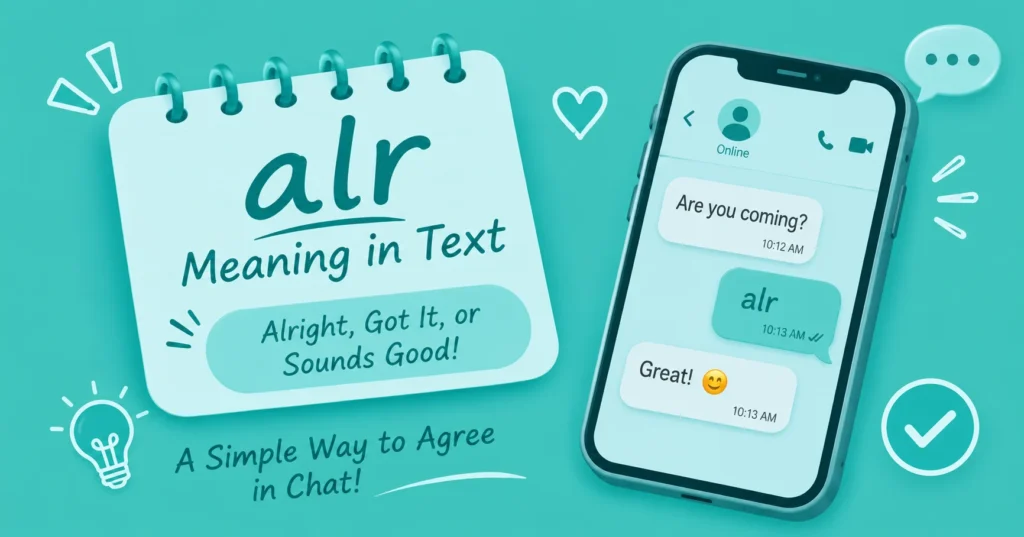
If someone texts you “alr,” they usually mean “alright” a quick way to say okay, agree, or acknowledge a message. The abbreviation is common in casual texting and social media conversations. If you have received a short reply and are unsure whether it sounds friendly, neutral, or dismissive, the surrounding conversation is the best clue.
ALR is informal digital shorthand, not a secret code with one fixed emotional meaning. In everyday messaging, it can confirm a plan, accept a suggestion, or show that someone has understood you. This guide explains the common meaning, the less common “already” interpretation, and how to read or respond to the abbreviation without overthinking it.
ALR Meaning in Text: Meaning and Definition
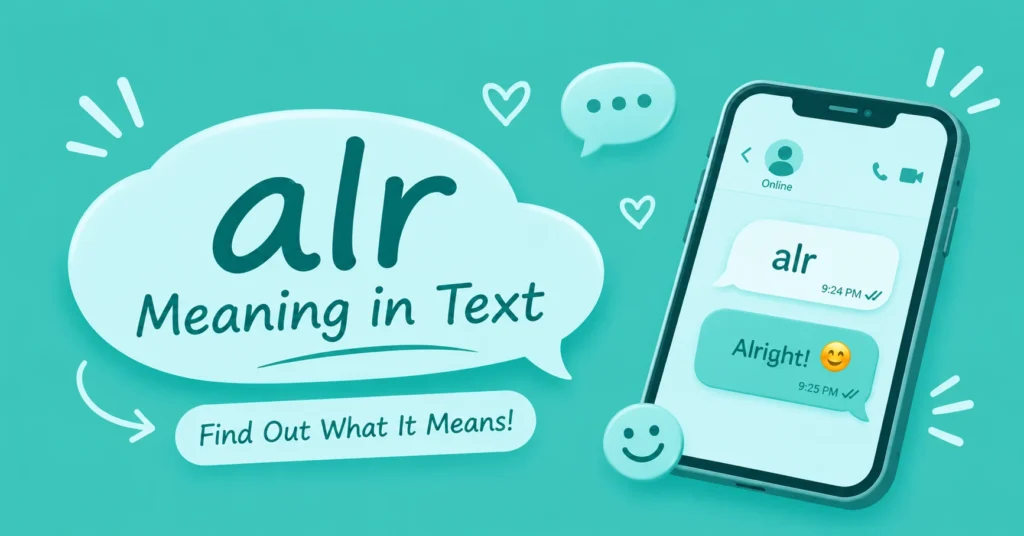
The most common ALR meaning in text is “alright,” sometimes written as “all right.” People use it as a brief response to say okay, understood, agreed, or accepted. For example, “Alr, I’ll meet you at 6” means the person has acknowledged the plan and is confirming they will meet you.
ALR is generally an informal abbreviation or shortened spelling. It is not usually an acronym in which each letter stands for a separate word. In casual messages, the lowercase form “alr” is common, while “ALR” and “Alr” usually communicate the same basic meaning.
The abbreviation is useful because texting often involves quick exchanges. Instead of typing “alright,” someone can send “alr” and keep the conversation moving. You may see it in private messages, group chats, comments, or gaming conversations.
The exact meaning still depends on the sentence. If someone writes, “Alr, thanks for letting me know,” the message is a straightforward acknowledgment. If they write, “Alr, whatever,” the surrounding words may suggest frustration or reluctance. The abbreviation alone does not establish that emotion.
ALR Meaning in Text: Alright or Already?
Although “alright” is the usual interpretation, some people use “alr” as shorthand for “already.” This second meaning is less common and is usually easier to recognize from the sentence. When ALR begins a reply, it is likely to mean “alright.” When it follows an action, “already” may fit better.
| Text message | Likely meaning |
| “Alr, I’ll be there soon.” | Alright |
| “I alr ate.” | Already |
| “Alr, that works for me.” | Alright |
| “Did you send it alr?” | Already, if the sender uses it that way |
This is a useful clue, not a strict grammar rule. People use slang differently, and the same person may use an abbreviation in more than one way. If the sentence still seems unclear, read the full message or ask a simple follow-up.
For example, “I finished it alr” likely means “I already finished it.” But “Alr, I finished it” is more likely to mean “Alright, I finished it.” The placement and sentence structure help distinguish the two interpretations.
ALR Meaning in Text: How It Is Used in Different Contexts
The basic meaning of ALR usually stays the same across messaging apps and social platforms: “alright.” What changes is the situation in which it appears. A quick reply to a friend’s plan may confirm agreement, while a comment on a video may simply introduce a reaction.
In casual chat
A friend might text, “We’re leaving at 7,” and receive “alr” in response. Here, the abbreviation means “alright” or “okay.” It acknowledges the information without adding much detail. It does not necessarily express excitement or reluctance.
In group chats and gaming
In group chats, short replies help people coordinate quickly. A message such as “Alr, I’m joining now” confirms that someone is ready. In gaming conversations, “alr” may acknowledge a teammate’s instruction or plan. The context tells readers what is being accepted.
On WhatsApp, Instagram, and TikTok
On WhatsApp, ALR may appear in private messages about plans or everyday tasks. On Instagram, it can appear in direct messages or comments. On TikTok, it may be used in a comment as a casual opener or acknowledgment. The platform does not usually change the core meaning.
In professional communication
ALR is best kept to informal communication with people who understand the shorthand. In a work email, school assignment, or formal message, “alright,” “okay,” or “understood” is clearer. For example, “Understood. I’ll send the file this afternoon” sounds more polished than “Alr, I’ll send it.”
ALR Meaning in Text: Common Misconceptions
One common misconception is that ALR always signals a particular mood. It does not. A short reply may be neutral, friendly, hurried, or distant depending on the conversation. Someone who routinely sends brief messages may use “alr” without intending any special emotional signal.
Another misconception is that ALR always means “alright.” In everyday texting, that is the safest first interpretation, but “already” is possible in some sentences. In technical or specialized writing, the same letters may also be an abbreviation for something unrelated to texting. Context matters.
It is also easy to overread punctuation. “Alr!” may seem enthusiastic, while “alr.” may feel more serious or abrupt. However, punctuation alone cannot prove that someone is annoyed. The previous messages, the relationship, and the sender’s usual writing style provide better clues.
If a short response leaves you uncertain, avoid treating it as a hidden message. Consider what was being discussed. If the conversation concerns a plan, “alr” probably confirms it. If it follows a question about whether someone is okay, the intended meaning may be different.
ALR Meaning in Text: Similar Terms and Alternatives
Several short expressions can communicate a similar idea, but they are not always interchangeable. “Okay” and “OK” can acknowledge information or show agreement. “Sure” often expresses willingness, while “got it” emphasizes understanding. “Sounds good” is especially useful when accepting a plan or suggestion.
| Expression | Common use |
| Alright / all right | Agreement, acknowledgment, or acceptance |
| OK / okay | General acknowledgment or agreement |
| Sure | Willingness or agreement |
| Got it | Understanding or acknowledgment |
| Sounds good | Accepting a plan or suggestion |
| Aight | Informal variant of “alright” |
“Alr” is a shortened form of “alright,” so it is closest to the full word. “K” is even shorter and can sometimes feel more abrupt, although tone depends on the sender. “Bet” is another informal expression that may mean agreement, but it has a different style and usage.
The best alternative depends on your audience. Among friends, “alr” may feel natural. When clarity matters, use the full word or a more complete response. A little extra wording can make your meaning easier to understand.
ALR Meaning in Text: How to Respond
If someone sends you “alr,” your response should match what they are acknowledging. If they confirm a plan, you can say “See you then!” If they agree to help, “Thanks!” may be enough. If the message completes the conversation, you may not need to reply at all.
If the tone feels unclear, look at the previous messages before assuming the person is upset. A brief “alr” may simply mean they have read and understood your message. If you need a clear answer, ask a direct question such as, “Does that time still work for you?”
In general, respond naturally rather than trying to decode every punctuation mark. A short abbreviation is not reliable evidence of someone’s feelings. If the relationship or situation matters, a clear and respectful conversation is more useful than guessing what three letters mean.
Conclusion
The most common ALR meaning in text is “alright” a quick way to acknowledge a message, agree, or confirm a plan. It is informal shorthand used in everyday chats and social media conversations. A less common interpretation is “already,” which may fit when the abbreviation appears after an action.
When you see ALR, start with “alright,” then consider the full sentence and conversation. Do not assume that a short reply automatically signals anger, disinterest, or enthusiasm. Context is the best guide to meaning.
FAQs
Author

Ethan Carter is an SEO blogger specializing in internet slang, text abbreviations, and social media meanings. He creates clear, accurate, and reader-friendly content backed by thorough research. His goal is to help readers understand modern online language with reliable, easy-to-read guides.