10 Amazing Smutty Books Meaning: The Surprising Truth About “Smut” in Romance
If you’ve spent any time on BookTok or in a romance readers’ group, you’ve seen it: someone gushing about a “smutty” book like it’s the highest compliment in the world. The first time I saw a five-star review that just said “so smutty, 10/10,” I had to stop and ask what that actually meant and whether it was an insult or a badge of honor.
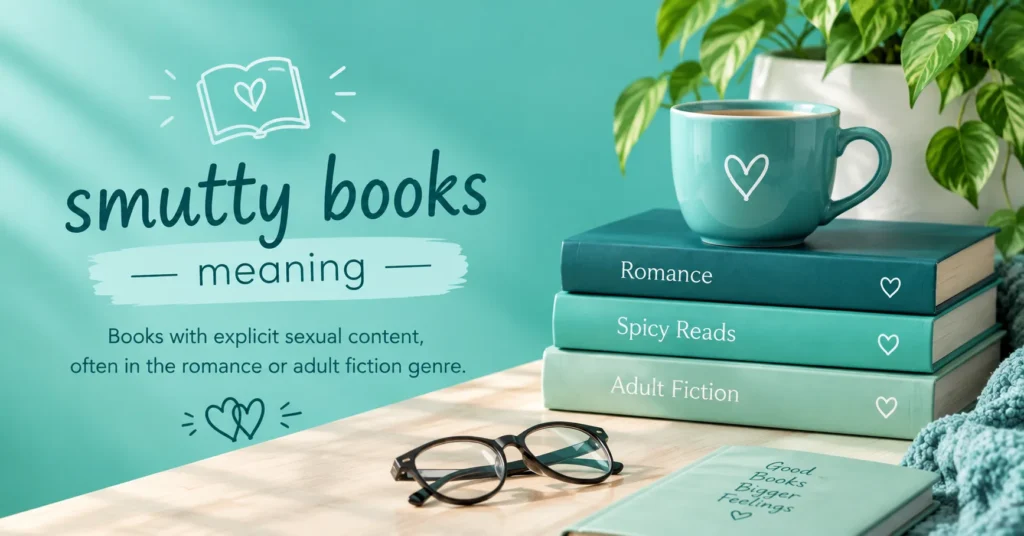
Turns out, it’s almost always the latter. Smutty books meaning, in plain terms, refers to romance novels that include explicit, detailed sexual content as a central part of the story not hinted at, not faded to black, but written out in full. Once you know the term’s history and how readers actually use it today, the whole genre starts making a lot more sense.
What Does “Smut” Mean in Books?
At its simplest, “smut” describes books usually romance novels that contain explicit sexual scenes written in vivid, detailed language. These aren’t vague suggestions of intimacy tucked behind a closed bedroom door. Smutty content lingers on physical connection, desire, and the mechanics of a scene, and it’s written specifically to be provocative and engaging on that level.
What surprises a lot of new readers is that smut isn’t automatically low-quality or plotless. Most smutty romance still has a real story running underneath it: character arcs, emotional stakes, a couple actually falling for each other. The explicit scenes sit on top of that foundation rather than replacing it. That distinction is exactly why the term gets used so casually and so fondly inside romance communities it’s shorthand for “this delivers on the heat,” not a warning label.
Etymology of the Term
“Smutty books meaning” wasn’t always a book-community compliment. The word has roots going back centuries, originally describing something literally dirty or soot-stained. Over time its meaning drifted from physical grime to moral or sexual “dirtiness,” and by the 19th century, “smut” was commonly used to describe erotic or obscene material often as an insult aimed at dismissing certain writing as lowbrow trash.
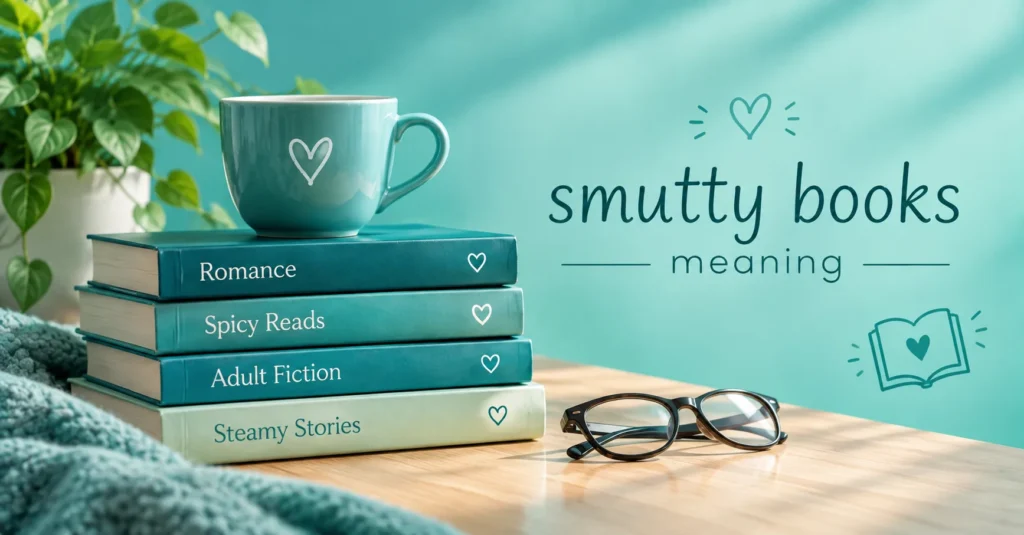
That negative history is part of what makes today’s usage interesting. Modern romance readers have reclaimed the word entirely. Calling something “smut” used to be a way to shame a book (or a reader) for enjoying explicit content. Now it’s said with pride, the same way other once-derogatory labels in literary and fan culture have been flipped into identity markers. When someone tells you they’re “in their smut era,” they’re not apologizing they’re recommending.
Smut vs. Romance vs. Erotica: What’s the Difference?
This is the question that trips up most newcomers, because all three categories clearly overlap. Here’s the practical breakdown readers actually use:
| Feature | Romance | Smut | Erotica |
| Explicit content | Little to none, often fade-to-black | Moderate to high, open-door scenes | Very high, explicit throughout |
| Main focus | Emotional connection, HEA | Both emotional and physical | Primarily physical |
| Plot importance | Central to the story | Present, but varies by book | Minimal or secondary |
| Typical audience | Broad romance readership | Romance and BookTok readers | Adult fiction readers specifically |
A straight romance novel might spend chapters on banter and tension before the door quietly closes on the bedroom scene. Smut keeps that door wide open, but it still cares whether the couple gets their happily-ever-after. Erotica goes further still the physical content isn’t just present, it’s often the entire point, with plot and character development taking a back seat.
So when someone asks “is this book smut or just romance,” the honest answer is usually: it depends how much the physical scenes are front-and-center versus supporting a bigger emotional story. Smut sits deliberately in the middle of that spectrum spicier than traditional romance, more plot-driven than pure erotica.
Keywords to Understand Smut Books
If you’re new to the genre, a few terms come up constantly and it helps to know what they actually mean before you start browsing:
- Open-door vs. fade-to-black whether a sex scene is written out in full (“open-door”) or the narrative cuts away before things get explicit (“fade-to-black”). Smut is almost always open-door.
- Spice level a shorthand readers use (often rated 1-5) to signal how explicit a book’s content is, so you know what you’re getting into before you start.
- Steamy / spicy romance near-synonyms for smut, used interchangeably in most reader circles and increasingly on retailer sites as a slightly softer-sounding label.
- Erotic fiction the broader umbrella category that smut technically falls under, though “smut” carries a more playful, community-driven connotation than the more formal “erotica.”
Knowing this vocabulary matters practically it’s how readers filter recommendations, warn each other about content, and find exactly the kind of book they’re in the mood for.
Popular Tropes in Smutty Books Meaning
Smutty Books Meaning doesn’t exist in a vacuum it’s built on the same storytelling tropes that drive romance more broadly, just turned up in intensity. A few show up again and again:
Enemies-to-lovers is probably the most requested trope in the genre right now. The tension of two characters who start out hating each other creates a natural build toward the kind of high-stakes physical chemistry smut readers are looking for.
Slow burn works almost as an opposite strategy instead of jumping straight into explicit content, the story draws out the anticipation for chapters before delivering the payoff, which readers often say makes the eventual scenes hit even harder.
Other recurring setups include forbidden romance (age gaps, workplace dynamics, rival families), forced proximity (stuck together during a storm, sharing one bed), and possessive or “obsessive” love interests, which have become especially popular in dark romance corners of BookTok. None of these tropes are unique to smut they’re romance staples but smutty books tend to lean into them harder and resolve the tension more explicitly than a traditional romance novel would.
How a Romance Book Actually Becomes “Smutty”
Not every romance with a sex scene in it earns the “ Smutty Books Meaning” label from readers. A few things tend to push a book over that line:
Detailed, explicit scenes. The content goes beyond implying intimacy it describes what’s happening, how it feels, and lingers there rather than cutting away quickly.
Frequency, not just presence. A single steamy scene in an otherwise clean romance usually doesn’t get called smut. Readers tend to reserve the term for books where explicit content shows up repeatedly and is clearly part of what the book is offering, not an occasional detour.
Emotional intimacy woven in. Ironically, the best-reviewed smut isn’t just physical readers consistently say the Smutty Books Meaning that work best pair the explicit content with real emotional stakes between the characters, so the heat feels earned rather than gratuitous.
Conclusion
The term “ Smutty Books Meaning” generally refers to novels that contain mature romantic or sexual themes, often alongside characters, relationships, and emotional storylines. The amount and intensity of these themes can vary widely from one book to another, so the label does not always mean the same thing to every reader.
Understanding the meaning can help readers decide whether a book matches their personal preferences and comfort level. It is also worth checking a book’s description or content warnings before reading. Ultimately, knowing what the term means makes it easier to choose books thoughtfully and understand how readers and publishers use the label.
FAQs
Author

Ethan Carter is an SEO blogger specializing in internet slang, text abbreviations, and social media meanings. He creates clear, accurate, and reader-friendly content backed by thorough research. His goal is to help readers understand modern online language with reliable, easy-to-read guides.