Cringe Meaning From Internet Slang to Modern Culture
Have you ever watched a video, read a comment, or seen someone’s behavior online and immediately thought, “Why did they do that?” That uncomfortable feeling you get when something feels awkward, embarrassing, or painfully out of touch is often described as cringe. But many people still wonder about the real cringe meaning and how the word became such a common part of internet conversations.
Understanding this term matters because “cringe” is not only about embarrassment. People use it to describe reactions, jokes, trends, situations, and even certain behaviors that make them feel secondhand awkwardness. The meaning can also change depending on the context and who is using it.
In this article, you’ll learn the cringe definition, what does cringe mean in everyday conversations, where the term came from, and how people use it on social media, texting, and real-life situations.
Cringe Meaning Explained: What Does Cringe Mean?
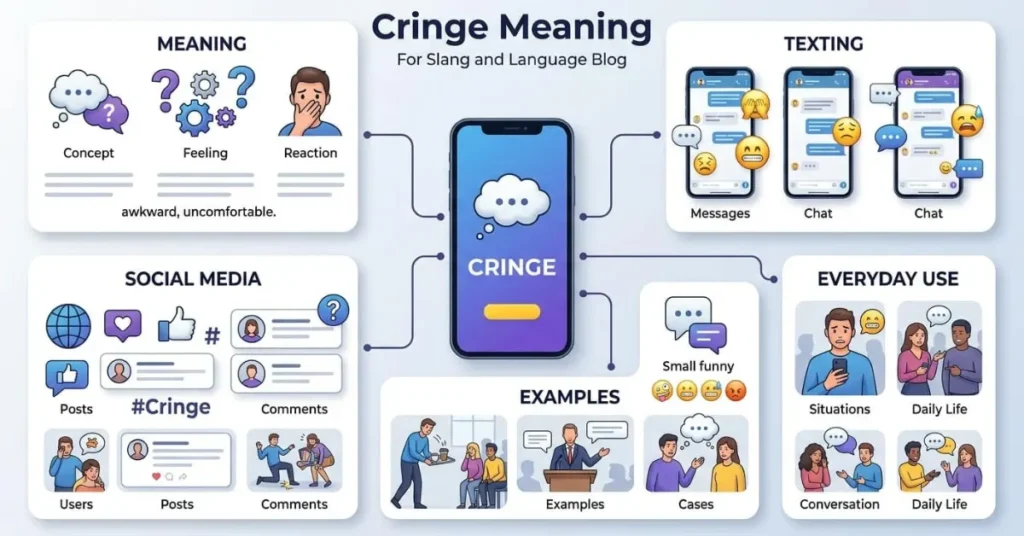
The cringe meaning refers to a feeling of discomfort, embarrassment, or awkwardness caused by something someone says, does, or shares. When people say something is “cringe,” they usually mean it makes them feel uncomfortable or embarrassed, often because it seems forced, unnatural, or socially awkward.
For example, if someone tells an obvious joke that nobody laughs at, posts an overly dramatic message online, or tries too hard to appear cool, others might describe it as “cringe.”
The word can describe both a reaction and the thing causing that reaction. A person can cringe when watching an awkward moment, while a video, comment, or action can be called cringe.
Cringe Definition
The basic cringe definition is:
Cringe means to feel embarrassed, uncomfortable, or awkward because of something unpleasant or embarrassing.
Originally, the word “cringe” was used as a verb meaning to shrink back or recoil because of fear or discomfort. Over time, especially through internet culture, the word developed a newer meaning connected to social awkwardness.
Today, people commonly use it online to describe moments that create secondhand embarrassment.
What Does Cringe Mean in Slang?
In slang, what does cringe mean often refers to something that feels embarrassing, awkward, or difficult to watch.
On platforms like TikTok, YouTube, Reddit, and Instagram, users often call content “cringe” when it feels:
- Forced or unnatural
- Too dramatic
- Attention-seeking
- Out of touch
- Embarrassing to watch
For example:
“That fake reaction video was so cringe.”
This means the person thought the reaction seemed unnatural or embarrassing.
However, “cringe” is also subjective. One person may find something embarrassing, while another person may find it funny or entertaining.
Examples of Cringe in Everyday Conversations
The word is commonly used in casual conversations, especially among younger internet users.
Example 1: Social Media
Person A: Did you see that video where someone pretended to be famous?
Person B: Yeah, it was really cringe.
Meaning: The video felt awkward or embarrassing.
Example 2: Texting
Friend: I sent my old message to my boss by mistake.
Reply: That’s cringe.
Meaning: The situation was embarrassing.
Example 3: Real Life
Someone trying too hard to impress others might be described as cringe because their behavior feels uncomfortable to watch.
Why Do People Use the Word Cringe So Often?
The popularity of “cringe” grew because the internet made awkward moments easier to share. A person can now see thousands of unusual, embarrassing, or uncomfortable moments every day.
Social media also changed how people talk. Short slang words like “cringe” quickly communicate a strong reaction without needing a long explanation.
Instead of saying:
“That behavior made me feel uncomfortable because it seemed fake and forced.”
People simply say:
“That’s cringe.”
It is faster, simpler, and everyone understands the feeling.
Is Cringe a Bad Word?
Not always. Calling something cringe is usually a criticism, but it depends on the situation and tone.
Sometimes people use it seriously to point out something uncomfortable. Other times, they use it jokingly between friends.
For example:
- A friend’s funny old photo might be called cringe in a playful way.
- A rude or disrespectful action might be called cringe as genuine criticism.
The meaning depends heavily on context.
Cringe vs Embarrassing: What’s the Difference?
Although these words are similar, they are not exactly the same.
Embarrassing usually describes a situation where someone feels shame or discomfort about themselves.
Cringe often describes the feeling of watching someone else do something awkward.
Example:
- Forgetting someone’s name during a conversation can be embarrassing.
- Watching someone give a terrible speech while acting overly confident can feel cringe.
Cringe is often connected to secondhand embarrassment.
Is Cringe Still Popular Slang?
Yes, “cringe” remains widely used in online conversations, especially when discussing memes, videos, trends, and social behavior.
Although internet slang changes quickly, the idea behind cringe has stayed popular because people naturally react to awkward or uncomfortable situations.
Whether it appears in a comment section, a group chat, or a casual conversation, “cringe” has become a common way to describe something that makes people feel uncomfortable.
Conclusion
The cringe meaning has changed from a simple word for discomfort into one of the most common ways people describe awkward moments online and in everyday life. While the term often points to embarrassment or secondhand awkwardness, its meaning depends on the situation, the person using it, and the tone behind it.
Understanding what does cringe mean helps you follow conversations on social media, recognize internet slang, and understand why certain moments create strong reactions. Whether someone calls a video cringe, a joke cringe, or a situation cringe, they are usually describing that uncomfortable feeling when something just does not feel right.
Sometimes those awkward moments are embarrassing, sometimes they are funny, and sometimes they become the most memorable moments people share.
FAQs
Author

Ethan Carter is an SEO blogger specializing in internet slang, text abbreviations, and social media meanings. He creates clear, accurate, and reader-friendly content backed by thorough research. His goal is to help readers understand modern online language with reliable, easy-to-read guides.