
Feining Meaning Explained Is It the Same as Feigning
Last updated: July 2026 · Reviewed by Ethan Carter, Editor & Language Writer
Have you ever seen someone comment “stop feining” or “you’re feining for it” on TikTok, Snapchat, or Instagram and wondered what they actually meant? You’re not alone. Internet slang changes so quickly that even people who spend hours online can come across words that seem completely unfamiliar or are spelled differently from what they expected.
Feining Meaning Explained: Is It “Feigning” or “Fiending”?
Quick answer: “Feining” is not a standard English word. Depending on context, it’s almost always a misspelling of one of two different words with two very different meanings:
- Feigning — pretending, faking a feeling or condition (e.g., feigning interest)
- Fiending — slang for craving or wanting something intensely (e.g., feining for a cigarette)
Which one applies depends entirely on the sentence it’s used in. This guide breaks down both meanings, shows you how to tell them apart, and gives you the correct spelling for each.
Why “Feining” Is Confusing
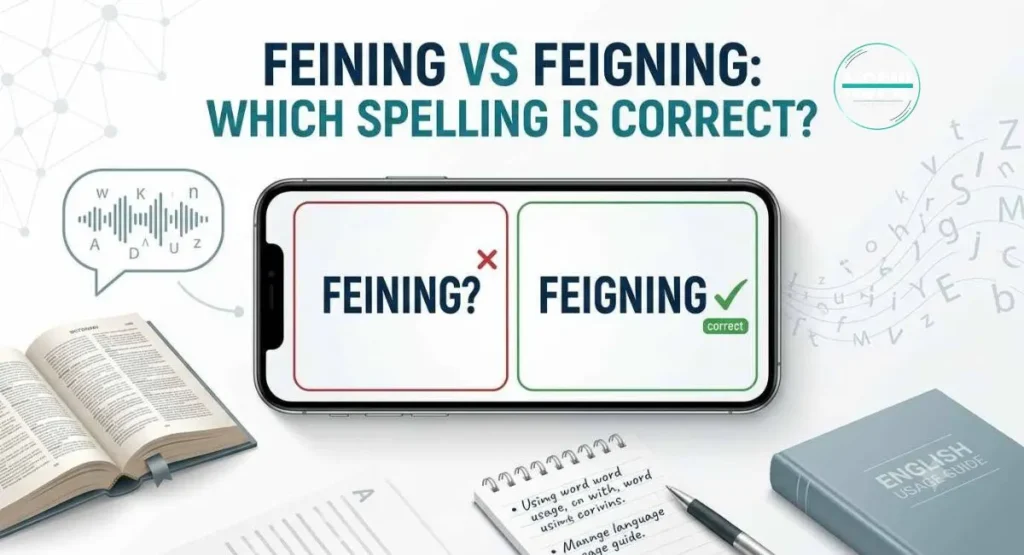
“Feining” shows up constantly in texts, song lyrics, social media captions, and casual comments but it’s never actually the correct spelling of anything. It’s a phonetic stand-in for two unrelated words that happen to sound similar when spoken quickly or informally:
- Feign (pronounced “fayn”) → becomes “feigning”
- Fiend (pronounced “feend”) → becomes “fiending,” often shortened in slang to “feinin'” or “feining”
Because both source words are somewhat uncommon in formal writing, people default to spelling them the way they sound and “feining” is the result either way.
Meaning 1: “Feining” as a Misspelling of “Feigning”
Feigning means pretending or putting on a false appearance of a feeling, reaction, or condition. It comes from the verb feign (“to pretend”), and the correct form when adding -ing is feigning not “feining.”
Examples
- She was feigning surprise when she already knew about the party.
- He was feigning interest in the conversation.
- The student was feigning illness to avoid going to school.
Common things people “feign”
Interest, surprise, illness, ignorance, confidence, sympathy, enthusiasm.
Where you’ll see this usage
This meaning shows up most in written or semi-formal contexts describing someone’s behavior, especially in narrative writing, workplace conversations, or relationship contexts (“he’s feigning happiness for the photos”).
Meaning 2: “Feining” as Slang for “Fiending”
Fiending is informal slang meaning to crave or want something intensely almost like an addict’s craving, even when used loosely (e.g., “I’m fiending for pizza”). It comes from the noun fiend, historically meaning someone with an intense compulsion or addiction, later adopted into everyday slang for strong desire.
Examples
- I’m fiending for a coffee right now.
- He’s been fiending over that new phone for weeks.
- She was fiending for his attention all night.
Where you’ll see this usage
This is the more common usage in music, social media captions, and casual conversation. If someone writes “I’m feining for you” or “feining for a smoke,” they almost always mean craving, not pretending.
Feining vs. Feigning vs. Fiending: Side-by-Side
| Spelling | Standard English? | Likely Intended Word | Meaning |
| Feining | No | Feigning or Fiending | Depends on context |
| Feigning | Yes | — | Pretending, faking |
| Fiending | Semi-standard (slang) | — | Craving, strongly wanting |
How to tell which one is meant
Ask: is the sentence about pretending, or about wanting?
- If the sentence is about someone’s behavior not matching how they really feel → they mean feigning.
- If the sentence is about someone badly wanting or craving something → they mean fiending.
Example comparison:
- “He was feining interest in the meeting” → this is about pretending → correct spelling is feigning.
- “He’s feining for a burger” → this is about craving → correct spelling is fiending.
Is “Feining” Ever Correct?
No in standard English, “feining” is not a recognized spelling of anything. It’s not in major dictionaries as a headword. In formal writing (essays, professional emails, articles, assignments), always use the correctly spelled version that matches your intended meaning: feigning or fiending.
That said, “feining” remains widespread in informal digital communication precisely because it’s ambiguous enough to cover both sounds-alike words, and spelling drift spreads quickly once a variant becomes visually familiar online.
How to Remember the Correct Spellings
- Feign → Feigning. Remember: feign rhymes with “reign,” and both keep the silent “g.” Feigning = pretending.
- Fiend → Fiending. Remember: a “fiend” is someone consumed by craving. Fiending = wanting badly.
A simple mental shortcut: feigning has a “g” you don’t hear, fiending has an “e” you do.
Conclusion
Feining” isn’t a word you’ll find in the dictionary it’s a spelling that gets used for two different real words depending on what the writer means. If the sentence is about someone pretending or putting on a false front, the correct spelling is feigning. If it’s about someone strongly craving or wanting something, the correct spelling is fiending. Once you know which meaning applies, spelling it correctly is easy: connect feigning to feign (pretend), and fiending to fiend (crave).
Sources: Merriam-Webster, Dictionary.com entries for “feign” and “fiend.”
FAQs
Author

Ethan Carter is an SEO blogger specializing in internet slang, text abbreviations, and social media meanings. He creates clear, accurate, and reader-friendly content backed by thorough research. His goal is to help readers understand modern online language with reliable, easy-to-read guides.





One Comment