
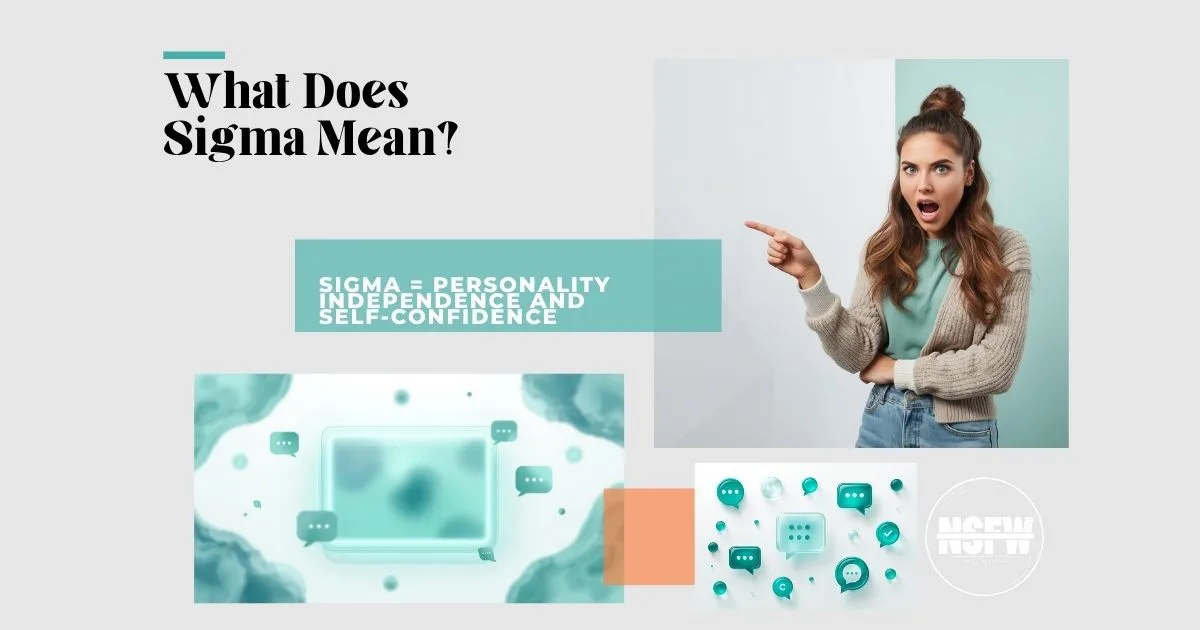
What Does Sigma Mean? The Real Meaning Behind the Viral Slang and Meme
You may have seen someone called a “sigma” in a TikTok comment, meme, YouTube video, or casual conversation and wondered what people actually mean. Is it a personality type, a joke, or just another internet word that suddenly became popular?
The answer depends on the context. “Sigma” can refer to a personality idea linked with independence and self-confidence, but online, it is also widely used as slang, often in a humorous or exaggerated way. That is why the word can be confusing, especially when people use it differently from one conversation to the next.
This guide explains what does sigma mean, where the term comes from, how people use “sigma” online, and what someone usually means when they call a person “sigma.” By the end, you will be able to understand the word in texts, social media posts, memes, and everyday conversations.

What Does Sigma Mean?
The word sigma has several meanings, but its modern slang use usually describes someone who is seen as independent, confident, and comfortable doing their own thing.
A person called a “sigma” is often portrayed as someone who:
- Does not need constant attention or approval
- Works toward personal goals independently
- Stays calm under pressure
- Does not always follow the crowd
- Appears confident and self-reliant
For example, someone might say:
“He never follows the crowd. He is such a sigma.”
In this sentence, “sigma” suggests that the person is independent and does not worry too much about fitting in.
That said, the word is often used jokingly. On social media, calling someone “sigma” does not always mean the speaker seriously believes that person has a particular personality type.
What Is the Sigma Personality Idea?
The modern “sigma” idea became popular online as a way to describe a person who is independent but does not focus on traditional social status.
The concept is often compared with the older internet idea of an “alpha.” An alpha is usually portrayed as dominant, outgoing, and socially influential. A sigma, by contrast, is often described as someone who prefers to operate independently.
The common stereotype is:
Alpha: Wants to lead the group.
Sigma: May not care about leading or following the group.
This is a simplified internet personality label, not a scientifically established personality category. Real people are much more complicated than a single label. Someone can be confident, quiet, social, ambitious, or independent without fitting neatly into the “sigma” category.
What Does Sigma Mean in Slang?
In slang, sigma meaning can change depending on the situation.
Sometimes, “sigma” is used seriously to describe someone who seems independent or unusually confident. Other times, it is used as a meme or playful reaction.
For example:
- “That was a sigma move.”
- “Bro is acting sigma.”
- “Sigma mindset.”
- “He thinks he is the sigma.”
The last example might even be sarcastic. The speaker could be making fun of someone who is trying too hard to appear mysterious or independent.
This is one reason context matters so much. The same word can be a compliment in one conversation and a joke in another.
What Does “Sigma” Mean on TikTok and Social Media?
On TikTok, YouTube, Instagram, and other social platforms, “sigma” is often used as part of internet meme culture.
You may see videos showing fictional characters, celebrities, athletes, or other people being described as “sigma” because they appear:
- Calm
- Independent
- Unbothered
- Powerful
- Focused
- Unwilling to follow the crowd
Many of these videos are exaggerated for entertainment. A dramatic clip may be labeled “sigma” simply because the person appears confident or does something unexpected.
The term is also frequently used in ironic memes. Someone might comment “sigma” on a completely ordinary video because the word itself has become part of the joke.
Is Calling Someone Sigma a Compliment?
Usually, yes, but not always.
When used seriously, calling someone “sigma” can suggest that the person is:
- Independent
- Strong-minded
- Self-confident
- Focused
- Comfortable being different
For example:
“She ignored the pressure to follow everyone else. Sigma.”
Here, the word is being used positively.
However, online slang often depends heavily on tone. If someone says, “He thinks he is sigma,” they may be making fun of the person rather than praising them.
What Does Sigma Mean in Texting?
In texting, “sigma” is usually a short slang term used to describe someone or something as independent, impressive, or unusually confident.
Examples include:
Friend: “Everyone went to the party, but Jake stayed home to finish his project.”
Reply: “Sigma.”
Or:
Friend: “She did not argue. She just walked away.”
Reply: “Sigma move.”
The word is often brief because internet slang is commonly used as a quick reaction. The meaning comes from the situation around it.
What Is a Sigma Male?
“Sigma male” is an internet phrase used to describe a man who is supposedly independent, self-reliant, and outside traditional social hierarchies.
The stereotype often portrays a sigma male as someone who:
- Works alone
- Does not seek approval
- Is confident without showing off
- Follows his own path
- Avoids unnecessary drama
However, this is an online social label rather than an official psychological classification. It should not be treated as a proven personality type.
The phrase is also frequently used in memes, jokes, and exaggerated online content.
Is Sigma Only Used for Men?
No.
Although the phrase “sigma male” became especially popular online, people may use “sigma” more broadly to describe anyone who seems independent, confident, or uninterested in following the crowd.
The exact meaning depends on the person using the word and the context of the conversation.
What Does “Sigma” Mean in Memes?
In memes, “sigma” can mean almost anything connected with being independent, confident, unusual, or “unbothered.”
Sometimes it is used sincerely. Sometimes it is completely ironic.
For example, a meme may show a character making a bold decision and label the moment a “sigma move.” Another meme may use the word to poke fun at people who constantly describe themselves as lone wolves.
That playful and exaggerated use is a major reason the word has become so common in online conversations.
Is Sigma a Real Personality Type?
Not in the same way as recognized psychological personality models.
The online idea of a sigma is mainly a social media concept and internet label. It can be useful as casual slang, but it does not fully explain a person’s personality or behavior.
Someone who prefers spending time alone is not automatically a sigma. Likewise, a social person can still be independent and confident.
People are more complex than internet categories. That is worth remembering when you see labels like “alpha,” “sigma,” or similar personality terms online.
Sigma Meaning: Simple Explanation
The simplest explanation is this:
Sigma usually describes someone who is seen as independent, self-confident, and willing to follow their own path instead of seeking approval from others. Online, the word is also commonly used as slang, memes, or a joke.
If you see “sigma” in a text or comment, look at the surrounding conversation. That will usually tell you whether the person is being serious, complimentary, or sarcastic.
Conclusion
So, what does sigma mean? In most online conversations, it describes someone who seems independent, confident, and willing to follow their own path. But the word has also become a popular meme, which means people may use it seriously, playfully, or sarcastically.
The best way to understand “sigma” is to pay attention to the context. A comment like “sigma move” is usually praise, while “he thinks he is sigma” may be a joke. Like many internet slang terms, the meaning can shift depending on who is saying it and why.
If you remember one thing, remember this: sigma is less about a strict personality type and more about the idea of being independent and not needing to follow the crowd.
FAQs
Author

Ethan Carter is an SEO blogger specializing in internet slang, text abbreviations, and social media meanings. He creates clear, accurate, and reader-friendly content backed by thorough research. His goal is to help readers understand modern online language with reliable, easy-to-read guides.

One Comment