
Gabacho Meaning: 17+ Surprising Facts About This Spanish Slang
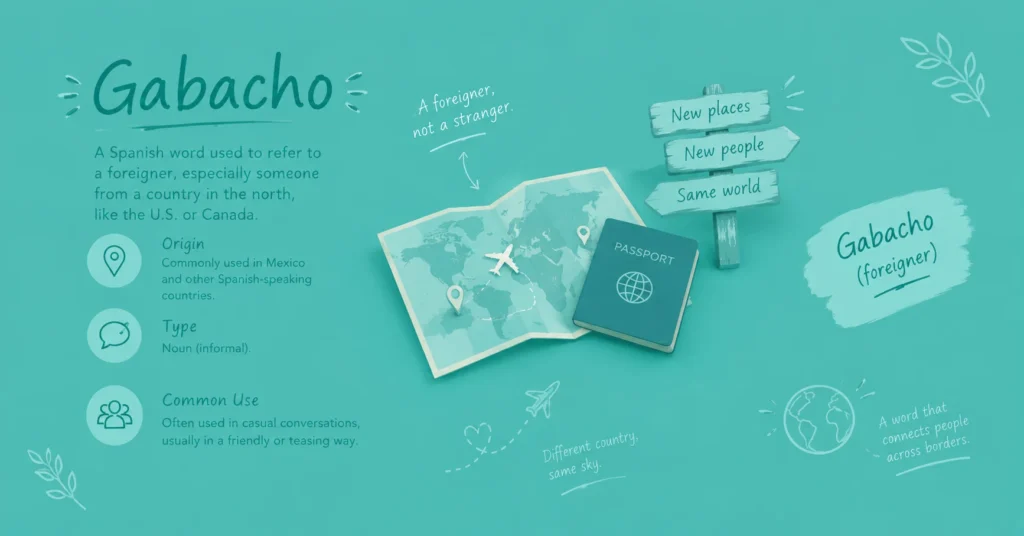
The gabacho meaning in Mexican Spanish is usually an American, a foreigner, or something associated with the United States. This informal Spanish slang can sound friendly, humorous, dismissive, or offensive depending on the speaker and situation. In Spain, it has traditionally been used for French people, making regional context essential.
If you have heard someone say el gabacho meaning in a conversation, movie, or Spanish-language social media post, the phrase may refer to the United States rather than a specific person. Understanding Mexican slang, Spanish vocabulary, cultural context, and everyday expressions helps you interpret the word correctly without misunderstanding someone’s intention.
Definition
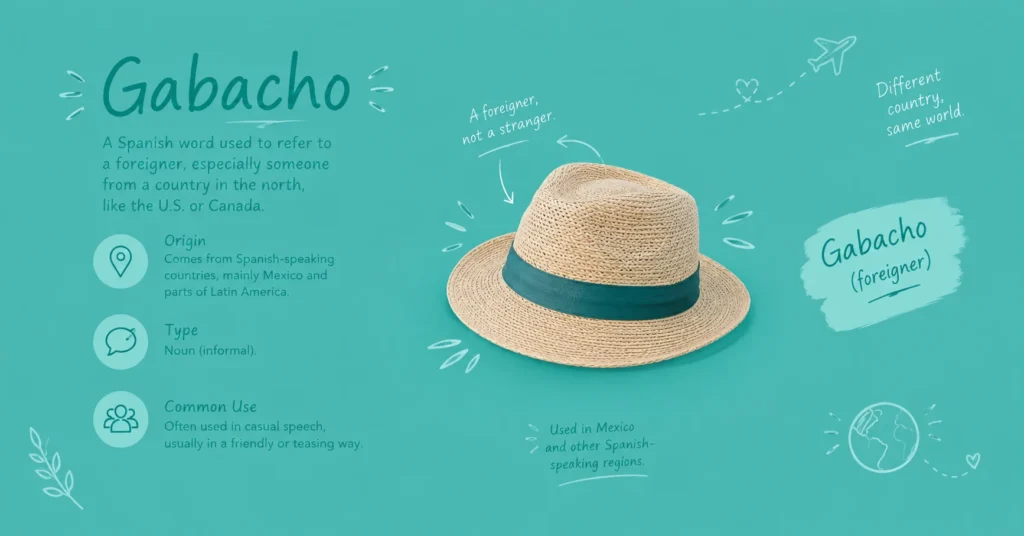
The word gabacho is an informal Spanish term with several regional meanings. In Mexico, it commonly describes a person or thing associated with the United States. Depending on the context, an English translation might be “American,” “foreigner,” or “American-made.” In Spain, the traditional meaning is associated with French people.
For example, a Mexican speaker might use gabacho meaning while talking about American products, a person from the US, or traveling across the border. The word is not a formal nationality label, however. If you need a neutral expression for someone from the United States, estadounidense is generally a safer choice.
Pronunciation
Gabacho is pronounced approximately gah-BAH-choh, with the strongest emphasis on the middle syllable. The Spanish letter ch sounds like the “ch” in “chair.” The feminine form, gabacha, follows the same pronunciation pattern.
Quick meaning guide
| Expression | Meaning in English |
| el gabacho | The United States, in some Mexican expressions |
| un gabacho | An American or foreigner, depending on context |
| una gabacha | A woman described using the feminine form |
| productos gabachos | American products, in a Mexican usage |
| los gabachos | Americans or French people, depending on region |
| gabacho / gabacha | Informal regional adjective or noun |
These translations are contextual rather than universal. A speaker’s country and the surrounding sentence help determine the intended meaning.
Other Word Forms
Spanish changes many nouns and adjectives according to grammatical gender and number. The common forms of gabacho include gabacha, gabachos, and gabachas. The form used depends on the person or thing being described, although the regional meaning and tone remain important.
| Form | Grammatical use | Example translation |
| gabacho | Masculine singular | An American man, in a relevant Mexican context |
| gabacha | Feminine singular | An American woman, in a relevant Mexican context |
| gabachos | Masculine or mixed plural | Americans or French people, depending on region |
| gabachas | Feminine plural | American or French women, depending on region |
These forms can also work as adjectives. For instance, productos gabachos may mean American products in Mexican Spanish. SpanishDictionary.com documents both the American-related and French-related senses, so the form alone cannot establish the intended nationality.
Is gabacha different from gabacho?
The primary grammatical difference is gender: gabacho meaning is masculine, while gabacha is feminine when referring to a person or a gendered noun. Neither form automatically makes a statement more polite or more offensive. The speaker’s intention and the social context determine how the expression is received.
Examples
Examples make it easier to understand how gabacho meaning works in real conversations. The following sentences are original illustrations of the documented meanings, not quotations from a particular conversation. Their translations reflect Mexican or Spanish usage where indicated.
| Spanish sentence | English meaning | Context |
| Mi amigo es gabacho. | My friend is American. | Informal Mexican usage |
| Se fue al gabacho. | They went to the United States. | Informal reference to the US |
| Compraron productos gabachos. | They bought American products. | Describing products |
| Ella es gabacha. | She is American. | Feminine form, Mexican context |
| Los gabachos llegaron temprano. | The Americans arrived early. | Informal group reference |
| En España, gabacho puede referirse a un francés. | In Spain, gabacho can refer to a French person. | Regional distinction |
The first five examples illustrate common Mexican-style meanings; the final sentence highlights the traditional Spanish usage. Actual interpretations can differ by community, and not every Spanish speaker uses the term in the same way.
Example in an everyday conversation
Imagine two friends discussing a trip to the United States. One says, “Mi primo se fue al gabacho para trabajar.” The natural translation is “My cousin went to the United States to work.” Here, el gabacho refers to a destination, not a person.
Now imagine someone saying “Ese gabacho no respeta nuestras costumbres.” This means something like “That American doesn’t respect our customs.” Because the sentence criticizes a person based on their perceived nationality or background, it can sound dismissive or insulting. The surrounding words change the tone.
Example in a conversation about products
A shopper might say, “Prefiero comprar productos mexicanos en lugar de productos gabachos.” This translates to “I prefer buying Mexican products instead of American products.” In this sentence, gabachos describes the products rather than directly addressing an individual. SpanishDictionary.com documents this product-related use in Mexico.
Etymology
The history of gabacho meaning is connected to regional Spanish usage and the historical relationship between Spain and France. Reference sources describe its traditional association with French people before its meaning developed in parts of Latin America to include Americans and things from the United States.
The precise origin is less certain than its modern meanings. Wikipedia discusses possible connections with the Occitan word gavach and the Catalan word gavatx, both associated in historical explanations with foreigners or regional outsiders. These proposals should not be treated as a definitively proven single origin.
How the meaning changed across regions
Language evolves as people migrate, trade, travel, and interact across borders. In Spain, gabacho meaning became associated with French people. In Mexican Spanish, the word came to be used for Americans and American-related things. Today, dictionaries record these different senses rather than assigning one universal English equivalent.
This history explains why a direct word-for-word translation can be misleading. Someone encountering the term in a Spanish conversation about France may need a different translation from someone hearing it in a Mexican American neighborhood in California or Texas.
Regional Meaning in Mexico, Spain, and the United States
The regional meaning is one of the most important aspects of this Spanish slang term. The Association of Academies of the Spanish Language records a Mexican use for a foreign person or thing, marked as derogatory, as well as an adjective relating to the United States. The Diccionario del Español de México also records the American meaning.
| Region or context | Commonly documented meaning | Important detail |
| Mexico | American, foreigner, or something related to the US | Can carry a derogatory tone |
| Spain | French person or something French | Traditional regional meaning |
| Some Hispanic communities in the US | White American, particularly in disparaging usage | Tone and local convention matter |
| Some Central American varieties | Certain work coats or garments | A distinct regional sense |
These are broad patterns, not rules that every individual follows.
What does el gabacho meaning?
In Mexican Spanish, el gabacho meaning can refer to the United States itself. The expression may appear when people discuss travel, migration, work, or family living across the border. In a sentence such as “Voy para el gabacho,” the intended meaning is “I’m going to the United States.”
The definite article el helps signal that the speaker is talking about a place, but context still matters. If the conversation is about a particular man, el gabacho might instead refer to that person. Listening to the complete sentence is more reliable than translating the phrase in isolation.
How is the term used in Hispanic communities in the US?
In the United States, the word may appear in bilingual or Spanish-speaking communities, particularly where Mexican Spanish influences everyday speech. Its meaning can overlap with gringo, and some English-language dictionaries record a disparaging sense referring to a white man. That does not mean every speaker intends an insult whenever the word appears.
A person might use the term jokingly among friends, while another might hear it as a dismissive label. If you’re unfamiliar with the community’s conventions, it is better to understand the word before adopting it yourself. Neutral alternatives can help avoid unintended offense.
Is Gabacho Offensive?
Gabacho can be offensive, but it is not automatically an insult in every conversation. The Association of Academies of the Spanish Language marks the Mexican usage for a foreign person or thing as derogatory, and Dictionary.com identifies a disparaging usage in some Hispanic communities in the United States. Other everyday uses may be more casual or descriptive.
The safest interpretation depends on tone, the relationship between the speakers, the words around the expression, and the local community. A friendly conversation between people who know each other may sound different from a hostile remark directed at a stranger. No single translation can capture every social meaning.
When might it sound insulting?
The term is more likely to sound insulting when it is used to stereotype a group, express contempt, or criticize someone because of their nationality or perceived background. Pairing it with an insult or saying it aggressively can make the negative intention clearer. In those situations, the word functions as a put-down rather than a neutral description.
Is it safe to use casually?
If you are learning Spanish, understanding gabacho is useful, but using it yourself requires more care. A word that feels ordinary to one speaker may feel disrespectful to another. Unless you know the people and the local convention, choose estadounidense for a neutral reference to a US national or persona de Estados Unidos when clarity matters.
Gabacho vs. Gringo vs. Estadounidense
These three terms can overlap, but they are not interchangeable in every situation. Gabacho is regional slang, gringo is another informal term commonly used for Americans in parts of Latin America, and estadounidense is a more neutral Spanish word for someone from the United States.
| Word | English meaning | Tone and usage |
| Gabacho | American, foreigner, or French person in certain regional contexts | Informal; can be derogatory |
| Gringo | Often an American or foreigner | Informal; can be neutral or negative |
| Estadounidense | Person from the United States | Generally neutral |
| Americano | American; interpretation depends on context | Common but can be geographically ambiguous |
| Extranjero | Foreigner | General term; not specific to Americans |
Which word should you use?
For school assignments, professional conversations, formal writing, or respectful introductions, estadounidense is usually the clearest choice when you mean a person from the United States. Use extranjero when you mean a foreigner generally. Reserve gabacho and gringo for situations where you understand the local meaning and tone.
Conclusion
The gabacho meaning changes with regional Spanish usage. In Mexico, it commonly refers to an American, the United States, or something American; in Spain, it has traditionally referred to a French person. Its tone may range from casual to derogatory, so context matters more than a single English translation.
If you hear el gabacho in a conversation about travel or migration, the speaker may mean the United States. If you need a neutral expression for an American, estadounidense is generally the better choice. Understanding these distinctions helps you interpret Spanish slang accurately and communicate respectfully.
FAQs
Author

Ethan Carter is an SEO blogger specializing in internet slang, text abbreviations, and social media meanings. He creates clear, accurate, and reader-friendly content backed by thorough research. His goal is to help readers understand modern online language with reliable, easy-to-read guides.