
Hypoallergenic Meaning: 7 Essential Facts About This Powerful Allergy-Friendly Term
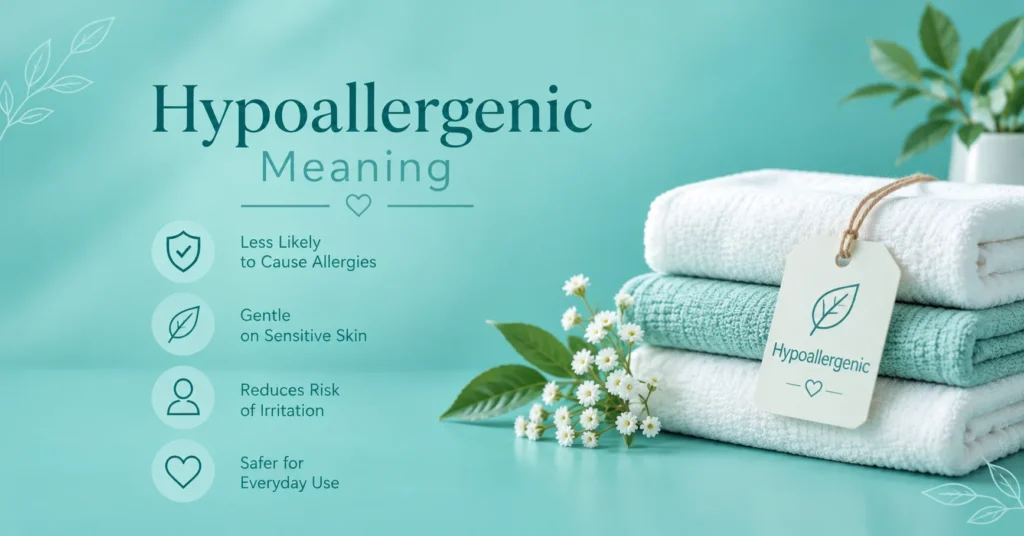
Hypoallergenic meaning less likely to cause an allergic reaction, although it does not mean completely allergy-free. The word commonly appears on skincare, cosmetics, jewelry, clothing, and pet-related products. Understanding the hypoallergenic meaning helps shoppers evaluate product claims without assuming that a label guarantees safety for every person.
When a product causes itching, redness, or discomfort, choosing an alternative can feel confusing. A hypoallergenic label may be a useful starting point, but ingredients, individual sensitivities, and the type of exposure matter more than the label alone. This guide explains the meaning, the science behind allergies, and how to make more informed purchasing decisions using established US health and regulatory guidance.
What does hypoallergenic meaning?
The word hypoallergenic describes something intended or considered less likely to trigger an allergic reaction. The prefix “hypo-” means under or below, while “allergenic” relates to the ability to provoke an allergy. In everyday English, hypoallergenic products are marketed as options that may be better tolerated by people with allergies or sensitive skin.
For example, a moisturizer advertised as hypoallergenic may be formulated with certain known allergens in mind. Likewise, hypoallergenic earrings may be made from materials selected to reduce the likelihood of a reaction. However, neither example guarantees that every user will tolerate the product. An ingredient that causes problems for one person may be perfectly suitable for another.
The important distinction is that hypoallergenic means lower potential risk, not zero risk. The meaning can also vary by product category. A cosmetic label, a jewelry description, and a claim about a dog do not necessarily reflect the same testing methods or scientific evidence.
Can you trust “hypoallergenic” labeling?
A hypoallergenic label can communicate a manufacturer’s intention, but shoppers should not automatically treat it as proof that a product has passed a universal allergy-safety test. In the United States, the FDA says there is no federal standard or definition governing the use of “hypoallergenic” on cosmetics. Manufacturers are not required to submit evidence of hypoallergenicity claims to the agency.
That matters because product labels can sound more definitive than the underlying evidence. A product may be described as hypoallergenic even though a particular customer reacts to one of its ingredients. Someone with a known fragrance allergy, for instance, still needs to check whether the product contains a fragrance ingredient that affects them.
Rather than dismissing every hypoallergenic claim, use it as one piece of information. Read the ingredient list, look for ingredients you already know you must avoid, and consider the product’s intended use. If you have a diagnosed allergy, personalized advice from a qualified healthcare professional is more reliable than a broad marketing claim.
What is an allergic reaction?
An allergic reaction happens when the immune system responds to a substance it recognizes as a threat, even when that substance is harmless to most people. Substances that trigger these responses are called allergens. Depending on the allergen and the person, symptoms can involve the skin, nose, eyes, respiratory system, or other parts of the body.
Skin reactions are especially relevant when shopping for cosmetics, lotions, soaps, and jewelry. Some people experience allergic contact dermatitis after exposure to a specific substance. Symptoms can include redness, itching, and a rash, and the reaction may not appear immediately after using a product. Irritation can produce similar symptoms, but irritation and an immune-mediated allergy are not identical.
This distinction explains why the same product can feel comfortable for one person and cause trouble for another. If a product repeatedly causes symptoms, stop using it and seek appropriate medical advice. Severe symptoms involving breathing difficulties or swelling of the throat require emergency medical attention.
Double-check the label
A careful ingredient check is more useful than relying on a single front-of-package claim. Start by identifying ingredients you have previously reacted to, then examine the complete ingredient list. For cosmetics, the FDA provides consumer guidance on product labeling and ingredient information. Ingredient names may be unfamiliar, so avoid assuming that a scientific-sounding name is automatically harmful or that a natural-sounding name is automatically safe.
It also helps to distinguish claims such as “hypoallergenic,” “fragrance-free,” and “for sensitive skin.” These phrases communicate different things. A fragrance-free product may be a practical option for someone who reacts to fragrances, but it is not necessarily free of every potential allergen. Similarly, a sensitive-skin claim does not establish that a product will suit every individual.
Keep track of products that have caused a reaction, including their ingredient lists. That record can help you compare products and discuss potential triggers with a dermatologist or allergist. If the cause remains unclear, professional evaluation may be more useful than repeatedly switching products at random.
Ingredient list
Look at the full ingredient list rather than relying only on the product name or advertising. If you know that a particular substance causes an allergic reaction, check for it before purchasing. Be aware that ingredient names can vary and that botanical ingredients may be listed using scientific plant names.
A shorter ingredient list may make a product easier to evaluate, but length alone does not establish safety. A product with only a few ingredients can still contain something you react to. Your own allergy history is an important guide when choosing skincare and personal-care items.
Active ingredients
Some products distinguish active ingredients from inactive ingredients. Both categories deserve attention because the complete formulation may contact your skin or otherwise affect your exposure. Do not assume that ingredients labeled inactive cannot cause an unwanted response. If a product is intended to treat a medical condition, follow its directions and consult a qualified professional about known allergies.
For cosmetics, compare ingredient lists across products rather than choosing based only on brand reputation. If you are uncertain about a particular ingredient, a pharmacist, dermatologist, or allergist may help you understand whether it is relevant to your known sensitivities.
Chemical names
Chemical names are not automatically warning signs. Many familiar substances have scientific names, and the name itself does not tell you whether a substance will cause an allergic reaction. What matters is the ingredient, the amount and type of exposure, and your individual response.
If you have a confirmed allergy, keep a reliable record of the substance and any related names identified by your healthcare professional. This is particularly useful when reading labels that use technical terminology or when comparing formulations from different manufacturers.
Plant-based ingredients
Natural and plant-derived ingredients can still trigger allergies. Essential oils, botanical extracts, and other plant substances may be included in products marketed as gentle or naturally formulated. Therefore, “natural,” “organic,” and “hypoallergenic” should not be treated as interchangeable claims or as guarantees of allergy safety.
If you have a known plant allergy, review product ingredients carefully and ask a healthcare professional about unfamiliar botanical names. A plant-derived ingredient may be appropriate for many users while remaining unsuitable for someone with a particular sensitivity.
The most common allergens in skin care products
Skin-care products can contain fragrances, preservatives, and other ingredients that cause reactions in some people. Cleveland Clinic identifies fragrance mixtures among common causes of contact allergy and discusses several other potential triggers, including balsam of Peru, propylene glycol, and certain preservative ingredients. The exact risks depend on the individual and the formulation.
Consider someone who starts using a new moisturizer and later notices a persistent itchy rash. The product’s hypoallergenic claim alone cannot identify the cause. The person may need to review the formula, discontinue the suspected product, and seek professional advice if symptoms persist or recur.
The best choice is not necessarily the product with the most reassuring marketing. It is the product whose ingredients and use are compatible with your known sensitivities. Fragrance-free formulations may be worth considering if fragrance is a known trigger, but they are not guaranteed to prevent every reaction.
Can allergic reactions be prevented?
No product label can promise that allergic reactions will never happen. However, you can make more informed choices by learning your known triggers, reading ingredients, and avoiding products that have caused previous reactions. If you have repeated or unexplained symptoms, a dermatologist or allergist can help determine whether an allergy, irritation, or another condition may be involved.
For a new skincare product, follow its directions and consider a cautious, small-area trial if appropriate. A home trial cannot rule out every allergy or replace formal testing. If you already have a diagnosed allergy or a history of serious reactions, ask a healthcare professional how to evaluate new products safely rather than experimenting on your own.
The same principle applies beyond skincare. People with jewelry sensitivities should verify the actual metal composition; people with pet allergies should understand that animal allergens can remain present even when a breed is described as hypoallergenic. The useful question is not merely whether something carries the label, but what evidence supports the claim and whether it addresses your particular trigger.
Skip the fragrances
If fragrance is a known skin trigger, look for products labeled “fragrance-free” and review their ingredient lists. Fragrances are used in many cosmetics and personal-care products, so comparing formulas can help you identify options that better fit your needs. Nevertheless, fragrance-free does not mean allergen-free, and a product may still contain other ingredients that cause a reaction.
Do a patch test
A patch test is a way of assessing how the skin responds to a product or suspected allergen. Home testing with a cosmetic is not the same as medical allergy patch testing and cannot rule out all reactions. Cleveland Clinic describes cautious small-area testing for certain new skin-care products, while professional patch testing can help identify contact allergens. Follow product instructions and seek individualized advice if you have a known allergy.
When to see a doctor
Seek advice from a healthcare professional if a suspected product reaction is severe, persistent, keeps returning, or affects sensitive areas such as the eyes or mouth. A dermatologist or allergist may help identify the cause and recommend suitable alternatives. If you experience trouble breathing or swelling of the throat, seek emergency medical care immediately.
Conclusion
The hypoallergenic meaning is simple: something is intended or considered less likely to trigger an allergic reaction. It does not mean that the product is guaranteed to be allergy-free, suitable for every sensitive person, or independently verified against a universal standard. For cosmetics sold in the United States, the FDA does not establish a specific federal definition for the claim.
When shopping, consider the product category, read the ingredients, and pay attention to your known sensitivities. If you have recurring reactions, seek professional guidance instead of relying on a marketing label. Understanding what “hypoallergenic” does and does not promise helps you make more informed decisions about everyday products.
FAQs
Author

Ethan Carter is an SEO blogger specializing in internet slang, text abbreviations, and social media meanings. He creates clear, accurate, and reader-friendly content backed by thorough research. His goal is to help readers understand modern online language with reliable, easy-to-read guides.