EPK Meaning: 15 Essential Facts About Its Powerful Uses & Benefits
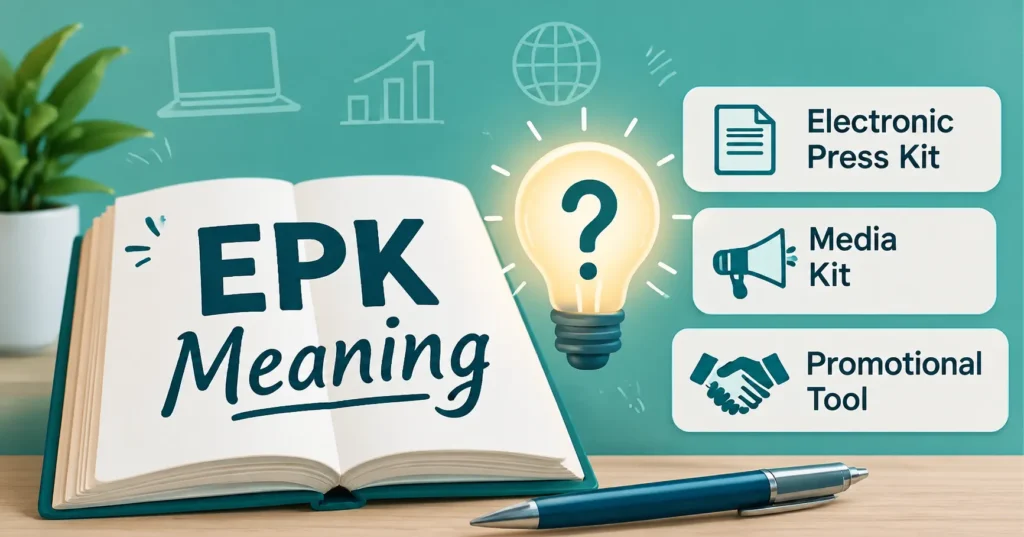
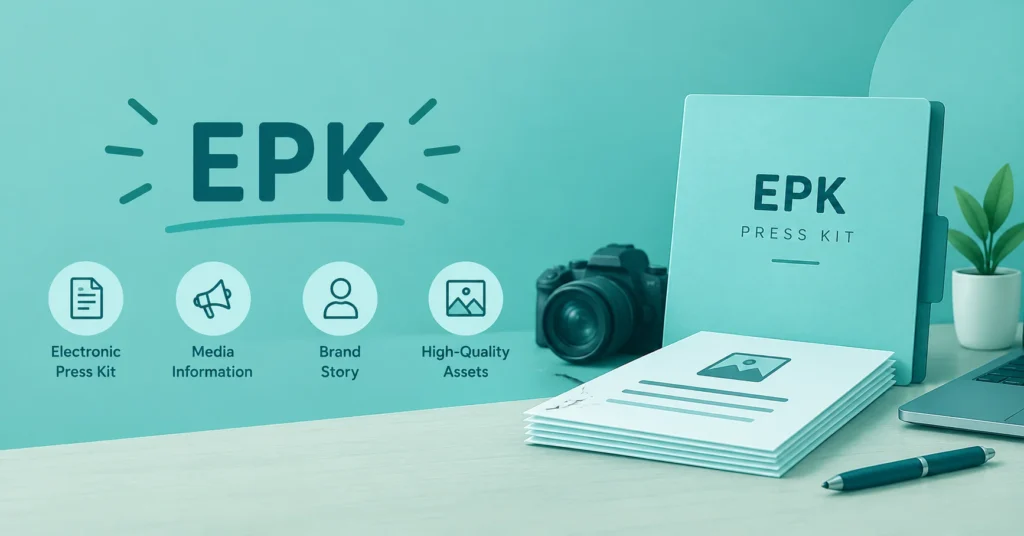
If you’re wondering “EPK meaning,” EPK stands for Electronic Press Kit, a digital package that presents an artist, musician, band, or music project to industry professionals. It typically brings together an artist bio, music, videos, press photos, achievements, and contact details in one convenient place.
For musicians, the confusing part is usually not the definition but what an EPK should actually look like. A good electronic press kit is different from a normal website, resume, or random collection of streaming links. It is designed around professional presentation, fast evaluation, music promotion, booking opportunities, press coverage, and industry contacts.
EPK meaning: An EPK is your press kit, built for a link
An EPK meaningfully translates to Electronic Press Kit, the modern digital version of the traditional artist press kit. Instead of sending separate files containing a biography, promotional photos, music links, press quotes, and contact information, an artist can provide one organized destination.
The biggest idea is convenience. A booking agent, journalist, label representative, or promoter should not have to search through several emails to understand who you are. Your artist story, strongest music, visual identity, professional credits, and contact path should be easy to discover from one shareable link.
What “EPK” actually stands for
EPK stands for Electronic Press Kit. The “electronic” part comes from the older physical press kit, which traditionally contained printed biographies, photographs, reviews, and recorded music. Digital technology moved that package online, turning the physical folder into a webpage, PDF, or other shareable digital presentation.
The concept remains surprisingly simple: give the right professional enough information to understand your work and decide what happens next. For a musician, that next step might be booking a show, requesting an interview, considering a release, discussing representation, or listening to more music.
EPK meaning: What an EPK actually looks like
An epk meaning can technically exist as a PDF, webpage, or digital package, but modern music-industry examples increasingly emphasize a concise, mobile-friendly webpage. The page normally presents an artist image, short biography, music, video, professional achievements, press material, and contact information in a logical order.
Imagine a festival programmer receives 50 artist submissions during a busy afternoon. They do not want to download six attachments, search Spotify, open Instagram, and hunt for an email address. A focused EPK removes those obstacles by putting the most useful information within easy reach.
EPK examples that actually book work
Strong EPK examples tend to prioritize clarity rather than decoration. DropCue’s current guidance emphasizes fast loading, immediately accessible music, a concise biography, relevant credits, video, and direct contact information.
For example, a film composer may lead with selected cinematic tracks and screen credits, while an indie band may emphasize its strongest songs, live footage, tour history, recent press, and booking contact. The underlying structure stays similar, but the emphasis changes according to the professional audience.
EPK meaning: What’s inside a good EPK
A useful EPK contains enough material to establish credibility without becoming an autobiography. Common components include an artist bio, selected music, video, high-resolution photos, press quotes, achievements, tour dates where relevant, social links, and booking or management contact information.
The best approach is selective. Ten outstanding assets are often more useful than fifty average ones. Your EPK should answer the important questions quickly: Who are you? What do you sound like? What have you accomplished? Where can someone learn more? And how can they contact you?
What to include in your EPK
Start with a recognizable artist name and strong visual. Add a concise biography that explains your sound, location, career highlights, and current work. Then place your strongest music where it can be played easily, followed by video, press evidence, photographs, relevant dates, and contact information.
Avoid turning the page into a complete archive of your career. A journalist may need different information from a festival booker, while a music supervisor may care more about catalog organization and previous placements. The EPK should remain focused on the decision the recipient needs to make.
Artist positioning
Artist positioning gives a professional immediate context. Your artist name, genre, location, short tagline, and concise bio can communicate your identity before someone listens to a single track. This matters because professional readers often scan first and investigate further only when something feels relevant.
A vague description such as “passionate musician creating unique sounds” says very little. A clearer statement identifies what you actually do, your musical territory, and a meaningful achievement or current project. Specificity makes an artist easier to remember.
Music and video proof
Music is usually the heart of a musician’s EPK. Choose your strongest tracks rather than automatically uploading your entire catalog. Embedded streaming links can reduce friction because the recipient can listen without downloading files or navigating through several external pages.
Video adds another layer of evidence. A live performance clip can demonstrate stage presence, while a music video or placement reel can show creative range. The objective is not to overwhelm someone with media but to give them convincing proof quickly.
Press and credibility
Press quotes, notable performances, playlist placements, collaborations, awards, streaming milestones, or professional credits can provide third-party evidence. This is more persuasive than simply describing yourself as “successful” or “highly respected.”
Credibility should remain honest and current. A small but genuine publication mention is better than exaggerated claims. If an old achievement no longer represents your career, replace it with something more relevant. Current information helps the recipient understand where your project stands today.
Press photos and visuals
High-resolution promotional photographs are particularly useful because journalists, venues, promoters, and event organizers may need ready-to-use visual assets. Choose images that accurately represent your current appearance, branding, and musical identity.
A good EPK does not require a huge photo gallery. A few carefully selected images are normally enough. Make sure filenames, image quality, orientation, and usage permissions are practical for professional recipients who may need to download or publish them.
Contact and booking path
Contact information should never be difficult to find. Include the appropriate booking, management, press, or professional email, depending on the audience. Social profiles and streaming platforms can be included as supporting links, but they should not replace a clear professional contact path.
Think about what happens after someone likes your music. If they cannot immediately determine who to contact, the EPK has created unnecessary friction. A visible next step can turn passive interest into a conversation.
EPK meaning: Why working musicians need an EPK
The real value of an EPK is not simply looking professional. It reduces the amount of work another person has to do before deciding whether your music fits a booking, article, playlist, label conversation, sync opportunity, or other professional situation.
That distinction matters. An EPK is created for an industry decision-maker rather than primarily for a fan. Your public website may contain merchandise, tour announcements, blog posts, newsletters, and extensive background information. An EPK should make professional evaluation faster.
Why a music EPK matters in 2026
The modern EPK is increasingly treated as a working professional asset rather than a static attachment. Current 2026 examples emphasize mobile usability, embedded media, concise information, current credits, and sometimes analytics showing how recipients interact with the page.
This reflects a broader change in digital communication. Professionals often review submissions from phones and move quickly between opportunities. A page that opens quickly, makes the music accessible, and provides a clear contact route respects that reality.
How an EPK helps independent artists
Independent artists often have to perform several roles simultaneously: musician, marketer, publicist, booking representative, and brand manager. An EPK packages the information they repeatedly send into one reusable professional destination.
Instead of rebuilding an email every time a venue asks for your bio and photos, you can send the same current link. That consistency also reduces mistakes such as outdated biographies, missing photographs, broken streaming links, or old tour dates.
EPK meaning: EPK vs. press kit vs. one-sheet
These terms overlap, which is why people sometimes become confused. A press kit is the broader concept: a collection of professional promotional material. A one-sheet is generally a concise single-page summary. An EPK is the digital version, commonly delivered through a webpage or shareable online destination.
The exact format can depend on the recipient. Some labels, festivals, journalists, or organizations may still request a PDF. That does not make a web-based EPK useless. In many situations, maintaining both formats gives you flexibility while keeping the live webpage as the easiest current reference.
EPK vs. portfolio vs. press kit what is the difference?
A portfolio can showcase a larger body of creative work, often organized around projects, genres, moods, or categories. A press kit concentrates on information and assets that help media or industry professionals understand and promote you. An EPK is typically the focused digital version used for professional evaluation.
For example, a composer might maintain a broad portfolio containing dozens of cues while using a shorter EPK for a specific pitching purpose. The same person can therefore have several professional destinations without making them identical.
EPK meaning: EPK as a PDF, or a web link?
There is no universal rule that says a PDF is always wrong. Some organizations still request downloadable documents, and a compact one-sheet can be useful for submissions or offline situations. However, a live webpage offers advantages such as embedded media, easier updating, mobile access, and a stable link.
The practical solution is often simple: maintain a current web EPK and keep a clean PDF backup available when a recipient specifically requests it. That approach avoids forcing every professional contact into the same format.
Where PDFs fall short
A PDF can become outdated the moment you export it. A new single, photograph, achievement, tour date, or contact person may require another version. Recipients may also have to click additional links to hear music or watch video.
That does not make PDFs obsolete. It means they are less flexible as the primary destination when your goal is to give someone an interactive, current overview of your music and professional identity.
Where a web EPK wins
A web EPK can combine music, video, images, text, links, and contact information on one current page. When you update the page, people who already have the URL can see the latest information without receiving another attachment.
For busy professionals, this can be a meaningful advantage. Instead of opening files and copying links, they can evaluate your project from one destination. The result is a simpler experience for both the artist and recipient.
EPK meaning: How to make your EPK
Creating an EPK starts with collecting the right assets rather than choosing the prettiest template. Prepare your biography, best music, strongest photographs, relevant video, press evidence, professional achievements, and contact information before worrying about design.
Then arrange the material according to the person receiving it. A booking EPK can emphasize live performance and booking information, while a press EPK may prioritize photos and publication-ready information. A label or sync-focused EPK can emphasize music and relevant credits.
How to make an EPK in 15 minutes
The basic process can be surprisingly quick when the content already exists. Choose a suitable format, upload your strongest assets, write a concise biography, add media, provide contact details, publish the page, and test the final link on a phone.
Speed should not mean carelessness. Before sending the link, play every track, test every button, check your images, proofread your biography, confirm that your email works, and remove outdated information. A five-minute quality check can prevent an embarrassing professional mistake.
Write the press-ready story
Your biography should help a stranger understand your musical identity quickly. Mention your sound, location, meaningful career developments, notable collaborators or credits, and what is happening now. Avoid turning the bio into a chronological autobiography unless the recipient specifically needs that level of detail.
Different audiences may also require different lengths. A short version can work near the top of an EPK, while a longer version can be available for journalists or organizations that need additional background.
Add proof
Proof can include music, video, press quotes, notable performances, playlist placements, achievements, streaming milestones, or other verifiable professional signals. The purpose is to support your positioning with evidence rather than simply making promotional claims.
The strongest proof is relevant proof. A festival booker may care about previous live performances, while a music supervisor may care about screen placements. Choose evidence that answers the actual decision facing your recipient.
Share one current page
Once the EPK is ready, give people one dependable URL. Place it in appropriate pitch emails, your professional email signature, relevant social profiles, and other places where industry contacts may discover you.
Most importantly, keep that page current. An EPK containing last year’s tour dates, old photographs, broken links, or outdated achievements can create the opposite impression from the one you intended.
EPK meaning: What is an EPK: common questions
The most common questions surrounding EPK meaning are straightforward: what the abbreviation means, what belongs inside the package, whether an EPK needs to be a website, and whether a new independent artist actually needs one. Current competitor pages consistently address these questions because they reflect the real search intent behind the term.
The simplest answer is that an EPK is a professional digital presentation designed to make an artist easy to understand, evaluate, contact, and potentially book or feature. Its value comes from reducing friction while presenting credible, relevant information.
What a bad EPK looks like (and how to avoid it)
A weak EPK often contains too much text, too many mediocre tracks, outdated information, generic biography language, poor photographs, or a confusing collection of links. Another common mistake is making someone download a huge folder before they can even hear the music.
Avoid trying to impress through quantity. Curate aggressively. Your strongest song, clearest biography, best performance clip, useful press quote, professional photograph, and visible contact information are usually more valuable than an enormous archive.
Conclusion
The simplest EPK meaning is Electronic Press Kit, but its practical role is bigger than the abbreviation suggests. It is a focused professional destination where an artist can present music, identity, credibility, visuals, and contact information without making a busy industry professional hunt for the pieces.
In 2026, the strongest approach is usually clear rather than complicated: use a fast, mobile-friendly page, lead with your strongest material, provide credible proof, keep your information current, and make the next contact step obvious. That turns an EPK from a formality into a useful professional tool.
FAQs
Author

Ethan Carter is an SEO blogger specializing in internet slang, text abbreviations, and social media meanings. He creates clear, accurate, and reader-friendly content backed by thorough research. His goal is to help readers understand modern online language with reliable, easy-to-read guides.