Gold Vermeil Meaning: 50+ Powerful Benefits, Real Gold Facts & Worth It?
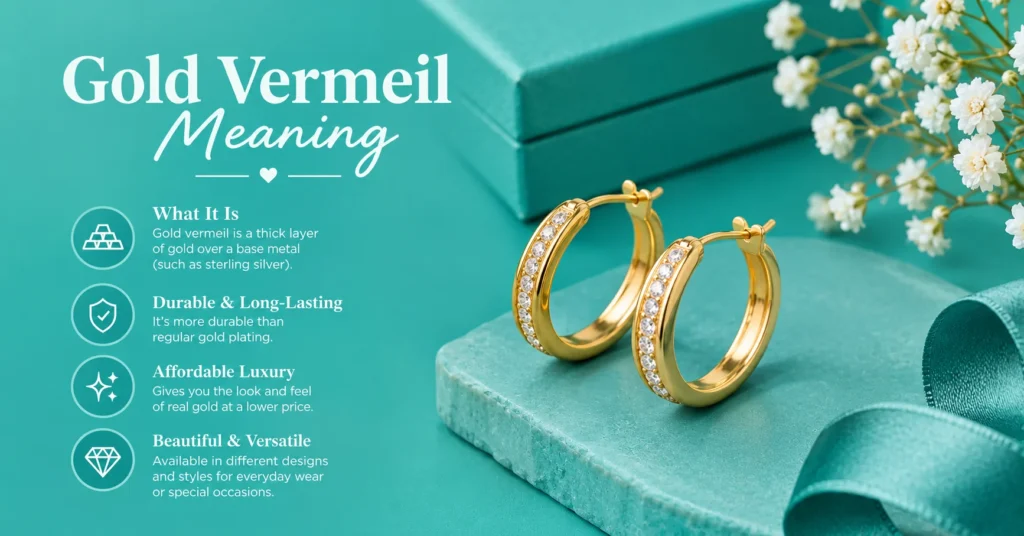
If you’re wondering about gold vermeil meaning, the simple answer is this: gold vermeil is genuine gold applied over a sterling silver base, rather than solid gold throughout. For shoppers comparing gold-plated jewelry, gold-filled pieces, and solid gold, that distinction matters because it affects quality, durability, price, and long-term value.
After years of studying jewelry materials and consumer-facing metal standards, I know why this label causes confusion: a piece can look exactly like gold while carrying a 925 silver stamp. The good news is that once you understand the gold layer, sterling silver core, karat, and micron thickness, choosing vermeil becomes much easier—and you can avoid paying solid-gold prices for something that isn’t solid gold.
What Is Gold Vermeil Meaning and Why Is It Popular?
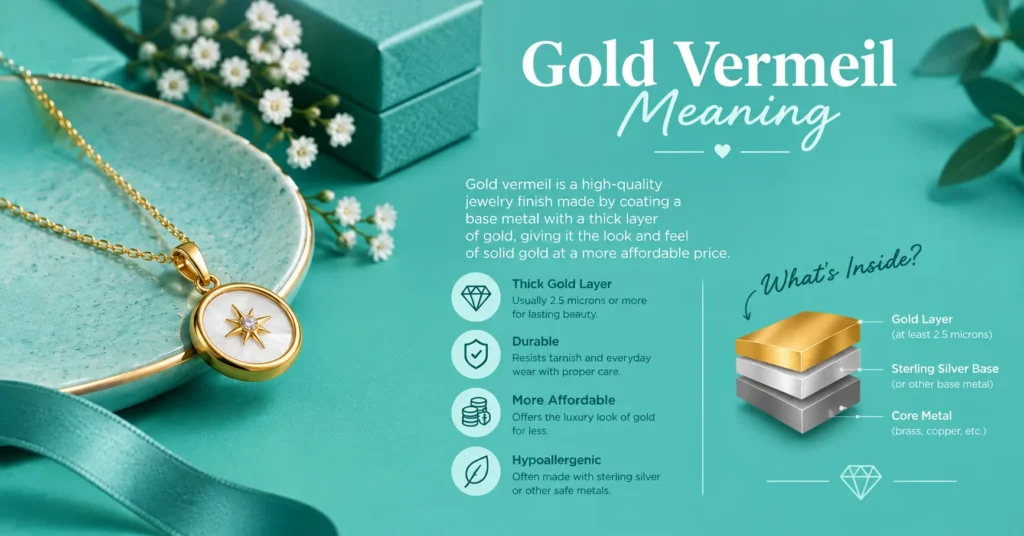
Gold vermeil meaning centers on one simple construction: a sterling silver base covered with a genuine gold layer. The combination gives shoppers the warm appearance of gold jewelry, a precious-metal foundation, and a more accessible price than solid gold. In the United States, vermeil also has a defined standard.
That middle position explains its popularity. Gold vermeil sits between ordinary gold plating and solid gold, making it attractive to someone who wants a premium appearance without paying for gold throughout the entire piece. It can be beautiful for necklaces, earrings, bracelets, and other rotating jewelry when expectations are realistic.
What Is Gold Vermeil Made Of?
Gold vermeil is made from two essential components: sterling silver underneath and a layer of gold on the surface. Sterling silver is commonly marked 925, indicating 92.5% silver. The visible gold is genuine gold, but it remains a coating rather than the entire body of the jewelry.
That construction is the key difference from solid gold. A vermeil necklace may look completely golden when new, yet the underlying metal is silver. This is not a flaw or deception when the item is properly represented; it is simply how this category of jewelry is constructed.
What does the vermeil definition actually require?
In the United States, the FTC Jewelry Guides define vermeil around sterling silver, gold fineness, and coating thickness. The base must be sterling silver, the gold or gold alloy must be at least 10 karats, and the coating must meet the applicable minimum thickness throughout.
The word “throughout” is important because vermeil isn’t supposed to mean a thick coating on only the visible front. The standard concerns the significant surfaces. That makes the base material and coating specifications much more useful than a vague seller description such as “luxury gold finish.”
What Is the Legal Standard for Gold Vermeil?
For U.S. consumers, the FTC standard is especially useful because it gives meaning to the term rather than leaving it entirely to marketing language. The applicable requirement is sterling silver coated with gold or gold alloy of at least 10-karat fineness and a minimum thickness equivalent to 2.5 microns of fine gold.
One subtle point is worth remembering: 2.5 microns refers to fine-gold equivalent, not necessarily a physical 2.5-micron layer of a lower-karat alloy. That distinction is easy to miss when shopping online, so transparent sellers should be able to explain both the gold karat and coating thickness.
What Is the History and Origin of Gold Vermeil?
The word vermeil has French roots and historically referred to gilded silver. Earlier gilding methods used techniques very different from today’s jewelry manufacturing. Modern vermeil is generally produced through electroplating, which offers more consistent control over the gold coating than historic fire-gilding methods.
That history explains why vermeil has traditionally been associated with silver beneath gold. It was never simply another name for solid gold. The relationship between a precious silver base and a gold exterior is central to the identity of the material.
Where Does Vermeil Fit in the Jewelry Quality Spectrum?
Vermeil is commonly positioned in the demi-fine jewelry space. At one end are inexpensive fashion pieces using base metals with thin gold coatings. At the other is solid gold, where gold alloy makes up the jewelry throughout. Vermeil occupies the practical middle ground between those categories.
That middle position is exactly why it appeals to budget-conscious shoppers. You get genuine gold on the surface and genuine sterling silver underneath, but you also accept that the gold finish can eventually wear. It is better understood as an accessible luxury material than as a substitute for an heirloom-quality solid-gold piece.
Is Gold Vermeil Real Gold or Not?
Yes—the gold layer on genuine vermeil is real gold. But the entire item is not solid gold. This distinction is important because “real gold” and “solid gold” describe different things. Vermeil contains genuine gold on its surface while sterling silver forms the underlying structure.
Think of a gold vermeil ring as a silver ring wearing a gold exterior. If the gold coating eventually becomes thin at high-friction points, silver may begin to show. That does not automatically mean the jewelry was fake; it can simply mean the surface finish has experienced normal wear.
Vermeil vs gold plated vs gold filled
Gold vermeil, gold plated, and gold filled jewelry can look similar at first glance, but their construction is different. Vermeil uses sterling silver as its base. Conventional gold plating can use various base metals, while gold-filled jewelry uses a mechanically bonded gold layer that represents a defined proportion of the item’s weight.
For shoppers, the practical difference is more important than the terminology alone. Look at the base metal, gold thickness, bonding method, and seller disclosures. A thicker coating and precious-metal base generally give vermeil an advantage over basic plated jewelry, while gold-filled construction can offer greater wear resistance.
Gold Vermeil vs Gold Plated: What Is the Difference?
The biggest difference is what sits beneath the gold and how substantial the gold coating is. Genuine vermeil uses sterling silver, while ordinary gold-plated jewelry may use brass, copper, steel, or another base material. Vermeil also has a defined U.S. standard involving gold fineness and thickness.
This matters when the coating wears. With brass-based plating, the underlying base metal can become visible and may react differently with skin. With vermeil, exposed areas reveal sterling silver. Neither option is indestructible, but they represent different quality levels and material choices.
| Feature | Gold Vermeil | Gold Plated | Solid Gold |
| Base | Sterling silver | Varies | Gold alloy throughout |
| Gold surface | Genuine gold | Gold coating | Gold throughout |
| U.S. vermeil standard | Yes | No | Not applicable |
| Relative cost | Mid-range | Lower | Higher |
| Can surface wear? | Yes | Yes | No plated layer |
| Long-term heirloom use | Limited | Usually not ideal | Best suited |
Is Gold Vermeil Better Than Solid Gold?
Neither is universally “better”; the right choice depends on what you expect from the jewelry. Solid gold wins for longevity, intrinsic gold content, repairability, and heirloom use. Vermeil wins when you want the appearance of gold at a substantially more accessible price.
For a wedding band, heirloom, or piece you expect to wear continuously for decades, solid gold makes more sense. For fashion-forward necklaces, earrings, and rotating pieces, vermeil can provide an appealing balance of appearance and cost without requiring a solid-gold budget.
Which Karat Is Best for Gold Vermeil: 10K, 14K, 18K or 24K?
The karat tells you the proportion of gold in the surface alloy. Ten-karat gold contains less gold than 14K or 18K, while 24K is essentially pure gold. Higher karat generally produces a richer yellow color, although alloy composition also influences appearance and physical performance.
For many shoppers, 14K or 18K offers the most practical balance. Eighteen-karat vermeil has a rich gold appearance and is common in premium jewelry. Twenty-four-karat gold is softer, so it isn’t automatically the best choice for a frequently worn ring or bracelet simply because it contains more gold.
How Can You Identify Real Gold Vermeil?
Start with the markings. A 925, S925, or STER mark indicates sterling silver, while a separate karat specification can indicate the gold used for the surface. However, a stamp alone should not be treated as absolute proof of coating thickness, especially when buying expensive jewelry.
Next, ask the seller for the gold karat and micron thickness. A reputable seller should be comfortable explaining the construction. If a listing says “vermeil” but provides no information about the silver base or coating specifications, treat that missing information as a reason to investigate further.
How do you tell if a piece is vermeil?
Examine the areas most likely to show wear: the inside of a ring, clasp, pendant bail, or edges that repeatedly rub against skin and clothing. If the gold has worn through, genuine vermeil should reveal a silver-colored base rather than the warmer yellow or reddish appearance associated with brass.
You can also inspect the hallmarks. A gold-colored item marked 925 is describing its silver base, not claiming that the entire piece is 92.5% gold. For valuable jewelry, professional testing is more reliable than visual inspection or a home magnet test.
Is Gold Vermeil Waterproof?
Gold vermeil should not be treated as waterproof. Water alone isn’t necessarily the entire problem; repeated exposure to chlorine, salt water, soap, cosmetics, sweat, and friction can accelerate wear of the gold surface. The more frequently a piece experiences these conditions, the faster its finish may change.
A simple habit makes a noticeable difference: put jewelry on after applying perfume, lotion, or cosmetics, and remove it before showering, swimming, exercising, or washing dishes. This is particularly important for rings and bracelets because they experience more physical contact than earrings or pendants.
How Long Does Gold Vermeil Last for Each Jewelry Type?
There is no universal expiration date for vermeil. Jewelry type, coating thickness, frequency of wear, friction, body chemistry, water exposure, and care all influence longevity. Earrings and necklaces often retain their finish longer because they experience less abrasion than rings.
Rings and bracelets typically face the greatest challenge because hands constantly contact surfaces, clothing, bags, desks, and other objects. A high-quality, thicker coating can help, but even good vermeil remains a surface finish. Expect wear eventually rather than treating a lifespan estimate as a guarantee.
How Long Does Gold Vermeil Last?
Well-maintained vermeil can remain attractive for years, but there is no honest number that applies to every person or piece. An occasionally worn necklace stored carefully may look excellent far longer than a ring worn during workouts, showers, cleaning, and everyday manual work.
This is why coating thickness is only one part of the equation. A shopper who wants maximum longevity should consider the jewelry’s design, where it will contact the body, how often it will be worn, and whether the manufacturer provides clear information about its gold layer.
Does Gold Vermeil Tarnish Over Time?
Gold itself is highly resistant to tarnishing, but vermeil can show discoloration as the surface coating becomes thinner and the sterling silver beneath it is exposed. Sterling silver can react with its environment, producing the darkened appearance associated with silver tarnish.
That does not mean every vermeil piece will tarnish quickly. Keeping it dry, avoiding harsh chemicals, storing it properly, and reducing friction can preserve the gold surface for longer. If silver eventually becomes visible, professional cleaning or replating may restore the appearance.
Can Gold Vermeil Be Replated?
Yes. Replating is one of the advantages of choosing a well-made vermeil piece with sentimental or design value. A jeweler can generally prepare the worn surface and apply a fresh gold coating. The exact process and cost depend on the jewelry’s construction and condition.
Replating makes the most sense when the underlying piece is worth preserving. Before paying for the service, compare the repair cost with the jewelry’s craftsmanship, sentimental importance, and replacement price. A lightweight fashion item may not justify the same investment as a meaningful piece.
How Do You Care for Gold Vermeil?
Treat gold vermeil gently. Remove it before swimming, showering, exercising, or using household chemicals. Apply perfume, lotion, sunscreen, and hairspray before putting the jewelry on. After wearing it, wipe away residue with a soft cloth and store the piece separately in a dry place.
Avoid abrasive polishing compounds and aggressive silver-cleaning dips unless a professional specifically recommends them for the piece. Because the gold is a surface layer, harsh cleaning can remove the finish you are trying to preserve. Gentle maintenance is usually the better strategy.
Gold Vermeil Price Guide
There is no single “correct” price for vermeil. Cost depends on the jewelry’s weight, design, craftsmanship, gemstone content, brand, gold karat, coating thickness, and retail positioning. Two necklaces can both qualify as vermeil while having very different production costs and quality.
That is why price alone cannot authenticate the material. A surprisingly cheap piece deserves closer inspection, but an expensive piece isn’t automatically superior. Look for transparent specifications first: 925 sterling silver, gold karat, coating thickness, craftsmanship, and a seller willing to explain what you’re buying.
Does vermeil have any real value?
Vermeil has some underlying material value because the base is sterling silver. However, shoppers should not confuse that with the melt value of solid gold. The gold coating is extremely thin compared with the total mass of a solid-gold piece, so its contribution to recoverable gold value is limited.
The jewelry can still be worth more than its raw metal content because of its design, maker, gemstones, age, condition, or sentimental importance. In other words, vermeil can have genuine value, but it should not be priced or understood as a solid-gold investment.
Is Gold Vermeil Worth Buying?
For many shoppers, yes especially when the goal is an attractive gold appearance without the cost of solid gold. Vermeil offers a sterling silver foundation and a genuine gold exterior, making it a meaningful step above basic base-metal plating when the material specifications are legitimate.
It becomes less attractive when your priority is lifetime durability or maximum intrinsic value. Someone buying an engagement ring, wedding band, or permanent heirloom may be better served by solid gold or platinum. Someone rotating necklaces, earrings, or fashion pieces may find vermeil an excellent compromise.
What Should You Look for When Buying Gold Vermeil?
Look for three things first: the sterling silver base, the gold karat, and the coating thickness. A 925 hallmark is useful evidence of the silver base, while transparent disclosure of 10K, 14K, or 18K gold tells you more about the surface material.
Then look beyond the label. Consider craftsmanship, clasp quality, chain construction, stone settings, warranty, return policy, and seller reputation. “Vermeil” is a useful material category, but it does not guarantee that every piece within the category is equally well made.
Does worn gold vermeil mean the piece is fake?
Not necessarily. Because vermeil is a gold surface over sterling silver, the coating can naturally become thinner at areas exposed to repeated friction. Seeing silver underneath a worn spot can therefore be consistent with genuine vermeil rather than proof of fraud.
The more useful question is whether the jewelry originally met the applicable material standard. Check the seller’s specifications, markings, purchase documentation, and construction. If authenticity matters financially, have a qualified jeweler or professional appraiser examine the piece instead of relying solely on appearance.
Conclusion
The easiest way to remember gold vermeil meaning is: real gold over sterling silver, not solid gold throughout. In the United States, the FTC framework gives the term a specific material and coating standard. That makes vermeil meaningfully different from generic gold plating while keeping it distinct from solid gold.
If you’re shopping, don’t stop at the word “vermeil.” Ask what karat gold was used, how thick the coating is, whether the base is 925 sterling silver, and how the seller recommends caring for it. Those details tell you far more about the piece than a premium-sounding product name.
FAQs
Author

Ethan Carter is an SEO blogger specializing in internet slang, text abbreviations, and social media meanings. He creates clear, accurate, and reader-friendly content backed by thorough research. His goal is to help readers understand modern online language with reliable, easy-to-read guides.