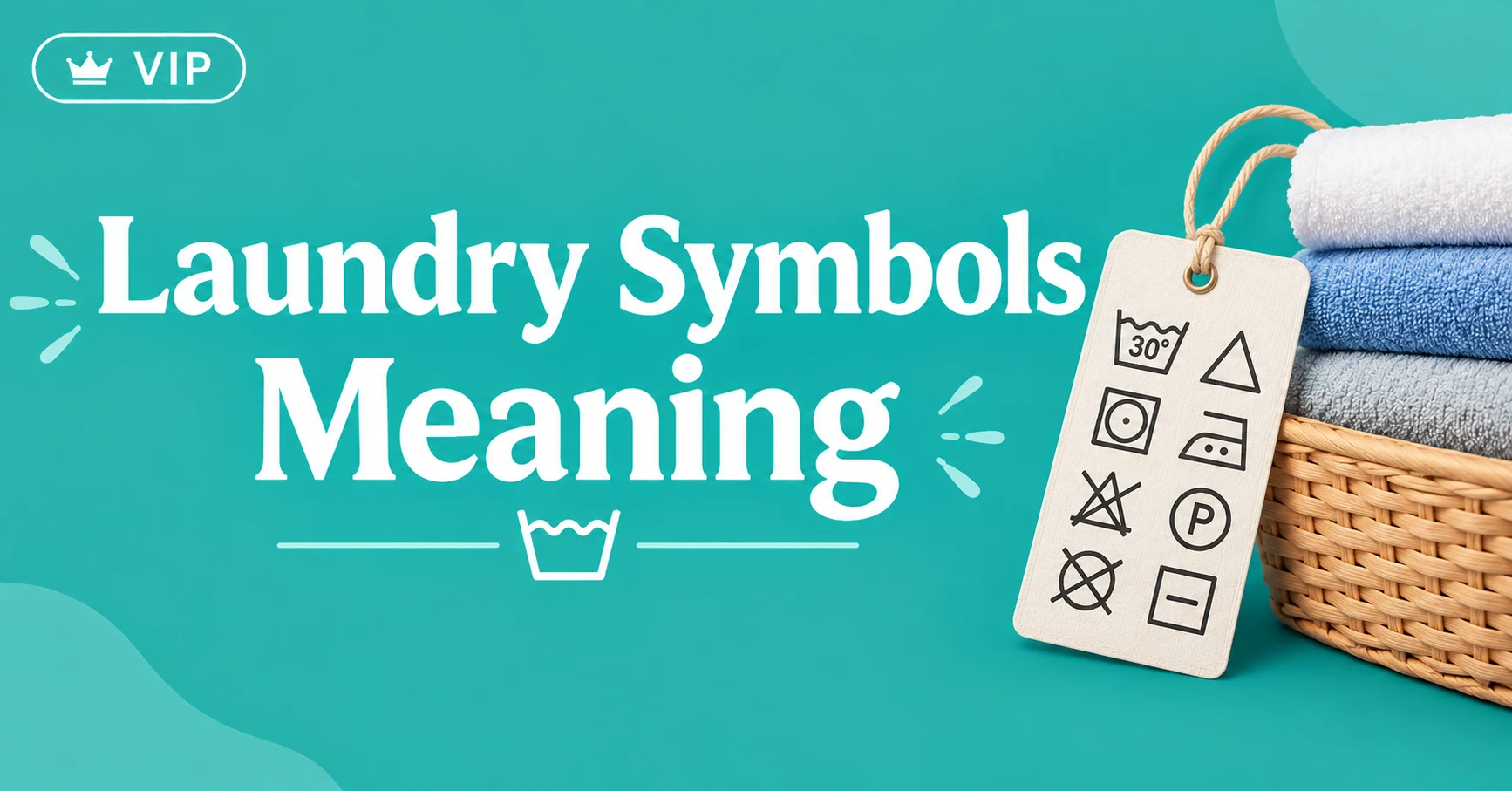
Laundry Symbols Meaning: Easy Guide to Every Care Tag
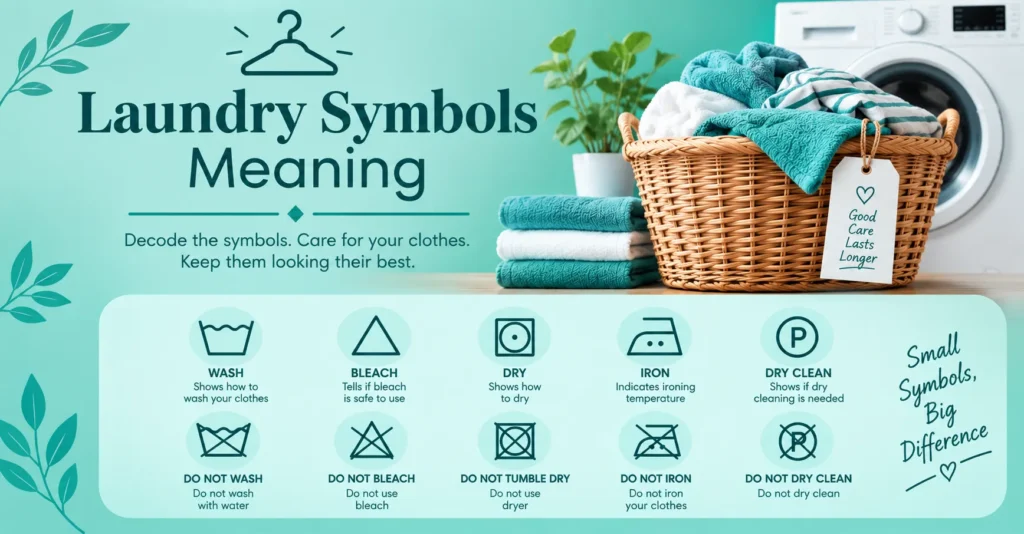
Laundry symbols meaning is simple once you recognize the basic shapes, dots, lines, and crosses on a clothing care label. These tiny washing symbols, drying symbols, bleach symbols, ironing symbols, and dry-cleaning symbols tell you how to care for a garment without guessing.
If you’ve ever pulled a favorite sweater from the dryer and discovered it suddenly fits like a child’s shirt, you’re not alone. I’ve seen how one overlooked care tag can turn an ordinary laundry load into an expensive mistake. This guide makes clothing care labels easier to read, so you can protect fabric, color, shape, and comfort with confidence.
Laundry symbols meaning: Washing Symbols
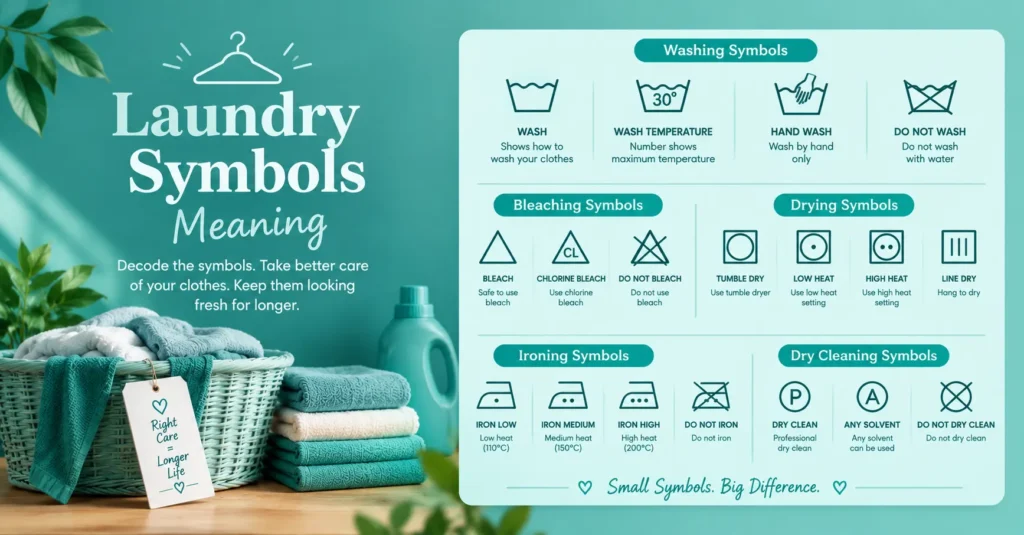
The wash-tub symbol tells you whether a garment can be machine washed, hand washed, or not washed with water. A plain tub generally indicates machine washing, while a hand inside the tub means hand wash. A crossed-out tub means do not wash, so follow the garment’s alternative care instructions.
When reading laundry symbols, also notice the details inside or beneath the tub. Dots relate to temperature, while lines underneath indicate a gentler cycle. These clothing care labels are designed to communicate washing instructions quickly, helping protect delicate fabrics such as wool, silk, and cashmere from unnecessary agitation or heat.
Common washing symbols at a glance
| Symbol pattern | Meaning | What to do |
| Plain wash tub | Machine wash | Use the recommended temperature and cycle |
| Hand in tub | Hand wash | Wash gently by hand |
| Crossed-out tub | Do not wash | Avoid water washing |
| One line under tub | Gentler/permanent press | Choose the appropriate reduced-agitation cycle |
| Two lines under tub | Delicate | Use a gentle or delicate cycle |
The important lesson is not to treat every tub symbol as permission for the same wash. A machine-washable garment may still require cold water or a delicate cycle. The complete symbol combination matters more than the basic shape alone.
Laundry symbols meaning: Washing temperature symbols
Temperature symbols tell you how much heat the wash water can safely reach. In many common systems, dots indicate increasing temperature, while some labels use Celsius numbers such as 30, 40, 50, or 60. In U.S. laundry care, always follow the maximum temperature shown on the garment’s label.
Cold washing is often gentler on color and fabric, while warmer temperatures can provide stronger cleaning for suitable garments. Whirlpool explains that 30°C is about 85°F, 40°C about 105°F, 50°C about 120°F, and 60°C about 140°F. These values are maximum recommended temperatures rather than instructions to always use the hottest available setting.
Quick temperature reference
| Label indication | Approximate temperature | Typical interpretation |
| 1 dot / 30°C | 85°F | Cold |
| 2 dots / 40°C | 105°F | Warm |
| 3 dots / 50–60°C | 120–140°F | Hotter washing |
| Higher temperature symbols | Varies | Follow the exact care label |
Don’t assume hotter means cleaner for every garment. Excessive heat can contribute to shrinkage, fading, distortion, or premature wear. For a new shirt, dark garment, delicate sweater, or unfamiliar fabric, the care tag is a better guide than habit.
Laundry symbols meaning: Washing machine symbols
Washing machine symbols provide more information than simply saying “yes” or “no” to machine washing. A normal-cycle symbol, permanent-press symbol, or delicate symbol indicates how much mechanical action the garment can tolerate. The lines beneath the wash tub help distinguish these cycle levels.
A normal cycle generally suits sturdier everyday garments, while permanent press is designed to reduce wrinkling and delicate cycles use gentler treatment. Tide explains that the lines beneath the wash tub help identify these different cycle types, making them useful when your washer offers several settings.
| Washing symbol detail | Cycle meaning | Suitable approach |
| No line | Normal | Regular durable fabrics |
| One line | Permanent press | Reduced wrinkling |
| Two lines | Delicate/gentle | Lower agitation |
| Hand symbol | Hand wash | Wash manually |
| X | Do not wash | Avoid machine or water washing |
A useful habit is to check the care label before choosing the washer setting rather than after loading the machine. This small pause can prevent a delicate garment from being exposed to unnecessary agitation, high spin speeds, or unsuitable water temperature.
Laundry symbols meaning: Drying Symbols
Drying symbols use a square as their basic shape. A square containing a circle indicates tumble drying, while other line arrangements inside a square describe natural drying methods such as drip drying, hanging, or drying flat. A crossed-out dryer symbol means the garment should not be tumble dried.
Drying is where many expensive laundry mistakes happen. A garment may survive a wash perfectly but shrink, stretch, or lose its shape in the dryer. Tide and Whirlpool both emphasize checking drying instructions separately from washing instructions because a safe wash setting does not automatically mean a safe dryer setting.
| Drying symbol | Meaning | General action |
| Square with circle | Tumble dry | Dryer permitted |
| Square with crossed-out circle | Do not tumble dry | Air dry |
| Horizontal line in square | Dry flat | Lay flat |
| Vertical lines | Drip dry | Let excess water drip away |
| Curved line at top | Hang dry | Hang to dry |
| Shade marking | Dry in shade | Keep away from direct sun |
Think of washing and drying as two separate decisions. A sweater can be perfectly washable but unsuitable for a heated dryer. When in doubt, choose the gentler drying method permitted by the label.
Laundry symbols meaning: Drying temperature symbols
Dots inside the tumble-dry symbol indicate the permitted heat level. More dots generally mean a higher temperature. A low-heat symbol calls for a lower dryer setting, while a no-heat or air symbol means the garment can tumble without added heat.
This distinction matters because heat-sensitive materials can react badly to excessive dryer temperatures. Even when a garment is technically dryer-safe, using the hottest setting may create unnecessary shrinkage or fabric stress. The safest approach is to match the dryer heat to the exact symbol rather than selecting a familiar cycle automatically.
Dryer heat guide
| Symbol detail | Meaning |
| One dot | Low heat |
| Two dots | Medium heat |
| Three dots | High heat |
| Filled/black circle | No heat or air |
| Crossed-out dryer | Do not tumble dry |
Air drying can be a useful alternative when the label allows it. It is especially gentle for many delicate garments and can reduce the heat exposure associated with machine drying. Still, follow the actual care label because fabrics and garment construction vary.
Laundry symbols meaning: Bleaching symbols
The triangle is the key bleach symbol on clothing care labels. An empty triangle indicates that bleaching is permitted under the applicable care instructions. A triangle with diagonal lines indicates non-chlorine bleach, while a crossed-out triangle means do not bleach.
Bleach should never be added simply because a white shirt looks dull. The garment’s bleach symbol determines whether that treatment is appropriate. Using chlorine bleach on a fabric that prohibits it can cause discoloration or damage that cannot easily be reversed.
| Triangle symbol | Meaning |
| Empty triangle | Bleach permitted |
| Triangle with two diagonal lines | Non-chlorine bleach |
| Crossed-out triangle | Do not bleach |
This is particularly important for colored garments, delicate fabrics, and materials containing fibers that may react poorly with strong chemicals. A color-safe or non-chlorine product is not automatically appropriate either the care label still comes first.
Laundry symbols meaning: Ironing Symbols
The iron-shaped symbol tells you whether and how a garment can be pressed. Dots indicate the maximum ironing temperature, while a crossed-out iron means do not iron. Some labels also indicate that steam should not be used, which is different from prohibiting ironing altogether.
A low-temperature iron is commonly associated with heat-sensitive materials, while higher settings are intended for fabrics that tolerate more heat. Never assume that an attractive, wrinkle-free finish is worth risking a delicate garment. The goal of ironing instructions is to remove wrinkles while protecting the textile underneath.
| Iron symbol detail | Meaning |
| One dot | Low heat |
| Two dots | Medium heat |
| Three dots | High heat |
| Crossed-out iron | Do not iron |
| Steam crossed out | Do not use steam |
When ironing a garment with printed designs, embellishments, or sensitive finishes, pay attention to both the care label and the construction of the item. If the label restricts heat or steam, follow that restriction rather than relying on the appearance of the fabric.
Laundry symbols meaning: Dry cleaning symbols
A circle represents professional textile care or dry cleaning in the care-symbol system. A crossed-out circle means the garment should not be dry cleaned. Letters inside a circle provide information intended primarily for the professional cleaner about the cleaning process or solvent.
This part of the label can look especially mysterious because the letters are not ordinary washing instructions. Whirlpool notes that symbols such as A, F, and P can specify different professional-cleaning requirements. If a garment says dry clean only, don’t replace that instruction with a home washing experiment simply because the fabric feels washable.
| Dry-cleaning symbol | General meaning |
| Plain circle | Dry cleaning/professional cleaning |
| Circle with A | Professional solvent instruction |
| Circle with F | Restricted professional solvent instruction |
| Circle with P | Professional solvent instruction |
| Crossed-out circle | Do not dry clean |
For expensive suits, structured clothing, embellished garments, or pieces with delicate construction, professional care can be especially important. The care label is there to tell you what cleaning process the garment was designed to tolerate.
Laundry symbols meaning: A simple five-shape memory trick
If the symbols seem overwhelming, remember the five main shapes: tub for washing, triangle for bleaching, square for drying, iron for ironing, and circle for professional cleaning. ASTM describes the U.S. care-symbol system around these five basic operations.
Then remember three modifiers: dots usually indicate temperature, lines indicate gentler treatment, and an X indicates that the marked action should not be performed. Once these patterns become familiar, an intimidating clothing tag starts looking more like a simple visual language.
Laundry symbols meaning: Quick reference chart
| Shape or mark | Main job | Key detail |
| Tub | Washing | Dots/lines modify care |
| Triangle | Bleaching | Lines or X restrict bleach |
| Square | Drying | Circle means tumble drying |
| Iron | Ironing | Dots indicate heat |
| Circle | Professional cleaning | Letters may guide cleaner |
| Dots | Temperature | More dots generally mean more heat |
| Lines | Gentleness | More lines generally indicate gentler treatment |
| X | Prohibition | Do not perform that process |
The U.S. care-label system has a regulatory context as well. The FTC’s Care Labeling Rule requires covered manufacturers and importers to provide regular care instructions, while ASTM provides a standardized symbol guide used for textile care communication.
That is why these little symbols deserve more attention than they usually receive. They are not decorative icons. They are compact instructions designed to help consumers understand how a garment should be cared for throughout its useful life.
Conclusion
Understanding laundry symbols meaning becomes much easier when you stop trying to memorize dozens of separate icons and instead learn the visual system behind them. The tub handles washing, the triangle handles bleach, the square handles drying, the iron handles pressing, and the circle handles professional cleaning.
The next time you find a confusing tag inside a new shirt, sweater, dress, or pair of pants, pause before choosing the washer or dryer. Look at the shape, check the dots and lines, and watch for the X. That few-second habit can help protect your favorite clothes, preserve their appearance, and save you from an unpleasant laundry-day surprise.
FAQs
Author

Ethan Carter is an SEO blogger specializing in internet slang, text abbreviations, and social media meanings. He creates clear, accurate, and reader-friendly content backed by thorough research. His goal is to help readers understand modern online language with reliable, easy-to-read guides.