50+ Essential Sus Meaning, Modern Slang & Real-Life Examples Explained
If you’ve spent any time on TikTok, Snapchat, Discord, or gaming chats, you’ve probably seen someone type, “That’s sus,” and wondered what they actually meant. At first glance, it might seem like just another internet buzzword, but the way people use it can change depending on the conversation. Sometimes it’s a joke. Other times it’s a serious way of calling out behavior that seems suspicious or untrustworthy. Without knowing the context, it’s easy to misunderstand what someone is trying to say.
Understanding sus meaning helps you keep up with online conversations, memes, and text messages without feeling left out. It’s one of those slang terms that has become part of everyday internet language, especially among younger users.
In this guide, you’ll learn the sus definition, what does sus mean, where the term came from, how it’s used on social media and in games, and plenty of real examples so you can recognize and use it confidently.
Sus Meaning Explained With Examples and Common Uses
If you’ve ever seen someone comment, “That’s so sus,” under a TikTok video or heard friends say it during a game, you’re not alone in wondering what they mean. The word has become one of the most recognizable pieces of internet slang, and while it’s simple, its meaning depends on the situation.
This guide explains sus meaning, where the term came from, how people use it online, and when it makes sense to use it yourself.
What Does Sus Mean?
Sus is a shortened form of the word suspicious. It describes a person, action, or situation that seems dishonest, questionable, strange, or likely to be hiding something.
People often use “sus” when something doesn’t feel right, even if they don’t have proof that anything is actually wrong.
Quick Definition
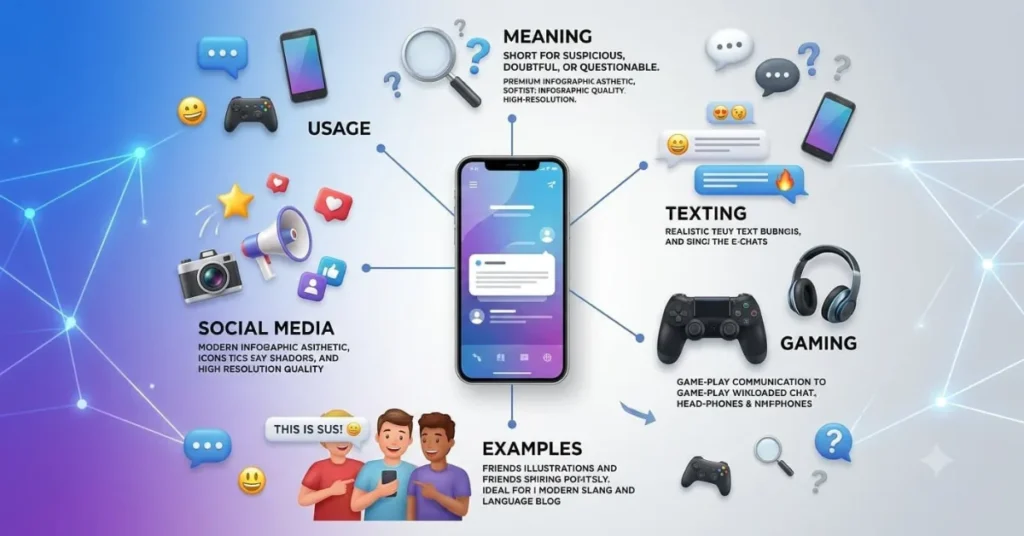
Sus meaning: A slang term meaning suspicious, untrustworthy, or something that seems unusual enough to make people question it.
Sus Definition
The sus definition is simple:
Sus (adjective): Informal slang used to describe someone or something that appears suspicious, shady, or questionable.
Although the word has existed as a shortened version of “suspicious” for years, it became much more popular through internet culture and multiplayer games.
Where Did “Sus” Come From?
The abbreviation “sus” has been used in spoken English for decades as a casual way to say “suspicious.”
Its popularity exploded in 2020 when the online game Among Us became a global hit. In the game, players try to identify hidden impostors, so saying someone was “sus” became the fastest way to accuse another player.
Soon afterward, the word spread across TikTok, YouTube, Discord, Twitch, Instagram, and text messaging. Today, people use it even when they’re not talking about games.
How Is “Sus” Used?
The meaning changes slightly depending on the conversation.
Someone Seems Suspicious
The most common use is to suggest a person’s behavior feels suspicious.
Example:
- He’s acting really sus today.
- Why are you hiding your phone? That’s sus.
Something Doesn’t Add Up
People also use “sus” when a situation feels strange or questionable.
Example:
- That excuse sounds sus.
- The numbers look sus.
Playful Teasing
Many people use “sus” jokingly among friends without making a serious accusation.
Example:
Friend: “I definitely didn’t eat the last slice.”
Friend: “Hmm… pretty sus.”
Examples of Sus in Everyday Conversations
Here are a few examples you might see online:
- That story sounds sus.
- He’s being kind of sus today.
- Why did you delete those messages? Sus.
- This deal looks a little sus.
- Their explanation doesn’t make sense. It’s pretty sus.
What Does “Sus” Mean on TikTok?
On TikTok, “sus” usually means someone is acting suspicious, hiding something, or doing something that seems unusual.
Creators often use it for humorous videos where someone’s actions look questionable, even if everyone knows it’s just a joke.
For example:
“My friend suddenly became quiet when I mentioned pizza. That’s sus.”
What Does “Sus” Mean in Text Messages?
In texting, “sus” is a quick way to express doubt or skepticism.
Examples:
Text 1
A: I wasn’t online last night.
B: That’s sus I saw your profile active.
Text 2
A: Trust me.
B: Sounds sus.
What Does “Sus” Mean in Gaming?
Gaming helped make the word famous.
In games like Among Us, calling someone “sus” means you believe they could be the impostor or the player secretly working against everyone else.
Today, gamers use the word in many multiplayer games whenever someone behaves strangely or makes an unexpected move.
Is “sus meaning” Always Negative?
Not always.
Sometimes it’s a genuine warning that something seems suspicious.
Other times it’s simply friendly teasing.
For example, calling your friend “sus” because they suddenly know too much about a surprise party is usually meant as a joke rather than a serious accusation.
Context makes all the difference.
Synonyms for sus meaning
Depending on the situation, similar words include:
- Suspicious
- Questionable
- Sketchy
- Shady
- Doubtful
- Fishy
- Untrustworthy
- Odd
Each has a slightly different tone, but they all suggest that something doesn’t seem quite right.
When Should You Use “Sus”?
You can use “sus” in casual conversations when:
- Someone’s behavior seems suspicious.
- A story doesn’t sound believable.
- Something feels questionable.
- You’re joking with friends.
- You’re chatting online or playing games.
It’s best avoided in formal writing, school assignments, or professional emails, where “suspicious” is usually the better choice.
Common Mistakes About Sus
Thinking It Only Refers to Criminal Behavior
Not true. Someone can be “sus” simply because they’re acting strangely.
Assuming It’s Always Serious
Many people use it humorously.
Using It in Formal Writing
Although common online, it’s considered informal slang.
Sus vs Suspicious
| Sus | Suspicious |
| Informal slang | Standard English |
| Common in texts, memes, and social media | Used in formal and professional writing |
| Casual conversations | Academic, business, and official communication |
| Short and conversational | More formal and descriptive |
Conclusion
The popularity of sus meaning shows how quickly internet slang can become part of everyday conversations. What started as a simple abbreviation for suspicious is now used across social media, gaming, and text messages to describe anything that feels questionable, unusual, or just a little off. In many cases, it’s less about making a serious accusation and more about adding humor or expressing doubt in a casual way.
Once you understand what does sus mean, you’ll notice it almost everywhere from TikTok comments to group chats with friends. Paying attention to the context is the key, since the same word can be playful in one conversation and genuinely cautious in another. Knowing how and when to use “sus” will help you understand modern online conversations and communicate more naturally without missing the joke.
FAQs
Author

Ethan Carter is an SEO blogger specializing in internet slang, text abbreviations, and social media meanings. He creates clear, accurate, and reader-friendly content backed by thorough research. His goal is to help readers understand modern online language with reliable, easy-to-read guides.