

WTV Meaning Explained What Does WTV Mean in Texting
You get a text that simply says “wtv” and suddenly the conversation feels a little unclear. Is the person saying “whatever” casually, or are they annoyed, dismissive, or trying to end the conversation? If you have searched what does wtv mean, you are probably trying to understand more than just three letters.
WTV is a common abbreviation used in texting, social media, comments, and online chats. Most of the time, it means “whatever,” but the tone can change depending on the situation and the relationship between the people talking. A short reply can sound relaxed in one conversation and dismissive in another.
This guide explains the wtv meaning in simple terms, shows how people use it in real conversations, and helps you understand the tone behind the abbreviation. By the end, you will know when wtv is harmless, when it may sound rude, and how to respond naturally.
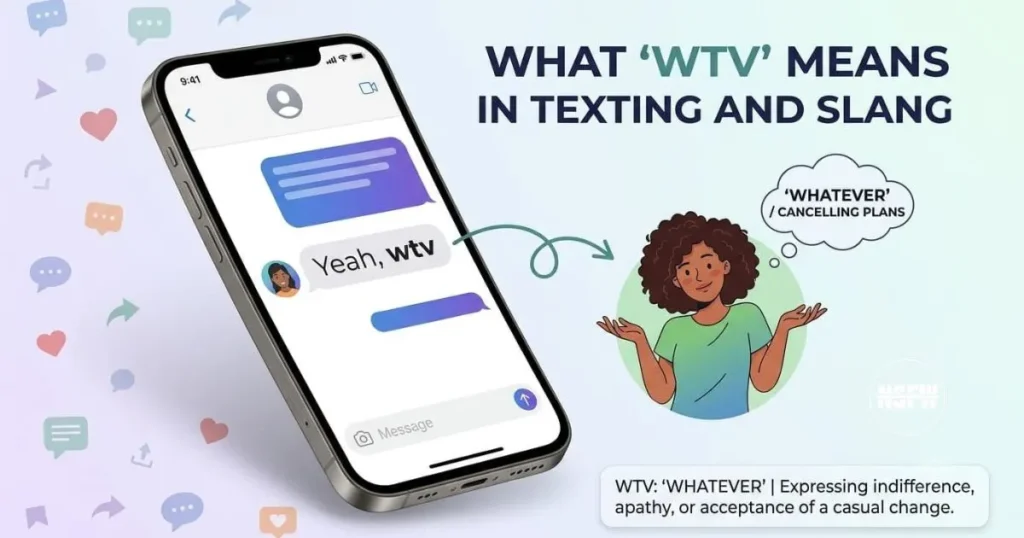
What Does WTV Mean?
WTV usually means “whatever.” It is a shortened form commonly used in texting, social media messages, online comments, and casual conversations.
People often use wtv when they do not have a strong preference, do not want to continue an argument, or simply want to say that something does not matter to them.
For example:
Person 1: “Do you want pizza or burgers?”
Person 2: “WTV is fine.”
Here, wtv means “whatever is fine” and sounds casual.
In another situation, the meaning can feel different:
Person 1: “Are you coming with us?”
Person 2: “Wtv.”
This could sound dismissive or annoyed, depending on the conversation.
That is why understanding what does wtv mean involves looking at the context, not just translating the abbreviation.
WTV Meaning in Texting
In texting, WTV is mainly used as a quick way to write “whatever.” People use it because texting is informal and abbreviations help keep conversations short.
The exact feeling behind the word can vary. Someone might use wtv to mean:
- Whatever you want
- It does not matter to me
- I do not care
- Anything is fine
- I do not want to argue about it
The surrounding words usually help reveal the intended meaning.
For example:
“Wtv you want, I’m good.”
This probably means the person is flexible.
But:
“Wtv, I’m done talking about this.”
This sounds more dismissive and may suggest frustration.
Is WTV Rude?
WTV is not automatically rude. Its tone depends heavily on how it is used.
If someone writes “wtv works for you,” they may simply be saying that they are flexible.
However, if someone replies with only “wtv” during a serious conversation, it may sound like they are uninterested or trying to end the discussion.
Compare these examples:
Casual Use
“Wtv you want to watch is fine with me.”
This sounds relaxed and cooperative.
Dismissive Use
“Wtv, believe what you want.”
This sounds more annoyed or dismissive.
The same abbreviation can therefore have very different meanings emotionally. When you are unsure, consider the person’s usual texting style and what was being discussed.
What Does WTV Mean on Snapchat and Social Media?
On Snapchat, Instagram, TikTok, and other social platforms, wtv usually still means “whatever.”
People may use it in:
- Direct messages
- Comments
- Captions
- Group chats
- Story replies
Because social media communication is often fast and informal, shortened expressions like wtv are common.
For example:
“Wtv, I’m still going.”
This may mean, “Whatever people say, I am still going.”
Or:
“Wtv you decide, let me know.”
Here, the meaning is closer to, “Whatever you decide.”
The meaning stays connected to whatever, but the tone comes from the rest of the message.
WTV vs Whatever
The biggest difference between wtv and whatever is the level of formality.
| Term | Meaning | Common Use |
| WTV | Whatever | Texts and casual online chats |
| Whatever | Whatever | Both casual and more standard writing |
WTV is best suited to informal communication. You would normally avoid it in a school essay, professional email, formal letter, or official document.
For example:
Casual: “Wtv works for me.”
More standard: “Whatever works for me.”
Both sentences communicate a similar idea, but the first one feels more like texting.
Common Examples of WTV
Here are some natural examples of how people use wtv:
When Someone Has No Preference
“Wtv you want to eat is fine.”
Meaning: The person does not care which option you choose.
When Someone Wants to End an Argument
“Wtv, I’m not arguing anymore.”
Meaning: The person does not want to continue the disagreement.
When Someone Is Being Dismissive
“Wtv, do what you want.”
Meaning: The person may be annoyed or uninterested.
When Someone Is Flexible
“Wtv time works for you.”
Meaning: The person is open to different times.
How to Respond to WTV
Your response depends on the tone of the conversation.
If someone says:
“Wtv you want to do is fine.”
You could reply:
“Okay, let’s get pizza.”
If someone simply says:
“Wtv.”
and you think they sound annoyed, you might respond:
“Are you upset about something?”
or:
“I’m not trying to argue. I just wanted to understand.”
Sometimes, the best response is not to overthink the abbreviation. A person’s usual communication style often tells you more than the abbreviation itself.
Conclusion
The wtv meaning is usually simple: it is a shortened form of “whatever.” People use it in texts, social media, and casual chats when they have no preference, want to sound relaxed, or do not want to continue an argument.
Still, the tone matters. “Wtv works for me” sounds flexible, while a short “wtv” during an argument can come across as dismissive. If you are trying to understand what does wtv mean in a specific message, look at the words around it and consider the situation.
Like many texting abbreviations, wtv is quick and convenient, but the real meaning often comes from the person behind the message.
FAQs
Author

Ethan Carter is an SEO blogger specializing in internet slang, text abbreviations, and social media meanings. He creates clear, accurate, and reader-friendly content backed by thorough research. His goal is to help readers understand modern online language with reliable, easy-to-read guides.




One Comment