IHY Meaning in Text: 10+ Essential & Shocking Ways to Understand Its Playful or Rude Meaning
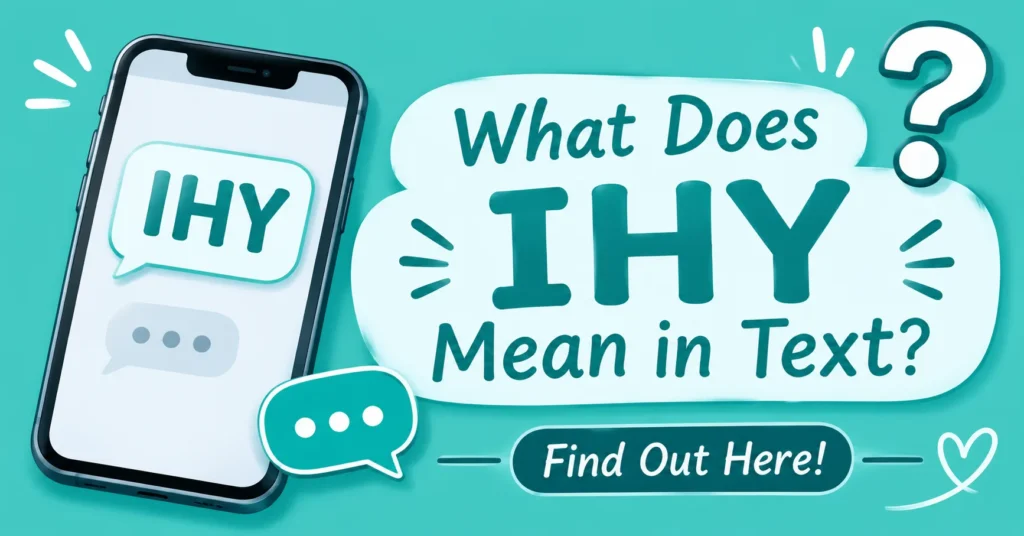
If someone texts you “IHY,” it usually means “I Hate You,” but the IHY meaning in text is not always as harsh as it sounds. In everyday texting, this abbreviation can express playful jealousy, sarcastic teasing, mock frustration, or genuine anger depending on the conversation.
Understanding internet slang can sometimes feel confusing, especially when three letters carry an emotional message. From SMS and group chats to Snapchat, Instagram, and TikTok, this guide explains how IHY works, what the sender might mean, and how to respond confidently without misreading their intentions.
What Does IHY Meaning in Text?
IHY most commonly stands for “I Hate You.” It is a short texting abbreviation formed from the first letters of the phrase: I for I, H for Hate, and Y for You. Instead of typing the complete expression, people use these three letters in casual messages and online conversations.
However, the IHY meaning in text depends on emotional context. Friends might send it after losing a game, seeing someone get concert tickets, or receiving an embarrassing photo. In those situations, it can communicate playful annoyance rather than actual hatred. The surrounding conversation helps explain the intended feeling.
The Quick Meaning of IHY
| Abbreviation | Full meaning | Typical tone |
| IHY | I Hate You | Playful or serious |
| ILY | I Love You | Affectionate |
| IDC | I Don’t Care | Indifferent |
| IHU | I Hate You | Informal |
| IH8U | I Hate You | Emphatic |
The main distinction is that IHY has a negative literal meaning but can have a humorous social meaning. Someone might say it when a friend gets something they wanted, makes a ridiculous joke, or wins a competition. It is not automatically a sign of a damaged friendship.
Is IHY Always Meant Literally?
No. People frequently use exaggerated expressions in informal digital communication. A friend who writes “IHY 😂” after you beat them in a video game may simply be pretending to be angry. The message can communicate disappointment, jealousy, or friendly competition without expressing genuine dislike.
Nevertheless, context matters. If someone sends IHY during a serious disagreement, following dishonesty or hurtful behavior, the message may be intended literally. Do not assume that every abbreviation accompanied by casual language is harmless. Consider the relationship and conversation before responding.
Who uses IHY?
IHY can appear in conversations between teenagers, young adults, friends, siblings, romantic partners, and other people who regularly communicate through texting. It is informal internet slang rather than a phrase restricted to one generation. Its meaning is generally understood through shared online communication habits and familiarity with abbreviations.
For example, two friends might use IHY after one receives better exam results, gets invited to a party, or wins a competition. A sibling might send it after taking the last piece of pizza. In these situations, the expression often works as playful banter between people who understand each other’s humor.
When should I use IHY?
IHY is best reserved for casual conversations with people who already understand your communication style. It can work when joking with close friends, teasing a sibling, or reacting dramatically to something funny. Adding an emoji such as 😂 or 😭 can provide extra context, although emojis cannot guarantee that someone will interpret the message correctly.
Avoid using IHY with strangers, professional contacts, teachers, employers, or people who might take the words seriously. It is also better to avoid the abbreviation during sensitive disagreements. If you want to express genuine affection or appreciation, use clearer language rather than relying on an expression that literally communicates dislike.
Examples of IHY in Sentences
The easiest way to understand the IHY meaning in text is to examine how it appears in ordinary conversations. The following are illustrative texting examples, not quotations from actual private messages. Notice how the same three letters can express different emotions depending on what happened beforehand.
Example 1: Playful jealousy
Friend A: I just got tickets to see our favorite singer!
Friend B: IHY 😭
Meaning: Friend B is jealous and wishes they had tickets too.
Example 2: Friendly teasing
Person A: I posted that embarrassing picture from last weekend.
Person B: IHY 😂
Meaning: Person B is jokingly annoyed about being embarrassed.
Example 3: Gaming frustration
Friend A: I beat you three times in a row!
Friend B: IHY 💀
Meaning: Friend B is pretending to be angry about losing.
Example 4: Sibling humor
Sibling A: I ate the last slice of pizza.
Sibling B: IHY!
Meaning: Sibling B is expressing exaggerated annoyance.
Example 5: Genuine anger
Person A: You lied to me even after I trusted you.
Person B: IHY.
Meaning: In this situation, IHY may communicate genuine hostility rather than friendly teasing.
These examples demonstrate why interpreting a short text message requires more than knowing its dictionary definition. The relationship, previous messages, and situation all contribute to the intended meaning.
Common Situations Where People Use IHY
IHY can appear in several casual communication situations. Its literal meaning remains the same, but its emotional purpose changes according to the interaction. Understanding these situations can help you recognize whether someone is expressing jealousy, joking annoyance, frustration, or genuine dislike.
| Situation | Example message | Possible interpretation |
| Playful jealousy | IHY, you got front-row seats! | I wish I were there |
| Friendly teasing | IHY for posting that picture 😂 | You’re embarrassing me |
| Gaming | IHY, you won again! | I’m annoyed about losing |
| Friendship | IHY for forgetting our plans | I’m playfully upset |
| Flirting | IHY, you’re too cute 😭 | Playful romantic teasing |
| Serious disagreement | IHY after a major argument | Possible genuine anger |
IHY on Snapchat
On Snapchat, IHY can appear in private messages, group conversations, and reactions to someone’s story. A friend might send it after seeing your vacation photos or discovering that you attended an event without inviting them. The expression may communicate playful jealousy rather than genuine hostility.
For instance, if someone posts a picture from a concert and their friend replies “IHY 😭,” the sender may simply wish they could have attended. However, Snapchat does not give the abbreviation a separate official meaning. The surrounding interaction still determines its intended tone.
IHY on Instagram
On Instagram, people may use IHY in direct messages, story replies, and comment sections. Someone might write it under a friend’s achievement, a funny photograph, or a post showing something they wish they had. In friendly exchanges, it can express exaggerated jealousy or mock frustration.
For example, replying “IHY 😂” to a friend’s holiday photograph may mean that you are jealous of their trip. It does not necessarily communicate dislike. Still, a message without friendly context can sound harsh, so consider the relationship before interpreting it.
IHY on TikTok
TikTok comments often contain short expressions that communicate strong reactions with very few words. IHY can appear when users react to entertaining videos, impressive achievements, funny situations, or content that makes them jealous. It can also appear in conversations between creators and their followers.
For example, someone might comment “IHY 😭” under a video showing a person meeting their favorite celebrity. The intended message may be closer to “I’m so jealous!” than a literal statement of hatred. The video and comment thread provide important context.
IHY vs IDC
IHY and IDC are both short internet abbreviations, but their meanings are different. IHY stands for “I Hate You,” while IDC means “I Don’t Care.” One can communicate dislike or playful frustration, whereas the other generally expresses indifference or a lack of concern.
| Feature | IHY | IDC |
| Full form | I Hate You | I Don’t Care |
| Main emotion | Dislike or mock annoyance | Indifference |
| Tone | Playful, sarcastic, or serious | Neutral or dismissive |
| Typical use | Reacting to someone’s actions | Showing a lack of concern |
| Example | IHY, you beat me again! | IDC what they think |
For example, if your friend wins a game and you reply “IHY,” you may be teasing them. If you respond “IDC,” you are communicating that the result does not matter to you. Although both expressions are informal, they serve different conversational purposes.
IHY vs ILY
IHY and ILY look similar, but their literal meanings are opposites. IHY stands for “I Hate You,” whereas ILY means “I Love You.” Confusing these abbreviations can create an awkward situation, particularly in romantic conversations or messages where emotional meaning matters.
| Abbreviation | Full form | Meaning |
| IHY | I Hate You | Dislike or playful annoyance |
| ILY | I Love You | Affection and love |
| IHYSM | I Hate You So Much | Intensified dislike or teasing |
| IHU | I Hate You | Alternative shorthand |
| IH8U | I Hate You | Alternative spelling |
Consider this example:
Person A: You mean so much to me. ILY ❤️
Person B: ILY too!
Here, both people are expressing affection. However, if someone accidentally types IHY instead of ILY, the message could be misunderstood. Always double-check abbreviations when sending emotionally important messages.
Why Gen Z Uses IHY So Much
Short expressions are a familiar part of internet communication, particularly in fast-moving group chats and social media conversations. IHY fits this style because it turns a strong emotional phrase into three letters. It can express mock anger, playful jealousy, dramatic reactions, and humorous frustration without requiring a lengthy explanation.
Gen Z communication frequently includes sarcasm, exaggerated reactions, memes, and emojis. These elements can change how a phrase is understood. For example, “IHY 😭” may communicate playful disbelief when a friend gets something exciting. However, IHY is not exclusive to Gen Z; people from different age groups can use it too.
Is IHY Internet Slang?
Yes. IHY is an informal internet abbreviation used in texting, online chat, and social media communication. It is not a standard formal expression and generally does not belong in academic writing, professional reports, or business emails. Its primary value is convenience in casual digital conversations.
You may encounter it alongside other texting abbreviations such as LOL, BRB, IDK, ILY, IDC, and TBH. These expressions help people communicate quickly, although their meanings depend on shared language conventions. If someone is unfamiliar with IHY, spelling out the complete phrase can prevent confusion.
An Academic Look at IHY
From a linguistic perspective, IHY is an initialism because it is formed from the first letters of the words “I Hate You.” It is generally read by saying the individual letters rather than pronouncing them as a conventional word. In written communication, it functions as an informal expression or standalone reaction.
The abbreviation also demonstrates how digital language depends on context and pragmatics. The literal meaning of a message does not always communicate the speaker’s actual intention. Sarcasm, shared humor, relationship history, punctuation, and emojis can influence interpretation. This distinction between literal wording and intended meaning is especially important when communicating through text without vocal tone or facial expressions.
Conclusion
Understanding the ihy meaning in text can make everyday digital conversations easier to follow. This abbreviation is commonly used in informal messages, but its exact meaning may depend on the conversation, the relationship between the people, and the tone being used. Whether you encounter IHY in a text, social media comment, or private chat, paying attention to the surrounding words can help you understand the intended message.
Since texting slang often changes with online trends, it is always helpful to consider the context before making assumptions. A little context can make even unfamiliar abbreviations much easier to understand.
FAQs
Author

Ethan Carter is an SEO blogger specializing in internet slang, text abbreviations, and social media meanings. He creates clear, accurate, and reader-friendly content backed by thorough research. His goal is to help readers understand modern online language with reliable, easy-to-read guides.